According to a report by Reuters, the earthquake struck southern Panama on Friday afternoon, 9 October. The United States Geological Survey (USGS) reported that the earthquake originated at a depth of approximately 7.8 miles (12.6 kilometres) below the Earth’s surface.
The powerful tremor triggered concerns about possible casualties and extensive structural damage, although a comprehensive assessment of the impact was not immediately available.
Television footage showed residents gathering outside as further tremors were felt. Some elderly people were seen breaking down in tears amid fears that their homes might collapse.
Ricardo Brown, a 74-year-old resident of Herrera province in southern Panama, said his house had developed cracks during the earthquake, leaving him worried about its safety.
“We are frightened. There are only two elderly people here, with nobody else. The house has developed cracks. We are afraid it could collapse on top of us,” he said.
Brown added that several homes had been damaged in the Las Minas area, highlighting the concerns facing residents whose properties may have been weakened by the tremors.
Power Cuts and Transport Disruptions
The earthquake disrupted electricity supplies and transport services across Panama, affecting daily life and raising concerns about the continuity of essential services.
According to electricity provider Naturgy, power supplies were interrupted in six provinces following the tremor. The outages added to the difficulties facing communities already dealing with damaged buildings and uncertainty over the possibility of further aftershocks.
Flights were also temporarily suspended at Tocumen International Airport, a major regional aviation hub. The disruption affected air travel, although the immediate reports did not specify how long services remained suspended.
In the capital, Panama City, the earthquake caused traffic congestion as residents and workers responded to the tremors. Long queues of vehicles formed on roads, while several offices released employees early amid concerns about building safety.
The city’s metro rail services were also suspended as a precaution. Schools and other educational institutions brought forward their dismissal times, sending uniformed pupils into the streets. Classes were suspended in other parts of the country as authorities responded to the emergency.
Although Panama City lies approximately 200 kilometres from the earthquake’s epicentre, the tremors were strongly felt in the capital. People were evacuated from various buildings, while many others gathered in streets and nearby parks, waiting for the shaking to stop and seeking reassurance that it was safe to return indoors.
The disruption to electricity, aviation, public transport and education illustrated how the earthquake affected communities far beyond the immediate area where it originated.
Tremors Lasted Around 40 Seconds
Nestor Luque, director of Panama’s Institute of Geosciences, said the earthquake was associated with activity along the Azuero-Soná fault system.
According to Luque, pressure had accumulated along the fault system over an extended period. The release of that accumulated energy eventually triggered the earthquake.
“The tremors spread across the entire country. That is why the earthquake was felt everywhere,” he said.
Luque reported experiencing approximately 40 seconds of shaking in Panama City. In some other areas, the tremors may have lasted even longer.
The duration and intensity of the shaking heightened concerns among residents, particularly those living or working in multi-storey buildings.
Sabina Rios was on the sixth floor of an old building dating from the period of American military presence in the capital when the earthquake struck. She described the experience as unusually powerful and prolonged.
“The earthquake was very strong and lasted a long time. I have not experienced shaking this prolonged in several years,” she said.
The experience underscored the anxiety caused by the tremor, especially among people inside taller structures who had little immediate certainty about the condition of the buildings around them.
Churches and Buildings Suffer Damage
The earthquake’s epicentre was near La Pitaloza, a relatively sparsely populated area in Herrera province, close to the Pacific coast.
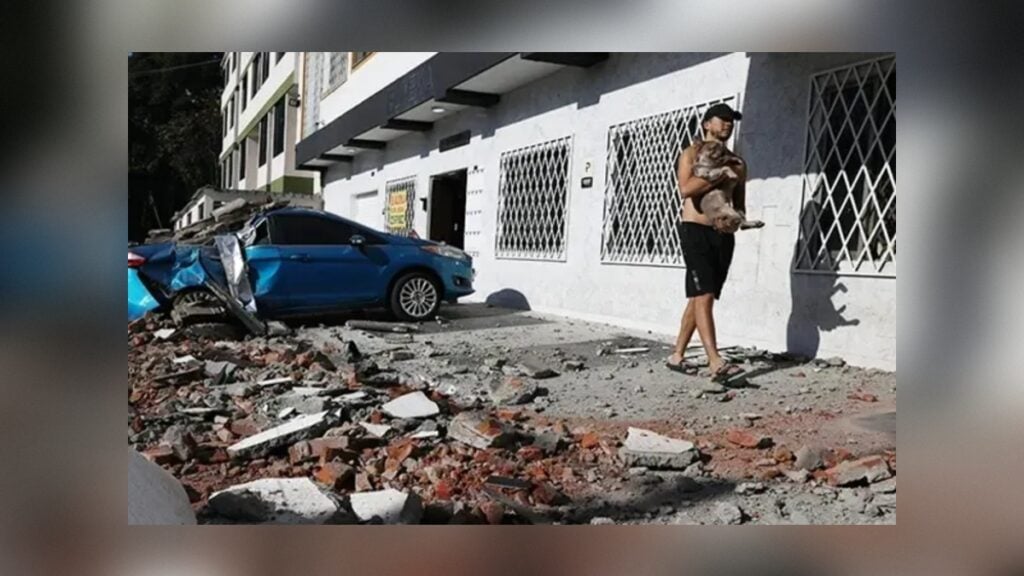
Despite the distance between the epicentre and the capital, damage was reported in several communities between the two locations.
Videos verified by Reuters showed damage to a church and several nearby buildings in the town of Penonomé. Some footage also showed portions of structures collapsing, raising concerns about the safety of buildings that may have sustained structural damage.
Omar Smith, head of Panama’s civil protection agency, told Telemetro Reporta that reports of damage had also emerged from Chitré, the capital of Herrera province, and the coastal province of Los Santos.
The authorities faced the challenge of assessing the condition of affected buildings and determining whether residents could safely return to their homes. Structural damage can remain difficult to assess immediately after an earthquake, particularly when cracks or other visible signs may indicate more serious weaknesses.
The tremors were also felt beyond Panama’s borders. A Reuters witness reported that shaking was experienced in San José, the capital of neighbouring Costa Rica.
The reports highlighted the wider geographical reach of the earthquake, although the extent of any damage outside Panama was not immediately clear.
Meanwhile, the United States tsunami warning system said the threat of a tsunami following the earthquake had passed. It reported that there was no current tsunami risk, easing immediate concerns about potential coastal inundation.
Economic Losses Could Be Significant
The earthquake could also have substantial economic consequences for Panama, according to an initial assessment by the USGS.
The agency estimated that potential economic losses could amount to between 1 and 10 per cent of Panama’s gross domestic product (GDP).
The estimate was preliminary and did not represent a confirmed calculation of the damage. A more reliable assessment would require further information about the condition of buildings, infrastructure and businesses, as well as the duration of service disruptions.
Nevertheless, interruptions to electricity supplies, aviation, public transport and commercial activities could affect economic output if they persist. Damage to homes and public buildings could also create additional costs for repairs, inspections and emergency assistance.
The full financial impact remained uncertain as officials and relevant agencies continued to assess the situation.
Government Activates Emergency Response
Panamanian President José Raúl Mulino said all government departments had been activated to respond to the earthquake and manage the situation.
He urged the public to remain calm and avoid actions that could create unnecessary panic or disorder.
“This incident should not become a cause for panic or disorder,” the president said.
The government’s immediate priorities include assessing damage, addressing electricity disruptions, restoring transport services and ensuring that people in affected areas remain safe.
Authorities also need to establish whether buildings damaged by the earthquake can be occupied safely and whether additional precautions are necessary in areas where aftershocks have been reported.
Panama is scheduled to hold a nationwide emergency evacuation drill on Monday. The exercise is intended to test preparations for moving people to safety during emergencies and assess the capabilities of the agencies responsible for responding to disasters.
The earthquake has brought renewed attention to the importance of emergency preparedness, public awareness and coordination between government departments. Such measures are particularly important in areas where strong tremors can affect buildings, transport networks and essential infrastructure simultaneously.
For residents whose homes have been damaged, however, immediate concerns remain more pressing. Many are waiting for clearer information about the condition of their properties and whether it is safe to return.
Although reports of damage have emerged from several provinces, the number of casualties, the full extent of structural damage and the eventual economic cost were not immediately established.
As assessments continue, the authorities face the dual challenge of restoring normal services and ensuring that residents are not exposed to further risks from weakened buildings or subsequent tremors. The pace of recovery will depend largely on the findings of those assessments and the extent of the damage caused by the earthquake.