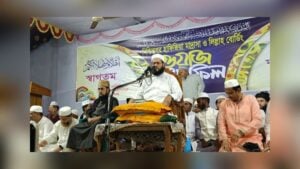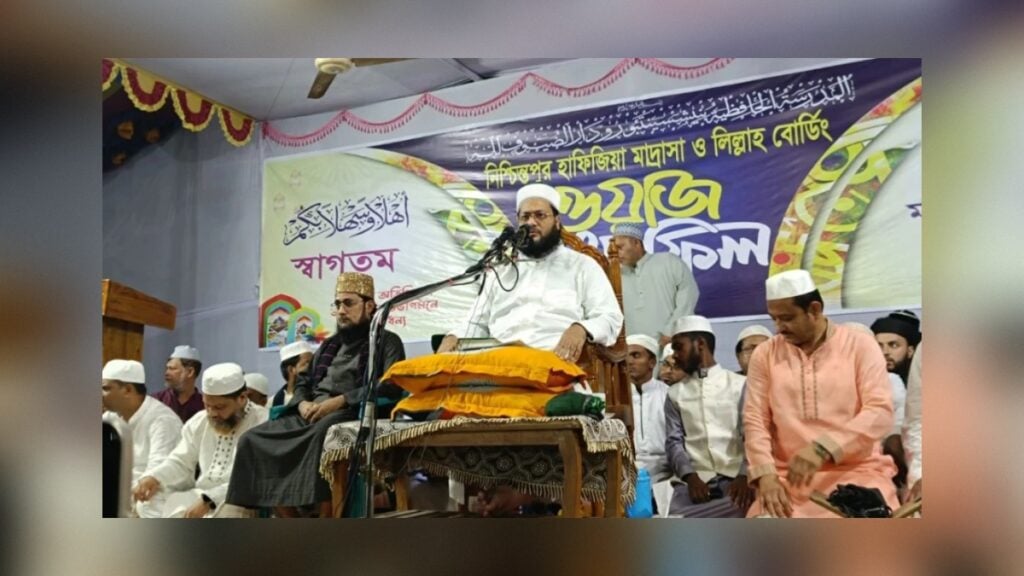
Abbasi made the remarks on Monday night, 19 October, while addressing the annual religious sermon and prayer gathering at Nishchintapur Hafizia Madrasa in Matlab Uttar upazila of Chandpur.
Criticising the media’s coverage, Abbasi said the operation against drugs was a positive initiative, although he acknowledged that Ishraq’s method of holding up a pistol was inappropriate. He argued that the intention behind the operation was commendable but claimed the government had been unwilling to take responsibility for it.
In particularly inflammatory remarks, Abbasi said Bangladeshi journalists were among the worst and suggested they should be beaten like dogs. His comments were directed at the media’s portrayal of Ishraq’s actions during the anti-drug drive.
Abbasi claimed that Ishraq had declared a war on drugs and attempted to dismantle a drug trafficking network with the assistance of his team while serving as a state minister. According to the speaker, news coverage concentrated on footage of Ishraq running with a pistol rather than examining the broader purpose of the operation.
He also described some journalists as ‘yellow journalists’ and called for action against them. Abbasi alleged that certain media professionals received money from foreign intelligence agencies and did not want Bangladesh to prosper. However, he did not provide specific evidence to substantiate these allegations during his speech.
The remarks came amid debate over the handling and media coverage of Ishraq’s anti-drug activities, including the controversy surrounding his decision to brandish a firearm and the subsequent issue of his resignation. Abbasi argued that more favourable coverage of the campaign might have influenced the government’s response.
He also stressed the need for effective social initiatives alongside law enforcement efforts to combat the spread of drugs. Tackling drug trafficking, he suggested, required attention not only to enforcement operations but also to broader efforts to address the problem within society.
Call to protect innocent Awami League supporters
In another part of his address, Abbasi urged the authorities to ensure that innocent Awami League leaders, activists and supporters were not harmed in the process of pursuing justice.
He said those responsible for crimes should face punishment, including the death penalty for murderers where warranted, but insisted that people who had committed no wrongdoing should not suffer because of their political affiliations.
‘Let the guilty be punished. Let murderers be sentenced to death, but ensure that innocent Awami League supporters are not harmed,’ he said.
Discussing the political composition of the gathering, Abbasi observed that people associated with the Bangladesh Nationalist Party (BNP), Jamaat-e-Islami and the National Citizen Party (NCP), as well as the Awami League, could be present. He rejected claims that the Awami League had no supporters left in the country, describing such assertions as untrue.
Abbasi reiterated that punishment should be directed at those responsible for crimes, while innocent individuals should be treated with leniency. He argued that sparing people who had committed no offence would serve the country’s interests.
He concluded this part of his speech by calling on people to set aside political differences and work towards unity.
His address combined support for Ishraq’s stated anti-drug objectives with criticism of the government’s response, harsh attacks on journalists and an appeal for the protection of innocent political supporters. The allegations against journalists and the language used to describe them were not accompanied by specific evidence in the remarks reported.