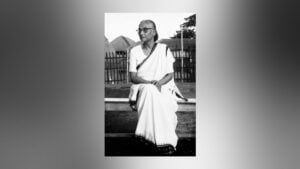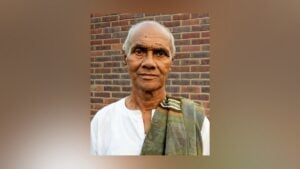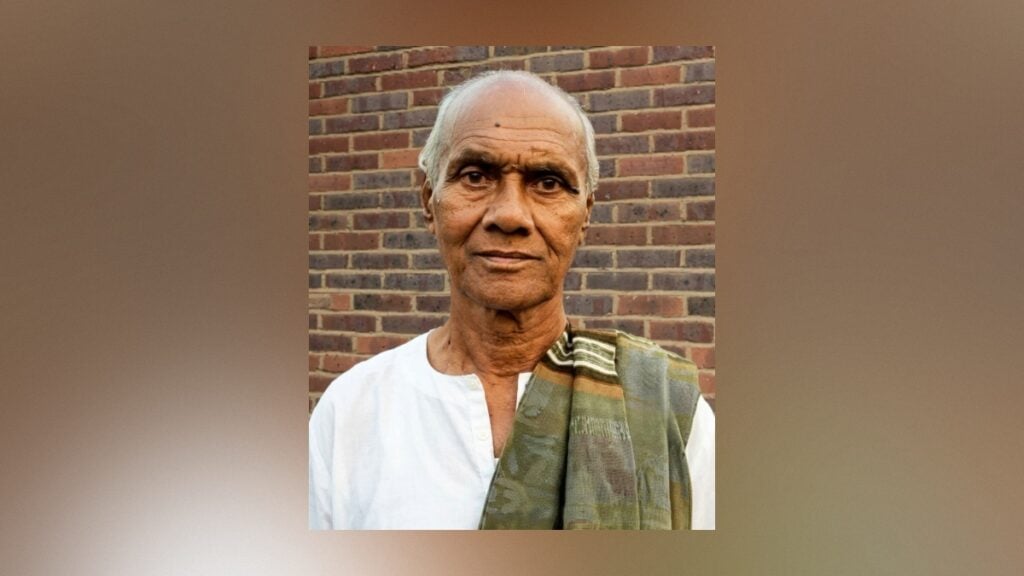
Today, however, Das remains largely forgotten, despite a career that spanned decades and enriched the cultural life of Kumarkhali and the wider Kushtia region. On the anniversary of his death, his life and work offer a reminder of the many gifted performers whose contributions to Bengal’s cultural heritage have gradually faded from public memory.
A performance that changed his life
The year was 1961. The historic Mohini Mills Auditorium in Kushtia was hosting a performance of the jatra pala Palashir Pore. Among the audience members was Debi Prasad Chakraborty, widely known as Kanu Babu, a director of Mohini Mills. He watched as Anil Kumar Das, already a familiar figure in Kumarkhali’s cultural circles, performed an important role in the production.
Impressed by Das’s acting, Kanu Babu arranged for him to join Mohini Mills as an employee. The opportunity marked a significant turning point in the young artist’s life, allowing him to pursue his livelihood while continuing his involvement in cultural activities.
From 1961 to 1972, Das worked at the mill, balancing the demands of employment with his passion for the performing arts. His professional responsibilities did not diminish his commitment to the stage. He continued to act in jatra pala productions and theatrical plays, while developing a reputation as a vocalist, particularly for his interpretations of songs by Kangal Harinath Majumdar.
His career reflected a tradition in which performers often worked outside the arts to support themselves, while remaining deeply committed to preserving local cultural practices. For Das, artistic expression was not simply an occupation; it was a lifelong calling.
Bringing Kangal Harinath’s songs to television audiences
One of Das’s most significant contributions was his work in popularising the songs of Kangal Harinath, a celebrated figure in Bengal’s folk and devotional musical traditions.
In 2008, Das made his first appearance on Bangladesh Television (BTV) in the programme Adi Okritrim, where he performed Harinath’s song Shunyo Ghore Ekti Kamal Achhe Ki Shundor. The performance helped bring the composer’s work to television audiences through the voice of an artist who had devoted considerable time to studying and performing his repertoire.
On 20 July 2010, Das appeared in a special BTV programme marking the birth anniversary of Kangal Harinath Majumdar. On that occasion, he performed the much-loved song Hari Din To Gelo, Shondhya Holo, Par Koro Amare.
The song’s emotional appeal lies in its reflection on the passage of time, the uncertainty of human existence and the yearning for spiritual release. In Das’s hands, it became an expression of both musical tradition and personal feeling.
His performances were valuable not merely as individual musical presentations but also as contributions to the preservation of a cultural legacy. Folk songs are often transmitted across generations through oral traditions, local performers and community gatherings. When artists such as Das bring them to larger platforms, they help ensure that the works remain accessible beyond the communities in which they originated.
His association with Kangal Harinath’s music therefore formed an important part of his artistic identity.
A prolific career in theatre and jatra pala
Das’s achievements extended well beyond music. He was an active member of Parimal Theatre in Kushtia and the Rupali Cultural Association in Kumarkhali, both of which provided platforms for theatrical performance and cultural engagement.
Over the course of his career, he performed in more than 200 jatra pala productions and over 300 stage plays across different parts of Bangladesh. These figures illustrate the scale of his involvement in the performing arts and the commitment required to sustain such a long career.
Traditional jatra pala, a form of popular Bengali folk theatre, has historically played an important role in rural cultural life. Combining acting, music, dialogue and dramatic storytelling, it has served as a source of entertainment and a means of sharing social, historical and moral narratives with audiences.
Performers in this tradition often have to master several skills, moving between spoken dialogue, expressive gestures, character interpretation and, in many cases, singing. Das’s extensive experience across theatre and music demonstrated his versatility as an artist.
His performances also formed part of a broader cultural tradition that relied heavily on local theatre groups and dedicated individuals. Such groups have helped sustain live performance in communities where access to formal cultural institutions may be limited. The labour of artists like Das was essential to keeping these traditions alive.
In 1969, he also worked for a year as an assistant to the renowned music director Subal Das. The experience added another dimension to his artistic career, reflecting his engagement with the musical side of performance as well as acting.
Early hardship and an enduring passion for art
Anil Kumar Das was born in 1936 in the Adivasi settlement of Kazipara, within Kumarkhali municipality in Kushtia.
His childhood was marked by hardship. He lost his father at an early age, and financial difficulties prevented him from continuing his formal education beyond Class Eight at Kumarkhali JN Secondary School.
Yet his limited access to education did not prevent him from developing his artistic abilities. He began his career as a performer during his adolescence, appearing in the jatra pala Shri Krishna Jamuna. That early experience set him on a path that would eventually lead to decades of work in theatre and music.
His story reflects the experiences of many performers who developed their craft outside formal institutions. In traditional theatre, talent was often nurtured through participation in local productions, learning from experienced performers and gaining practical experience before live audiences.
For Das, the stage became a place where his abilities could flourish despite the economic challenges that shaped his early life. Through persistence and dedication, he established himself as a respected figure in the cultural community of Kumarkhali.
His journey also highlights the importance of grassroots cultural organisations in nurturing artists whose work might otherwise never reach a wider audience.
Balancing employment and artistic commitment
Alongside his work in the performing arts, Das maintained a long career in public employment. From 1978 to 2003, he worked at Kumarkhali Municipality, providing himself with a livelihood while remaining connected to cultural activities.
The two decades and a half he spent in municipal employment did not mark a withdrawal from the arts. His continued participation in theatre and music demonstrated how deeply his artistic commitments were rooted in his life.
Recognition for his contribution came in 2011, when Kumarkhali Theatre presented him with a medal in acknowledgement of his longstanding service to the performing arts.
The honour was a meaningful gesture, recognising a career built through sustained work rather than widespread commercial fame. Nevertheless, recognition alone could not erase the financial difficulties he faced in his later years.
According to the account of his life, Das received a regular allowance from the Ministry of Cultural Affairs. Even so, he experienced financial hardship towards the end of his life, reflecting the precarious circumstances in which many traditional performers have lived.
His experience raises broader questions about the support available to veteran artists, particularly those who have spent decades preserving folk traditions and regional forms of performance. Their cultural contributions may be substantial, yet the financial rewards and public recognition they receive can remain limited.
For artists whose work has helped preserve a community’s cultural identity, adequate support and systematic documentation are important not only for their personal welfare but also for the continuity of the traditions they represent.
Family life and personal connections
Away from the stage, Das lived in his home in Kumarkhali’s Adivasi settlement with his wife, Jyotsna Das, and their son, Shyamal Das.
He also had three daughters: Trishna Das, Krishna Das and Shantana Das, all of whom are married. His youngest daughter’s husband, Prabir Kumar Das, is a regular tabla player for Bangladesh Betar and teaches tabla at Chhayanaut, the prominent cultural institution known for its work in music and the arts.
This family connection to music offers another glimpse into the cultural environment surrounding Das. His life was closely linked to a tradition in which artistic interests often extended beyond individual performers, becoming part of wider family and community networks.
Although his career was rooted in local cultural institutions, his performances on national television allowed his work to reach a broader audience. That combination of community-based practice and wider exposure formed an important part of his legacy.
A life that ended, but a cultural legacy that remains
Anil Kumar Das died at his home in Kumarkhali’s Adivasi settlement on 21 October 2015. He was 79.
Eight years before his death, his work had reached television audiences through his performances of Kangal Harinath’s songs. His extensive involvement in theatre, his years with Mohini Mills and Kumarkhali Municipality, and his contribution to local cultural organisations formed the principal chapters of a life devoted to both work and artistic expression.
His death did not diminish the value of those contributions. Yet the fading public memory of artists like Das illustrates how easily the achievements of regional performers can become obscured with the passage of time.
Cultural history is often shaped by the individuals who achieve national or international fame. However, the survival of artistic traditions also depends on those who perform in local theatres, participate in community productions and preserve songs through repeated performances. Their work may not always attract sustained attention, but it forms an essential part of the cultural landscape.
Das belonged to this quieter tradition of artistic dedication. His more than 200 jatra pala performances and over 300 stage plays represent a substantial contribution to Bengali theatre. His interpretations of Kangal Harinath’s songs also helped keep a distinctive musical heritage alive for audiences beyond its immediate origins.
Remembering him is therefore about more than paying tribute to a single performer. It is an opportunity to recognise the importance of preserving regional theatre, documenting the lives of veteran artists and making their work accessible to younger generations.
His career also serves as a reminder that cultural preservation requires more than occasional commemorations. Archiving performances, recording oral histories, supporting local theatre groups and recognising veteran artists can all help prevent valuable traditions from disappearing from public awareness.
On the anniversary of his death, Anil Das deserves to be remembered with respect for his talent, perseverance and lifelong commitment to the arts.
In the twilight of his life, his voice carried the poignant plea of Kangal Harinath’s timeless song: Hari Din To Gelo, Shondhya Holo, Par Koro Amare — a meditation on passing time and the journey towards the unknown.
Das has since taken his final leave, but the performances he gave and the songs he sang remain part of Bengal’s rich cultural story.
May his voice continue to resonate in the hearts of listeners, and may his artistic legacy find a renewed place in the memory of future generations. His final curtain may have fallen, but his contribution to Bengali folk music and theatre should not be allowed to disappear into obscurity.
Tribute to Anil Kumar Das — an artist whose work deserves to be remembered.