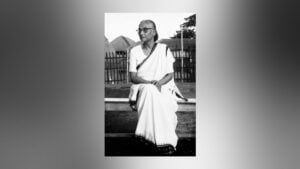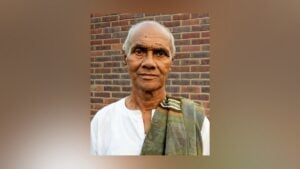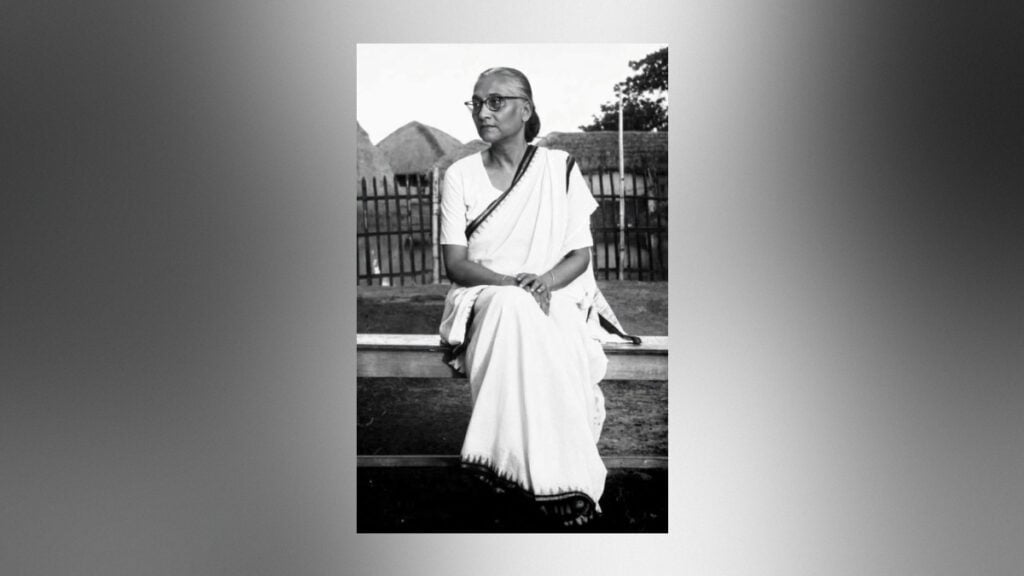
A letter she reportedly wrote in 1963 to Dilip Roy, a close friend of Bose, has attracted particular attention among those who question the accepted account of the revolutionary leader’s death. In it, she is said to have written: “I wanted to tell you something about your friend. He is alive; in India.”
The statement has fuelled speculation for decades. Yet Leela Nag Roy’s own achievements deserve recognition independently of the controversy. Her life stands as a remarkable account of courage, political commitment and the struggle to secure education and dignity for women in a deeply conservative society.
A pioneering journey through education
Leela Nag Roy was born on 2 October 1900. Although biographical accounts differ on certain details of her birthplace, she is widely associated with Goalpara in the Assam region of undivided India.
An outstanding student, she graduated in English from Bethune College in Calcutta, one of the pioneering institutions for women’s education in the Indian subcontinent. Her academic excellence earned her the Padmabati Gold Medal.
Her most historic educational achievement came after the establishment of the University of Dhaka in 1921. At a time when women’s access to higher education remained severely restricted by social conventions, she secured admission to the newly established institution, becoming its first female student. She subsequently completed a master’s degree in English.
Her admission was more than a personal milestone. It challenged entrenched assumptions about women’s intellectual abilities and their place in public life. By entering a university that had only just opened its doors, she demonstrated that women could participate in advanced education despite considerable social resistance.
Her example helped establish an important precedent for women aspiring to pursue higher studies in Bengal. She understood that education could provide women not only with professional opportunities but also with the confidence to question injustice and participate in shaping society.
Deepali Sangha and the struggle for women’s emancipation
Leela Nag Roy believed that national liberation could not be complete without the social and economic emancipation of women. This conviction inspired her to establish Deepali Sangha in Dhaka in 1923, an organisation dedicated to women’s education, self-reliance, physical development and political awareness.
The organisation sought to equip women with the skills and confidence needed to overcome social restrictions. Its activities included educational initiatives, physical training and efforts to encourage women to become more active in public affairs.
Deepali Sangha also became associated with the wider revolutionary movement in Bengal. Accounts of the period connect its activities with women who later participated in anti-colonial resistance, including Pritilata Waddedar. Such initiatives helped challenge the prevailing belief that political activism and physical training were exclusively male domains.
Roy also established educational institutions in Dhaka, extending opportunities to women who might otherwise have been excluded from formal learning. Her approach combined practical education with a broader vision of social transformation.
For her, literacy alone was not enough. Women needed the confidence to think independently, the ability to support themselves and the freedom to make decisions about their own lives.
Her commitment to these principles extended into journalism. In 1931, she launched Jayashree, a periodical that provided a platform for women’s writing and intellectual expression. Rabindranath Tagore is credited in biographical accounts with blessing the publication and contributing to the choice of its name.
At a time when women’s voices were often marginalised in public discourse, the magazine offered an important space for their ideas and creative work. It reflected Roy’s belief that social change required women to participate not only in political movements but also in literature, debate and cultural life.
A close association with Netaji Subhas Chandra Bose
Leela Nag Roy’s political journey brought her into contact with Subhas Chandra Bose, one of the most prominent figures in India’s independence struggle.
Biographical accounts place their first meeting during relief operations following the devastating floods in Bengal in 1921. Their association reportedly developed through a shared commitment to public service and resistance to British colonial rule.
Roy’s contribution to the freedom movement extended beyond political advocacy. She helped organise people, encouraged women to enter public life and took part in activities directed against colonial rule. Her commitment came at considerable personal cost, including imprisonment for her political activities.
Her relationship with Bose also developed within the changing political landscape of the Indian nationalist movement. In 1938, when Bose became president of the Indian National Congress, he involved Roy in the Congress’s National Planning Committee, reflecting the importance he attached to planning for India’s future beyond colonial rule.
When Bose subsequently left the Congress and established the Forward Bloc in 1939, Roy and her husband, Anil Chandra Roy, became associated with the same political current.
Their political alignment reflected a shared interest in a more assertive struggle for independence. Bose advocated a determined challenge to British rule, while Roy combined political activism with efforts to transform the social conditions that restricted women’s freedom.
Her role is therefore best understood within the broader history of India’s independence movement, in which women contributed through education, journalism, organisation, underground resistance and humanitarian work.
Standing with displaced people during Partition
The Partition of British India in 1947 brought enormous upheaval to Bengal. Communal violence, displacement and the breakdown of established communities left thousands of people struggling to find shelter, security and a means of rebuilding their lives.
Leela Nag Roy continued her work during this period of uncertainty. She was particularly concerned about displaced people arriving from East Bengal, as well as women who had suffered violence and hardship.
Her involvement in relief and rehabilitation reflected a consistent feature of her public life: the belief that political freedom had little meaning unless it improved people’s everyday circumstances.
The upheaval of Partition exposed women to particular vulnerabilities, including the loss of family support, economic insecurity and social exclusion. Roy’s efforts to assist affected people formed part of a wider tradition of humanitarian service among those who sought to address the human consequences of the division.
Her work during these difficult years demonstrated that her commitment to public service did not end with the formal achievement of independence. She continued to respond to the needs of people whose lives had been disrupted by political and communal conflict.
The 1963 letter and the mystery surrounding Netaji’s disappearance
One of the most discussed aspects of Leela Nag Roy’s later life concerns a letter reportedly sent to Dilip Roy on 7 September 1963. The correspondence has been cited by people who believe that Subhas Chandra Bose survived the events of August 1945.
According to the account reproduced in various reports, the letter stated:
“I wanted to tell you something about your friend. He is alive; in India.”
The wording has attracted attention because of Roy’s reported closeness to Bose. Those who support the theory that Bose survived argue that a statement from someone within his circle deserves serious consideration.
The historical context, however, requires caution.
The widely accepted account holds that Bose died following an aeroplane crash in Taihoku, then under Japanese control, on 18 August 1945. Questions about the circumstances of his disappearance have nevertheless persisted, prompting investigations, competing interpretations and public debate over the decades.
One of the alternative theories centres on a mysterious ascetic known as Bhagwanji or Gumnami Baba, who lived in Uttar Pradesh and was associated with Faizabad. Some people have claimed that he was Bose living under an assumed identity.
The theory gained attention through reports about documents and personal belongings reportedly associated with Bhagwanji at Ram Bhawan in Faizabad. Among the material discussed in connection with the case were letters said to be linked to Leela Nag Roy.
Some accounts have highlighted the use of the name ‘Lee’ in correspondence, noting that Bose was reportedly known to address Roy by that name. Supporters of the identification theory have interpreted this as a potentially significant connection.
Other claims concern handwriting comparisons involving documents attributed to Bose and Bhagwanji. Reports have referred to an examination by handwriting expert B. Lal, who was said to have found similarities between certain writings.
Such claims, however, must be distinguished from conclusive historical proof. Similarities in handwriting, personal correspondence and the recollections of associates may be relevant to an investigation, but they do not independently establish that two identities belonged to the same person.
The reported 1963 letter also raises questions that cannot be resolved by quoting a single sentence. The original document, its complete context, the identity of the person described as Roy’s friend and the circumstances in which the statement was made are all important to a reliable historical assessment.
Without sufficiently established documentary evidence, the letter cannot be treated as definitive proof that Bose survived the reported plane crash or that Bhagwanji was Bose.
Nevertheless, the correspondence remains part of the wider discussion surrounding one of modern South Asia’s most enduring historical mysteries. Its continued significance also reflects the deep public interest in Bose’s life, political legacy and disappearance.
An enduring legacy beyond the mystery
Leela Nag Roy died in Calcutta on 11 June 1970, leaving behind a legacy that extended across education, politics, journalism and social reform.
Her achievements are sometimes overshadowed by her association with Netaji Subhas Chandra Bose and the continuing debate over his fate. Yet her own life offers compelling reasons for remembrance.
As the first female student of the University of Dhaka, she challenged barriers to women’s higher education. Through Deepali Sangha, she sought to prepare women for a more independent and active role in society. Through Jayashree, she helped create space for women’s intellectual and literary expression. Her participation in the independence movement and her humanitarian efforts during Partition further demonstrated the breadth of her commitment.
These were not separate strands of her life but parts of a coherent vision. She believed that freedom required more than the departure of colonial rulers. It demanded changes in social attitudes, wider educational opportunities and the recognition of women as equal participants in public life.
Her work also offers an important reminder that the history of the independence movement cannot be understood solely through its best-known male leaders. Women such as Roy helped build organisations, spread political awareness, support revolutionary activities and address the social inequalities that persisted under colonial rule.
The questions surrounding Bose’s disappearance may continue to generate debate, and the evidence relating to Bhagwanji may be interpreted differently by researchers. But uncertainty over those matters does not diminish Roy’s established contribution to the history of the region.
Her courage lay not only in challenging British authority but also in confronting the social conventions that limited women’s ambitions. Her determination helped expand the possibilities available to generations who followed.
Remembering Leela Nag Roy, therefore, means looking beyond a disputed historical letter to recognise an extraordinary life devoted to education, independence and human dignity. Her journey from a pioneering university student to a revolutionary and social reformer remains an important chapter in the history of women’s emancipation in the Indian subcontinent.
Her example continues to speak to a fundamental principle: genuine freedom requires the courage to challenge injustice, the determination to widen opportunity and the conviction that every individual deserves dignity.
Leela Nag Roy’s place in history rests firmly on those achievements. Her memory deserves to be honoured not merely as part of Netaji’s story, but as that of a remarkable woman who helped shape her own.