Bangladesh’s ready-made garment industry is coming under increasing pressure as a global energy crisis drives up manufacturing costs, disrupts factory operations and raises concerns about the country’s ability to retain its position in the international apparel market.
Persistent gas shortages, frequent electricity outages and rising diesel prices have created significant difficulties for garment manufacturers. Exporters are struggling to maintain production schedules while absorbing higher operating expenses, with growing fears that delays in fulfilling overseas orders could encourage international buyers to shift business to competing countries.
Vietnam, Cambodia and Pakistan are among the alternative manufacturing destinations that could benefit if Bangladesh fails to maintain reliable production and delivery schedules.
A report published by New York-based TIME magazine on Tuesday (20 October) highlighted the challenges facing Bangladesh’s garment industry, linking the difficulties to global energy market disruptions and longstanding weaknesses in the country’s energy infrastructure.
According to the report, conflicts involving Ukraine and Iran have exposed vulnerabilities in international energy supply chains, leaving import-dependent economies particularly exposed to fluctuations in fuel prices and availability.
Since Russia’s invasion of Ukraine, industrial gas prices in Bangladesh have increased by approximately 150 per cent, while diesel prices have risen by nearly 70 per cent.
The situation has become more difficult following the outbreak of war involving Iran, which has contributed to an almost threefold increase in spot-market prices for liquefied natural gas (LNG).
These developments have placed considerable financial pressure on manufacturers that depend on stable supplies of electricity and gas to maintain production.
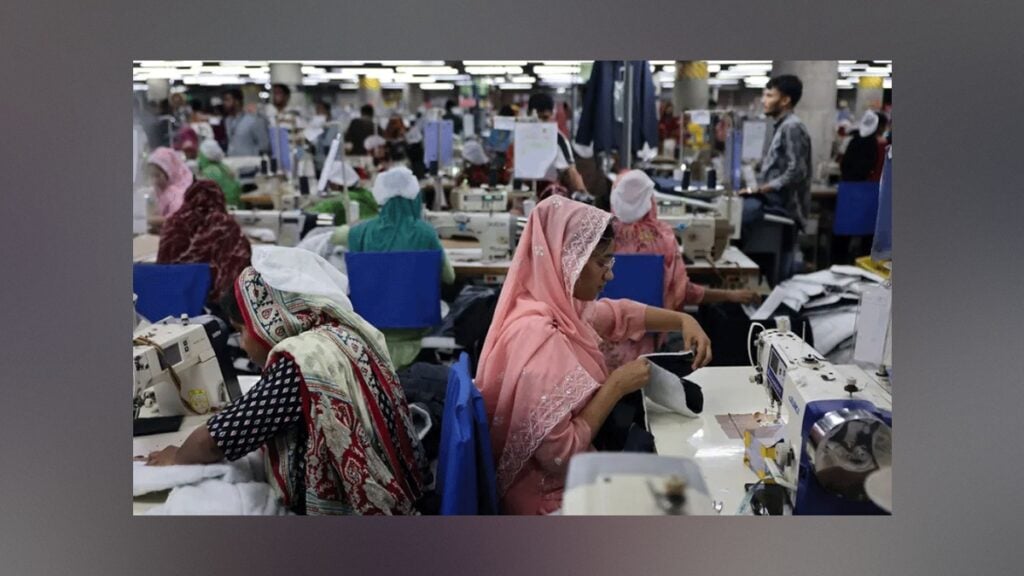
The garment industry is particularly vulnerable because several stages of textile manufacturing, including fabric processing, dyeing, washing and finishing, require substantial amounts of energy.
Disruptions to these processes can delay production across entire factories, making it increasingly difficult for exporters to meet the delivery deadlines agreed with international buyers.
The TIME report also identified inadequate energy infrastructure and insufficient investment in domestic gas exploration as major factors contributing to Bangladesh’s difficulties.
The country relies on imports from the Middle East for nearly half of its energy requirements, leaving its economy vulnerable to instability in the region.
Tensions surrounding the Strait of Hormuz, one of the world’s most important routes for energy shipments, have added to concerns over supply security.
Bangladesh has also faced domestic infrastructure problems. A fire at one of its two floating LNG terminals disrupted import operations, worsening an already difficult supply situation.
According to the report, instability around the Strait of Hormuz and the terminal incident contributed to an 83 per cent decline in LNG imports during July and August.
The resulting fuel shortages have affected electricity generation, creating difficulties for businesses and households across the country.
Bangladesh’s electricity shortfall has exceeded 3,000 megawatts, prompting the government to introduce measures to reduce power consumption in several sectors.
Industrial areas, including those surrounding the capital, Dhaka, have experienced repeated power interruptions. Some rural communities have reportedly faced electricity outages lasting as long as 16 hours a day.
For garment manufacturers, unreliable electricity supplies present an immediate operational challenge.
Factories must maintain continuous production to meet demanding international delivery schedules. Unexpected power cuts can interrupt machinery, delay processing and reduce overall efficiency.
Many manufacturers have consequently turned to diesel-powered generators to keep production lines operating during electricity outages.
However, the sharp increase in diesel prices has made this alternative considerably more expensive.
Businesses are therefore facing a difficult combination of unreliable energy supplies and rising costs, placing further pressure on profit margins.
The challenges are evident at Ha-Meem Group, one of Bangladesh’s major garment manufacturers and exporters.
Tanul Chakraborty, the company’s head of power, energy and environmental sustainability, told TIME that interruptions to electricity supplies remain a frequent problem in Bangladesh.
He explained that gas is the most reliable energy source for industrial operations, followed by diesel, while electricity supplied through the national grid ranks third in terms of dependability.
Ha-Meem Group employs approximately 90,000 workers and produces around 9.3 million garments every month.
Its customers include major international clothing brands such as Gap, American Eagle and JCPenney.
Despite the energy crisis, the company is prioritising productivity and attempting to maintain consistent output.
Meeting delivery commitments is particularly important because international buyers have the option of sourcing garments from competing manufacturing countries.
Any sustained increase in production costs or disruption to delivery schedules could weaken Bangladesh’s appeal as a reliable supplier.
The country’s garment industry has developed its international presence through large-scale manufacturing capacity, competitive pricing and established relationships with overseas retailers.
However, rising energy expenses threaten to erode some of those advantages.
Manufacturers face the challenge of maintaining affordable production while ensuring that higher operating costs do not affect the quality or timely delivery of finished garments.
The situation may be particularly difficult for smaller factories, which generally have fewer financial resources to invest in backup energy systems or absorb prolonged increases in fuel expenditure.
Larger manufacturers may be better equipped to manage temporary disruptions, but they are not immune to the financial consequences of persistent shortages.
The implications of the crisis extend beyond the garment industry itself.
Ready-made garments account for more than 80 per cent of Bangladesh’s total export earnings, making the sector a crucial source of foreign currency and economic activity.
Approximately four million people are directly employed in the industry.
The sector also supports numerous related businesses, including textile producers, packaging suppliers, transport operators and manufacturers of garment accessories.
Any prolonged decline in production or export orders could therefore affect employment and economic activity across a much broader range of industries.
Workers and their families may face increasing uncertainty if factories struggle to maintain normal operations or experience a reduction in international demand.
The wider economic pressures are also raising concerns about living standards and food security.
International food security observers have warned that approximately 18.1 million people in Bangladesh could face food insecurity in the near future, according to the report.
Although food insecurity is influenced by several factors, higher energy costs can add pressure to household budgets by increasing transportation and production expenses.
For an economy heavily dependent on manufacturing exports, sustained disruption to industrial activity could create additional challenges for employment, incomes and economic stability.
Against this backdrop, the Bangladesh government has introduced a new energy roadmap intended to strengthen electricity generation and reduce vulnerabilities in domestic fuel supplies.
The plan, unveiled in September, proposes increasing electricity generation capacity by 12,940 megawatts through solar and coal-based projects.
It also includes measures to modernise electricity distribution infrastructure and expand domestic gas exploration.
A major component of the strategy involves drilling 300 exploration wells to increase the availability of locally produced natural gas.
According to the TIME report, 31 wells have already been drilled.
The proposed investments are intended to address structural weaknesses that have contributed to recurring energy shortages.
Increasing domestic gas production could help reduce dependence on imported LNG, while improvements to electricity infrastructure may support more reliable supplies for industrial consumers.
However, such projects generally require considerable investment and time before they can deliver their intended benefits.
This means garment manufacturers are likely to continue facing immediate challenges even as the government pursues longer-term solutions.
Mohammad Hatem, president of the Bangladesh Knitwear Manufacturers and Exporters Association (BKMEA), expressed optimism about the government’s energy strategy.
He welcomed the proposed measures and voiced hope that Bangladesh’s electricity shortages could be resolved within the next three to four years.
Greater stability in electricity generation and distribution would provide significant relief to garment manufacturers, particularly those struggling to maintain production schedules amid repeated disruptions.
Nevertheless, the immediate outlook remains uncertain.
The continuation of conflict in the Middle East could further complicate international energy shipments and increase the cost of importing fuel.
Any additional rise in energy prices would create further difficulties for Bangladesh’s manufacturing sector, which is already dealing with higher production expenses.
Transportation costs could also increase, adding pressure to exporters responsible for delivering finished garments to international markets.
These concerns have been echoed by industry representatives who recognise the difficulties facing the government.
Fazlee Shamim Ehsan, managing director of Fatullah Apparels, said the current circumstances had created a particularly challenging situation for Bangladesh.
He suggested that conditions would have been considerably better without the conflict in the Middle East.
His comments reflect the wider concerns of garment manufacturers who are attempting to maintain business operations amid geopolitical developments beyond their control.
The crisis has also highlighted the importance of improving domestic energy security and strengthening the resilience of Bangladesh’s industrial infrastructure.
For garment exporters, uninterrupted energy supplies are essential not only for keeping factories operational but also for preserving long-established commercial relationships.
International apparel buyers place considerable importance on predictable production schedules, competitive pricing and dependable delivery arrangements.
If energy shortages continue to disrupt manufacturing, Bangladesh could face increasing competition from countries capable of offering more stable operating conditions.
Industry stakeholders therefore face the dual challenge of managing immediate production difficulties while supporting longer-term improvements in the energy sector.
The government’s proposed expansion of electricity generation, modernisation of distribution networks and investment in domestic gas exploration could help address some of these vulnerabilities if implemented effectively.
For now, manufacturers must continue balancing rising costs with the need to fulfil overseas orders and protect their position in the international market.
With millions of jobs and a substantial proportion of national export earnings dependent on the ready-made garment industry, prolonged energy instability could have consequences extending far beyond individual factories.
Ensuring reliable and affordable energy supplies has become one of the most pressing challenges for Bangladesh’s garment sector as it seeks to maintain its competitiveness and safeguard its contribution to the national economy.