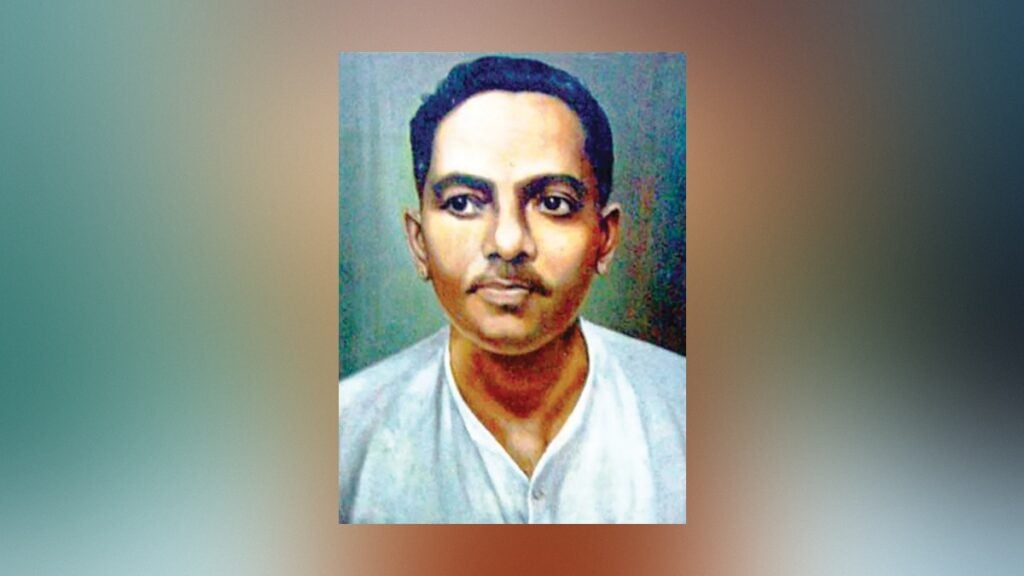
Through Banalata Sen, Das established a distinctive poetic world in which history, love, loneliness and the longing for peace merge into a deeply personal yet universal experience. His poetry continues to resonate with readers because it gives expression to feelings that transcend generations: the exhaustion of life’s journey, the desire for belonging and the hope of finding a moment of serenity amid uncertainty.
Banalata Sen: A Sanctuary After a Thousand-Year Journey
The opening imagery of Banalata Sen, with its references to distant seas and ancient lands, takes readers on a mysterious journey through time and civilisation. The poem evokes places such as the sea off Ceylon and the waters near Malaya, drawing upon the vastness of history to reflect the experiences of an eternal wanderer.
For Das, history is more than a record of past events. It becomes a metaphor for the long journey of human existence, marked by fatigue, separation and an unending search for meaning. The speaker appears to have travelled through countless ages and landscapes, carrying the accumulated weariness of time.
It is in this context that Banalata Sen emerges as a figure of extraordinary significance. Her eyes, compared to a bird’s nest, evoke warmth, intimacy and shelter. She represents a moment of rest for a traveller exhausted by the vastness of existence.
The poem’s appeal lies not merely in its portrayal of beauty or romantic affection. It explores the relationship between loneliness and companionship, movement and stillness, and the vast passage of time and the brief moments of peace that give life meaning. Through its distinctive imagery and measured language, the poem creates an atmosphere that is at once intimate and timeless.
Banalata Sen remains one of the defining works of modern Bengali poetry, demonstrating Das’s ability to transform personal longing into an experience shared by countless readers.
Ruposhi Bangla: A Lost Homeland Preserved in Poetry
Jibanananda Das is widely remembered as the poet of Ruposhi Bangla, or Beautiful Bengal, and the title captures an essential dimension of his literary imagination. In his poetry, Bengal’s natural landscape is not simply a subject of aesthetic appreciation. It embodies memory, affection, cultural identity and a profound emotional attachment to one’s homeland.
The Dhanasiri River, birds such as the shankhachil and myna, mist-covered fields, dew-laden grass, the scent of the harvest season and the gathering darkness of evening recur throughout his poetic world. These images bring the Bengali countryside vividly to life. Yet behind their apparent simplicity lie deeper reflections on loneliness, the passage of time and the human desire to recover a world that may have been lost.
One of his most celebrated poetic expressions captures this enduring attachment to the land:
“I shall return again to the banks of the Dhanasiri—in this Bengal.”
The sentiment extends beyond conventional patriotism. It expresses an intimate bond between human identity and the natural world, suggesting that a homeland can remain alive within the imagination even when it is distant or inaccessible.
The Bengal of Das’s poetry is not confined to geographical boundaries. It is a landscape shaped by recollection, dreams and emotional experience. Its rivers, fields and birds become vessels of memory, connecting the individual to a larger cultural inheritance.
Through Ruposhi Bangla, Das gave Bengali readers a distinctive vision of their homeland: beautiful, fragile and inseparable from the human experience of belonging.
Major Poetry Collections and Literary Works
Jibanananda Das’s literary output is distinguished by its diversity, philosophical depth and evolving poetic style. Although he is best known for his poetry, his work also reflects a sustained engagement with the uncertainties and contradictions of modern life.
Among his most significant collections are the following:
Jhara Palak (1927)
His first collection of poetry, Jhara Palak marked an important early stage in his literary development. It reflects his emerging poetic voice and the influences that shaped his initial experiments with language and imagery.
Dhusar Pandulipi (1936)
Often regarded as a crucial milestone in his development, Dhusar Pandulipi reveals the distinctive modernist sensibility that would become central to his work. Its imagery, atmosphere and treatment of time helped establish his individual place in Bengali literature.
Banalata Sen (1942)
This collection brought together the themes of love, loneliness, history and spiritual refuge that remain central to Das’s poetic reputation. The title poem is particularly celebrated for its imaginative scope and evocative portrayal of human longing.
Mahaprithibi (1944)
Written against the backdrop of a world experiencing profound upheaval during the Second World War, Mahaprithibi reflects anxieties about civilisation, human existence and the uncertainties of the age. Its outlook extends beyond personal experience to consider the wider condition of humanity.
Sat-ti Tarar Timir (1948)
This collection demonstrates the complexity of Das’s mature poetic imagination. Its language and imagery reflect the tensions of modern life, alongside a deepening interest in consciousness, uncertainty and the human condition.
Ruposhi Bangla
Although the poems associated with this collection were written earlier, Ruposhi Bangla was published posthumously in 1957. It remains one of his most beloved works, preserving an intensely lyrical vision of Bengal’s natural beauty and cultural identity.
Bela Obela Kalbela (1961)
Published after his death, this collection offers further insight into his mature poetic vision. Its title evokes the passage of time and the changing conditions of human life, themes that run throughout his work.
Beyond these collections, several individual poems have secured lasting places in Bengali literary culture. They include At Bochor Ager Ekdin (One Day Eight Years Ago), Bodh (Awareness), Abar Asibo Fire (I Shall Return Again) and Banglar Mukh Ami Dekhiyachhi (I Have Seen the Face of Bengal).
Together, these works demonstrate the breadth of his imagination and the distinctive contribution he made to Bengali poetry.
His Distinctive Place in Modern Bengali Poetry
Understanding Jibanananda Das requires more than an appreciation of his beautiful descriptions of nature. His significance lies in the way he transformed the language, imagery and emotional possibilities of Bengali poetry.
Writing in a literary environment strongly shaped by Rabindranath Tagore, Das gradually developed a poetic voice that was unmistakably his own. Rather than relying on familiar romantic expressions, he explored uncertainty, isolation, memory and the often unsettling realities of modern existence.
Time in his poetry rarely follows a straightforward path. Past, present and future frequently overlap, creating a sense that individual experience is connected to distant historical periods and forgotten civilisations. A landscape may evoke a memory, a bird may suggest the persistence of life, and darkness may become a setting for reflections on mortality.
Nature, therefore, serves several purposes in his work. It can offer consolation, inspire wonder or expose the fragility of human existence. Rivers, fields, birds, the moon, darkness and stars are not merely decorative elements. They carry emotional and philosophical significance, expressing the distance between human aspirations and the world in which people live.
This layered quality helps explain why his poems reward repeated reading. A familiar passage may reveal a different meaning depending on the reader’s age, experiences or state of mind. His writing often leaves questions unanswered, allowing readers to participate in the process of interpretation.
Das did not always receive the widespread recognition that his work would eventually command during his lifetime. His poetry, which often departed from conventional expectations, required readers to engage with a different kind of literary sensibility. In the decades following his death, however, his reputation grew steadily among poets, critics and general readers.
Today, he is recognised as one of the foremost architects of modern Bengali poetry. His influence extends beyond individual poems to the wider development of Bengali literary expression, particularly in the treatment of landscape, consciousness, time and existential uncertainty.
22 October: Remembering the Poet’s Death
Jibanananda Das died in Kolkata on 22 October 1954, at the age of 55. His death followed a tram accident on 14 October, in which he sustained serious injuries. He remained in hospital for eight days before passing away.
His death was a profound loss for Bengali literature. Yet the circumstances of his passing did not bring his literary journey to an end. In the years that followed, readers and critics increasingly recognised the depth, originality and emotional power of his work.
His poetry continued to reach new audiences, and collections published after his death helped bring further attention to aspects of his literary achievement. The growing appreciation of his writing also reinforced the importance of preserving his manuscripts and understanding the development of his poetic thought.
The anniversary of his death offers an opportunity not only to remember the man but also to revisit the extraordinary body of work he left behind. His poems continue to provide a language for feelings that are difficult to express directly: nostalgia, solitude, the desire for peace and the enduring attachment to a place called home.
A Poet Who Lives Beyond Death
Some poets change the way readers perceive the world around them. They take familiar landscapes and ordinary experiences and reveal dimensions that might otherwise remain unnoticed. Jibanananda Das belongs to this rare group.
His poetry carries readers to the banks of the Dhanasiri, across mist-covered fields and into the stillness of evening. It also leads them through the corridors of history, where human lives appear both fleeting and connected to something much larger than themselves.
In his literary universe, people can become lost in the immensity of time while simultaneously discovering new ways of understanding their own existence. This tension between alienation and belonging is one of the defining characteristics of his work.
Das is no longer alive, but the birds in his poems continue to cross the skies of Bengal. His rivers flow through the imagination of successive generations, while Banalata Sen remains an enduring image of peace for the weary traveller. His Ruposhi Bangla continues to offer readers an evocative portrait of a homeland preserved through memory and language.
His poetry also reminds readers that the relationship between a writer and a literary tradition does not end with death. A poem can acquire new meanings as society changes, allowing each generation to discover something of its own experience within familiar lines.
The poet may die, but poetry endures. The individual departs, yet returns through the words, images and emotions preserved in his work.
On the anniversary of Jibanananda Das’s death, readers remember him with deep respect and affection: the poet of Banalata Sen, a master of introspection and one of the most enduring artistic voices of Bengal.
As long as Bengal’s rivers continue to flow, the wind moves through its paddy fields and birds return to their nests beneath the evening sky, Jibanananda Das’s poetry will find its way back into the hearts of Bengali readers.