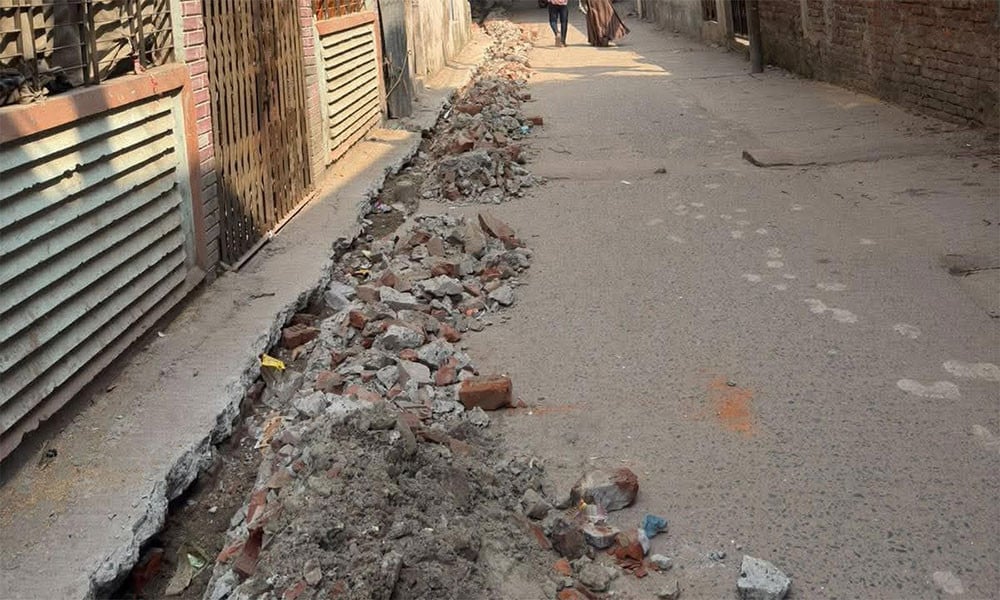
Dhaka South City Corporation (DSCC) authorities have detained two labourers while they were illegally excavating a public road to install an unauthorised gas connection. Officials from the municipal authority intervened on Tuesday, 27 October, seizing various tools and equipment used in the unlawful digging operation.
The incident occurred on Lal Mia Road in the North Muradpur neighborhood of Jurain, falling under Ward No. 52 within Zone 5 of the DSCC jurisdiction. According to sources from the DSCC engineering department, the road was being breached without the mandatory municipal permits or formal authorization. Investigations revealed that the excavation was being carried out under the leadership of Zia Uddin Badal, a resident associated with Sharif Manzil at holding number 307 in Muradpur. Upon receiving reports of the unapproved construction, city officials launched a prompt drive at the location, catching the two workers in the act.
During the drive, officials confiscated various equipment utilized for breaking through the paved surface, including two heavy-duty hammer drills, long runs of electrical cabling, and two trowels. Following their detention, the two workers were handed over to the Kadamtali Police Station with the assistance of the officer-in-charge to face further legal proceedings and investigation.
Municipal bodies in the capital have long struggled with unauthorised trenching by individuals and utility syndicates. Unregulated digging damages urban road infrastructure, disrupts traffic, and poses significant safety hazards to pedestrians. Furthermore, illegal utility connections—particularly those involving pressurized gas mains—present severe public safety risks, including potential leakages, fires, and sudden explosions in densely populated residential blocks.
Affirming their stance against infrastructure damage, DSCC representatives emphasized that law enforcement drives against illegal utility connections and unpermitted road cuts will continue across all zones. Municipal authorities maintain that strict enforcement is essential to protect public property, preserve civic amenities, and maintain safety across the urban transport network.