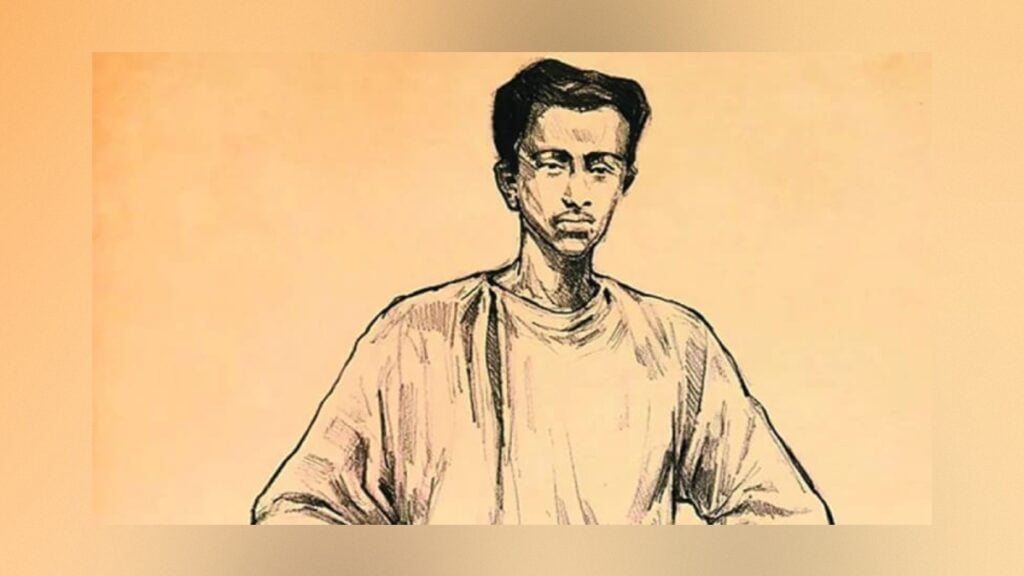
Born in Bakjuri village in present-day Manikganj district of Bangladesh, Sen was a visionary who recognised the possibilities of a revolutionary new medium long before filmmaking became an established industry in the region. His achievements were remarkable not only for their technical ambition but also for the range of subjects he explored.
He filmed theatrical performances, produced advertisements for commercial products and recorded significant events in the political life of Bengal. Yet, in a cruel twist of fate, almost all his surviving film materials were destroyed in a devastating fire in 1917. The loss deprived future generations of invaluable visual records of the cultural and political life of the period.
On the anniversary of his death, Hiralal Sen deserves to be remembered not merely as an early filmmaker but as an innovator whose work helped shape the foundations of Bengali cinema.
Early Life and Education
Hiralal Sen was born on 2 August 1866 in Bakjuri village, in what is now Manikganj district of Bangladesh. His father was Chandramohan Sen and his mother was Bidhumukhi Devi. He was the second of eight children.
His family had an established professional background. His grandfather, Gokulkrishna Munshi, was a well-known lawyer at the Dhaka Judge’s Court, while his father later practised law at the Calcutta High Court.
Sen began his education at Manikganj Minor School. Alongside his formal studies, he learnt Persian from a local teacher. After passing his minor examination in 1879, he enrolled at Dhaka Collegiate School. He subsequently moved to Calcutta with his father and continued his education there.
However, conventional academic pursuits did not ultimately define his future. His curiosity about new technologies and his desire to explore unfamiliar forms of artistic expression led him towards a field that was then attracting attention across the world: moving pictures.
During the late nineteenth century, cinema was still an experimental medium. Film equipment was expensive, technical expertise was limited, and the possibilities of recording and reproducing moving images were only beginning to be understood in many parts of the world. Sen nevertheless recognised that this emerging technology could have applications far beyond entertainment.
Discovering the Possibilities of Cinema
A decisive moment in Sen’s life came in 1898, when a short film was screened alongside the opera The Flower of Persia at Calcutta’s Star Theatre. The screening was associated with Professor Stevenson, who introduced Sen to the practical possibilities of filmmaking.
Fascinated by the new medium, Sen used Stevenson’s camera to film a dance sequence from the opera. The resulting work, A Dancing Scene from the Opera, The Flower of Persia, marked an important early step in his career as a filmmaker.
The experience encouraged him to pursue filmmaking more seriously. Rather than treating moving pictures simply as a novelty imported from abroad, Sen began exploring how the technology could be used to record local performances and bring Bengali cultural life before audiences in a new form.
His efforts were particularly significant because they took place before the development of a well-established film industry in the region. There were no modern studios, sophisticated production facilities or widely available training programmes of the kind associated with contemporary cinema. Much depended on individual initiative, access to imported equipment and the willingness to experiment.
Sen’s early work demonstrated that local theatrical traditions and cultural performances could be preserved and presented through film. In doing so, he helped establish an early connection between Bengali theatre and cinema.
Royal Bioscope Company and a New Chapter
Sen’s growing interest in filmmaking led him to acquire a Charles Urban Bioscope through the Warwick Trading Company in London, with assistance from his younger brother, Motilal Sen.
Around 1899, the brothers established the Royal Bioscope Company, which became an important platform for film exhibition and production in Bengal.
The company did more than screen films imported from abroad. Sen gradually developed its activities to include the filming of local theatrical performances and contemporary events. By obtaining film stock and equipment from overseas, he sought to adapt the emerging technology to the cultural and social environment of Bengal.
His work at Calcutta’s Classic Theatre was particularly noteworthy. Under the direction of Amarendranath Dutta, the theatre staged a number of productions that Sen recorded on film. These included Bhramar, Hariraj, Buddhadeb and Alibaba and the Forty Thieves.
His films offered audiences an opportunity to experience theatrical performances through a different medium. They also represented an early attempt to preserve stage productions beyond the limited period of their live performances.
Among his works, the film of Alibaba and the Forty Thieves, made in 1903, is particularly notable for its scale. It is widely discussed as one of his longest filmmaking projects and illustrates his interest in adapting theatrical productions for the screen.
At a time when cinema was still developing its own visual language, Sen’s approach helped demonstrate how the new medium could complement established forms of performing art.
A Pioneer of Advertising Films
One of Sen’s most innovative contributions was his recognition that moving pictures could serve commercial purposes as well as artistic ones.
He produced advertising films for products including Jabakusum Hair Oil and Edwards Tonic. These ventures are regarded as pioneering examples of the use of cinema for commercial promotion in the Indian subcontinent.
The significance of this work lies in the way Sen understood the persuasive power of moving images. A film could attract attention, communicate a product’s appeal and reach an audience in a manner that conventional printed advertisements could not easily replicate.
Commercial filmmaking was still in its early stages, and the modern advertising industry had yet to emerge in its present form. Sen’s experiments nevertheless anticipated a development that would become central to the relationship between cinema and commerce.
Today, advertising films are an integral part of marketing, brand communication and mass media. Sen’s work offers an early example of how an emerging technology can be adapted to meet commercial needs.
His achievement was not simply that he made advertisements. It was that he recognised a new application for cinema at a time when many people still viewed moving pictures primarily as a form of public entertainment.
Recording Political History Through Film
Sen’s contribution to filmmaking extended beyond theatre and commerce. He also recognised the potential of cinema to document political events and preserve moments of public significance.
In 1905, Bengal was at the centre of intense political activity following the British government’s decision to partition the province. The anti-partition movement and the Swadeshi movement drew widespread participation from people opposed to the measure.
During this period, Sen filmed a protest gathering held at Calcutta’s Town Hall on 22 September 1905. The resulting work is regarded as one of the earliest political films made in India, with some film historians describing it as the country’s first political film.
The significance of the recording was considerable. At a time when political events were documented largely through newspaper reports, written accounts and still photography, film offered the possibility of preserving the movement and atmosphere of a public gathering in motion.
Sen’s camera therefore served as more than a tool for entertainment. It became a means of documenting political expression and contemporary history.
His approach was remarkably forward-looking. He understood that the value of cinema lay not only in staged performances but also in its ability to record events as they unfolded in public life.
Had the footage survived, it might have provided an extraordinary visual record of the anti-partition movement and the political atmosphere of early twentieth-century Bengal. Such material would have been valuable to historians studying nationalism, public protest and the development of political consciousness under British colonial rule.
Sen also filmed social occasions, local life and other contemporary events. His work thus had the potential to preserve details of everyday life that might otherwise have disappeared from the historical record.
A Diverse Body of Work
Sen’s active filmmaking career extended approximately from 1898 to 1913. During those years, he worked across several forms, including theatrical films, advertisements, newsreel-style recordings and documentary material.
The precise number of films he produced remains uncertain. Historical accounts and research have identified more than 40 works associated with his filmmaking career, while some studies have reported that the titles of as many as 55 films have been recovered through historical investigation.
These figures reflect the difficulties researchers face when studying the earliest period of cinema. Records from the era are incomplete, and many original films have not survived. As a result, reconstructing Sen’s full filmography requires the examination of surviving documents, contemporary accounts and other historical evidence.
Even with these limitations, the breadth of his work is clear. He moved between artistic production, commercial advertising and the documentation of public events, demonstrating an understanding of cinema’s varied possibilities.
His achievements are especially significant when viewed against the conditions in which he worked. The filmmaking infrastructure available to him was limited, and much of the necessary equipment had to be obtained from abroad. He nevertheless established a production enterprise and developed a body of work that connected the new medium with the cultural and political life of Bengal.
The Devastating Fire That Destroyed His Films
The greatest tragedy of Sen’s legacy is the loss of almost all his cinematic work.
In 1917, a devastating fire destroyed the collection of films and materials he had preserved. The incident wiped out the surviving physical evidence of years of experimentation, production and creative labour.
The destruction was an enormous loss for the history of cinema in Bengal and the wider Indian subcontinent. The films might have offered direct visual evidence of theatrical performances, advertising practices, social customs and political developments from the late nineteenth and early twentieth centuries.
Their survival would have enabled later generations to study not only Sen’s filmmaking techniques but also the appearance, movement and atmosphere of a society undergoing significant cultural and political change.
The loss is particularly poignant because Sen had devoted much of his career to recording moments that might otherwise be forgotten. His own work, intended to preserve images of his time, was largely erased by the very forces of destruction against which historical preservation seeks to guard.
Without the original footage, researchers must rely on surviving written references and other historical records to reconstruct his achievements. This makes the study of his work more challenging and limits the extent to which contemporary audiences can directly experience his films.
The fire remains one of the most unfortunate episodes in the early history of Indian cinema, underscoring the fragility of film heritage and the importance of preserving cultural materials.
Financial Difficulties and His Final Years
Sen’s later years were marked by professional and financial difficulties. As the film business developed and new companies and entrepreneurs entered the market, the Royal Bioscope Company faced increasing commercial challenges.
The company eventually ceased its filmmaking activities around 1913. The end of production marked a difficult stage in the career of a man who had invested considerable energy and resources in establishing an early film enterprise.
The destruction of his collection in the 1917 fire dealt another severe blow to his legacy. He died in Calcutta on 29 October 1917, aged 51.
His death came at a time when cinema was beginning to develop into a more established form of mass entertainment. Yet the pioneer who had helped introduce and explore the medium in Bengal did not live to see the full expansion of the industry he had helped inspire.
His life illustrates the difficulties faced by early innovators, whose work often required substantial personal commitment at a time when commercial returns, institutional support and public recognition were far from assured.
Remembering a Pioneer Who Deserves Recognition
Hiralal Sen’s place in the history of Bengali cinema extends beyond the question of whether he made the first film in a particular category. His importance lies in the range of possibilities he explored at a formative stage in the development of moving pictures.
He brought theatre to the screen, experimented with commercial advertising and used film to record a major political movement. These activities revealed an understanding of cinema as an adaptable medium capable of serving artistic, commercial and documentary purposes.
His achievements also form part of Bangladesh’s wider cultural heritage. Born in present-day Manikganj, Sen belonged to a period when the cultural and artistic life of Bengal developed across geographical boundaries that were later reshaped by political change.
Remembering him is therefore an opportunity to revisit a shared history of innovation and artistic experimentation. His story highlights the contribution of individuals who helped establish new cultural forms long before the industries associated with them became firmly rooted.
The loss of his films makes his legacy harder to appreciate visually, but it does not diminish the historical importance of his work. Surviving records continue to offer insight into his ambitions and the pioneering role he played in the early development of cinema.
His life also serves as a reminder that innovation does not always receive immediate recognition. New ideas often emerge through individual curiosity, determination and a willingness to work beyond established boundaries. Their long-term significance may become clear only after the passage of time.
On 29 October, the anniversary of his death, Hiralal Sen is remembered with respect as one of the early architects of Bengali filmmaking. Although the images he created have largely vanished, his contribution remains part of the story of how cinema took root in the Indian subcontinent.
The man who sought to preserve his time through moving images ultimately lost most of his own creations to a devastating fire. Yet his name endures in the history of the medium he helped pioneer.
A humble tribute to Hiralal Sen, an early pioneer of Bengali cinema whose vision helped shape the language of moving pictures.