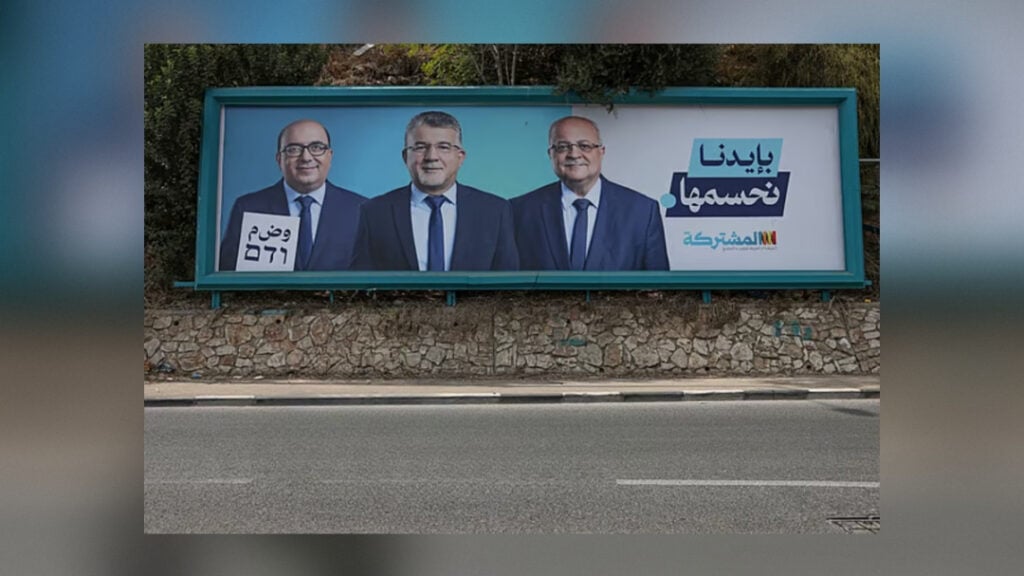
Tibi is a member of Israel’s parliament, the Knesset, and heads the Joint List parliamentary bloc, which brings together Arab representatives. According to Turkey’s Anadolu Agency, he has offered cooperation to the opposition ‘Change Bloc’ as it seeks to defeat Netanyahu’s government and establish a new administration.
The Change Bloc comprises several opposition parties, including Yashar, led by former military chief Gadi Eisenkot; Yesh Atid, headed by Yair Lapid; the Democrats, led by Yair Golan; Naftali Bennett’s Beyachad; and Avigdor Lieberman’s Yisrael Beiteinu. The alliance aims to challenge Netanyahu’s political dominance and assemble sufficient parliamentary support to form a government.
In a written statement obtained by Anadolu Agency, Tibi described the strong participation of Arab citizens in the election as a historic achievement for the Joint List. He said the movement had responded to public calls for unity and demonstrated that Arab political parties were a significant force in Israeli politics.
“Without them, no change is possible,” Tibi said, emphasising the importance of Arab representation in any effort to replace the current government.
He added that the Joint List was extending a hand of cooperation to the Change Bloc to remove Netanyahu and National Security Minister Itamar Ben-Gvir from power. According to Tibi, the process would begin with an effort to remove Knesset Speaker Amir Ohana from his position.
A video released by Tibi’s office showed him addressing supporters of the Joint List at a gathering in the Israeli city of Tayibe early on Wednesday. During the speech, he alleged that attempts had been made to disrupt voting by cutting electricity at polling stations and obstructing voters. Despite these difficulties, he claimed, his supporters had made their voices heard most strongly.
Tibi also delivered a sharp rebuke to Ben-Gvir, declaring that his tenure as national security minister was nearing its end. His remarks reflected the broader opposition to the government’s hardline policies among sections of Israel’s Arab population.
Election results leave Netanyahu short of a majority
With approximately 90 per cent of the votes counted, Israeli media projections indicated that Netanyahu’s coalition could secure 53 seats in the 120-member Knesset. That would leave it eight seats short of the 61 required for a parliamentary majority.
According to a report by The Times of Israel, citing figures from the Central Elections Committee, the opposition alliance led by Eisenkot was projected to win 48 seats. Parties representing predominantly Arab voters were expected to secure a combined 19 seats.
Of those seats, the Joint List was projected to win 12, while the United Arab List, also known as Ra’am, was expected to take seven.
The figures suggest that Arab parties could play a decisive role in determining the next government. Although their combined projected total would not automatically guarantee an opposition majority, their support could prove crucial in parliamentary negotiations.
Under Israel’s parliamentary system, a government needs the support of at least 61 members of the 120-seat Knesset. When no political bloc reaches that threshold independently, parties must negotiate alliances or secure support from other lawmakers to establish a governing majority.
The opposition’s challenge, therefore, extends beyond defeating Netanyahu’s coalition at the ballot box. It must also reach an agreement on cooperation among parties with different political priorities and secure enough parliamentary backing to sustain an alternative administration.
Tibi’s proposal signals a willingness to pursue that strategy, although the precise terms of any agreement between the Joint List and the Change Bloc remain unclear.
Why Arab voters matter in Israeli politics
Most Arab citizens of Israel are descendants of Palestinians who remained in their homes and communities during the 1948 war surrounding the establishment of the state of Israel. According to a report by The New York Times, many members of this population now live in predominantly Arab towns and communities, often separate from Jewish-majority areas.
Arab citizens have long raised concerns about discrimination, violence and unequal access to housing and other resources. Questions surrounding Israel’s identity as a Jewish state have also contributed to political divisions within the Arab community.
For decades, these concerns have influenced electoral participation. Many Arab voters have abstained from elections at various times, reflecting dissatisfaction with political representation and government policies.
In the days leading up to the latest vote, some Arab voters expressed anger over Netanyahu’s approach towards Palestinians in the occupied West Bank and Gaza. They also voiced concerns that Palestinians within Israel were treated as second-class citizens, attributing this perception to government policies and broader social inequalities.
Netanyahu’s election campaign also drew criticism over what opponents described as the use of anti-Arab rhetoric to mobilise support among Jewish voters.
Against this background, the reported record turnout among Arab voters on Tuesday represented a significant development. Greater participation appears to have contributed to the projected gains made by Arab political parties, giving their representatives greater potential influence over the formation of the next government.
For the opposition, cooperation with these parties could provide a route towards securing the parliamentary numbers needed to challenge Netanyahu. However, political and ideological differences between Arab representatives and some opposition parties could complicate negotiations.
The extent to which the two sides can agree on shared priorities will be central to determining whether the electoral gains translate into a change of government.
Gadi Eisenkot’s rise as an opposition figure
Former Israeli military chief Gadi Eisenkot has emerged as a leading figure in the opposition campaign. He heads the Yashar Party and plays a central role in the Change Bloc’s efforts to challenge Netanyahu’s leadership.
Eisenkot comes from a Mizrahi-Moroccan background. The distinction between Jews of European ancestry and those whose families originated in the Middle East and North Africa has long been a feature of Israel’s social and political history. Many Mizrahi voters have traditionally supported Netanyahu’s Likud Party, making Eisenkot’s background a potentially significant factor in the opposition’s political appeal.
The 66-year-old is the son of a family that emigrated from Morocco. He grew up in Tiberias and Eilat, areas outside Israel’s principal centres of political power. Netanyahu, by contrast, grew up in a more politically connected environment associated with Jerusalem’s influential circles.
Eisenkot rose through the military ranks during Netanyahu’s time in office and eventually became one of Israel’s most senior military commanders. His experience in the armed forces has helped establish his public profile, particularly on questions of national security and military strategy.
Following the Hamas-led attack on Israel on 7 October 2023, Eisenkot joined Netanyahu’s emergency wartime cabinet. However, he left the cabinet in June 2024, citing the absence of a clear strategy for the period after the war in Gaza.
His departure marked a significant break with the government at a time when questions over the war’s objectives, the future of Gaza and Israel’s long-term security were becoming increasingly contentious.
The conflict has also brought profound personal loss to Eisenkot’s family. His 25-year-old son, Gal, was killed while fighting in Gaza in December 2023, approximately two months after the war began. Two of his nephews were also killed in the conflict.
His son’s death is widely regarded as one of the experiences that contributed to Eisenkot’s deeper involvement in active politics and his determination to influence Israel’s future direction.
In an article published by Yedioth Ahronoth in April 2026, Eisenkot recalled making a promise beside his son’s grave. He wrote that he had vowed not to allow the sacrifice made by Gal and his comrades to be in vain.
That personal tragedy, combined with his military background and criticism of the government’s post-war planning, has become part of his political identity as he seeks to lead an alternative to Netanyahu.
A potential turning point for Israel’s political landscape
The projected election results have placed Arab political parties in a potentially influential position. If Netanyahu’s coalition falls short of a parliamentary majority, the Joint List and other Arab-led parties could become important partners in negotiations over the formation of a new government.
Tibi’s offer of cooperation indicates that at least some Arab representatives are prepared to engage with the broader opposition in pursuit of political change. His proposal also reflects the increased significance of Arab voter participation in an election where the distribution of seats could determine the country’s next administration.
Yet replacing Netanyahu will require more than a common desire to defeat his coalition. The opposition will need to reconcile differences among its constituent parties, agree on parliamentary priorities and secure reliable support from enough lawmakers to reach the 61-seat threshold.
For now, Tibi’s statement marks an important political signal rather than a completed agreement. Whether it leads to a viable governing alliance will depend on the final distribution of seats and the willingness of the opposition and Arab parties to turn their shared objective into a workable parliamentary arrangement.