The development was reported by Anadolu Agency on Wednesday, 4 November, citing a statement published by Iran’s state-run news agency IRNA.
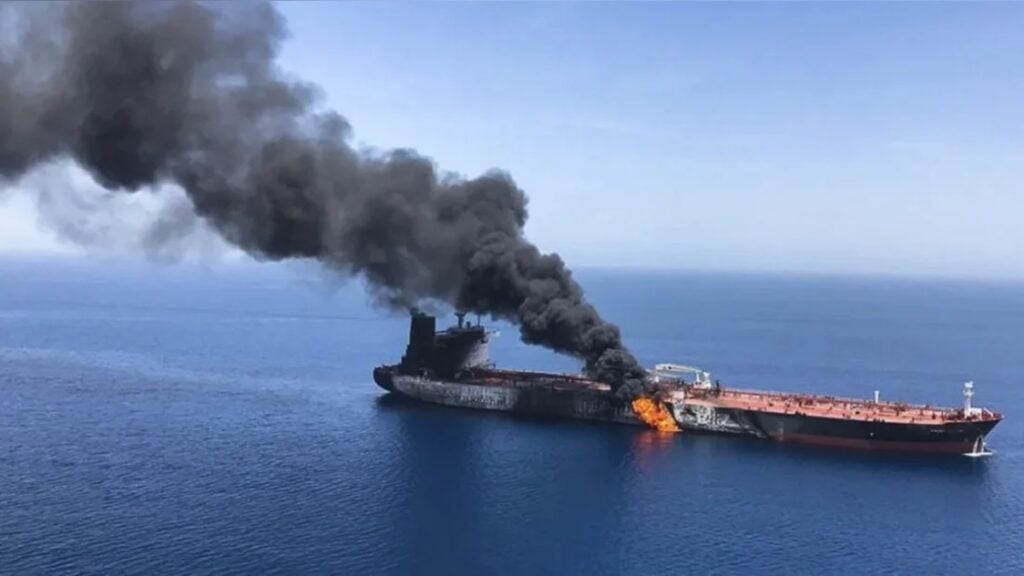
According to the IRGC, the four oil tankers were attempting to navigate through a restricted maritime route when they struck naval mines. The resulting explosions reportedly caused the vessels to catch fire. The Iranian military also said it had detained two additional vessels for allegedly violating maritime restrictions.
However, the statement did not identify the tankers, disclose their countries of registration or provide details about the number of crew members on board. There was also no immediate independent confirmation of the reported destruction or information about possible casualties.
In a separate claim, the IRGC said its air defence forces had shot down a US-made MQ-9 Reaper drone over the Strait of Hormuz at approximately 4.30am local time. Iranian authorities described the incident as the 56th aircraft of this category to have been brought down by their forces.
The IRGC said its naval and aerospace divisions had jointly carried out the operations, describing them as a major blow against what it called enemy forces. The statement also contained a strong warning against the United States and Israel, declaring that Iranian forces were prepared to deliver what it described as a ‘final blow’ to both countries.
The latest claims emerged as diplomatic efforts continued to ease tensions between Washington and Tehran, with Qatar maintaining its role as an intermediary. The situation in the Strait of Hormuz has become increasingly sensitive amid disputes over the US naval blockade and the conditions governing maritime movement through the waterway.
On Monday, Iran said communications with the United States were still taking place through intermediaries. Tehran also maintained that reopening the strategic waterway depended on Washington ending its naval blockade.
The Strait of Hormuz is one of the world’s most important maritime routes for energy supplies. It connects the Persian Gulf with the Gulf of Oman and the Arabian Sea, providing a crucial passage for oil and liquefied natural gas shipments from major energy-producing countries in the Gulf region to international markets.
Any disruption to shipping through the strait can have consequences well beyond the Middle East. Restrictions on vessel movements, military confrontations or attacks on commercial shipping could affect global oil supplies, increase transportation and insurance costs, and create volatility in international energy markets. Countries heavily dependent on imported energy are particularly vulnerable to prolonged disruptions.
The latest confrontation follows a series of military exchanges between Iran and the US-Israeli alliance earlier this year. On 28 February, the United States and Israel launched attacks against Iran, prompting Tehran to retaliate against Israeli targets and US assets in the region. The confrontation continued until a ceasefire was reached in April.
Diplomatic efforts subsequently focused on restoring freedom of navigation through the Strait of Hormuz. On 18 June, Washington and Tehran signed a memorandum of understanding concerning maritime movement through the waterway. However, disagreements over security arrangements prevented the agreement from being fully implemented.
The continuing dispute has left the strategic passage at the centre of wider regional tensions. While diplomatic communication has not completely broken down, differences over the naval blockade, maritime restrictions and security guarantees remain significant obstacles.
Iran’s latest announcement, particularly its claims concerning the destruction of four oil tankers and the downing of a US drone, could further complicate efforts to stabilise the region. Until independent verification and responses from the other parties become available, the full circumstances surrounding the reported incidents remain unclear.