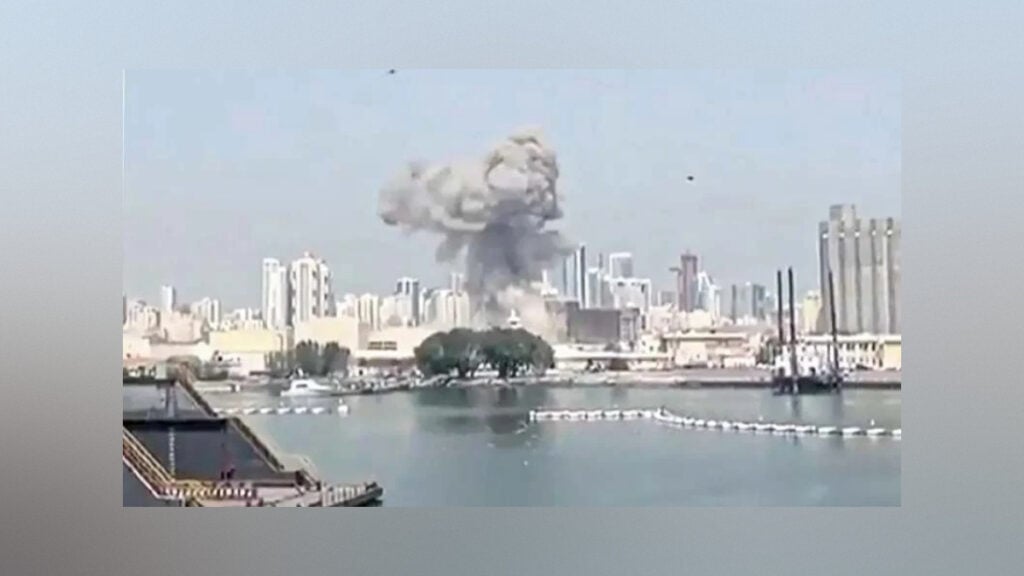
Iran has launched an attack targeting a United States early-warning radar installation in Bahrain in retaliation for a strike on the southern Iranian city of Sirik. The Islamic Revolutionary Guard Corps (IRGC) has claimed responsibility for the operation, warning that further military action could follow if American activities in the Strait of Hormuz continue.
According to Al Jazeera, Iran’s semi-official Tasnim News Agency reported the attack, citing the IRGC. The Iranian military organisation said the strike on the radar facility was a response to an earlier attack on a telecommunications tower in Sirik, located in Hormozgan Province in southern Iran.
The IRGC described its action as a response to what it considers provocative American activities in and around the strategically important Strait of Hormuz. It also accused the opposing side of engaging in aerial provocations and oil smuggling in the region.
In a statement, the organisation warned that its aerospace force was prepared to respond without restrictions if similar activities continued. The warning suggests that Tehran is prepared to maintain military pressure over developments in the vital maritime corridor, although the precise nature of any further action was not specified.
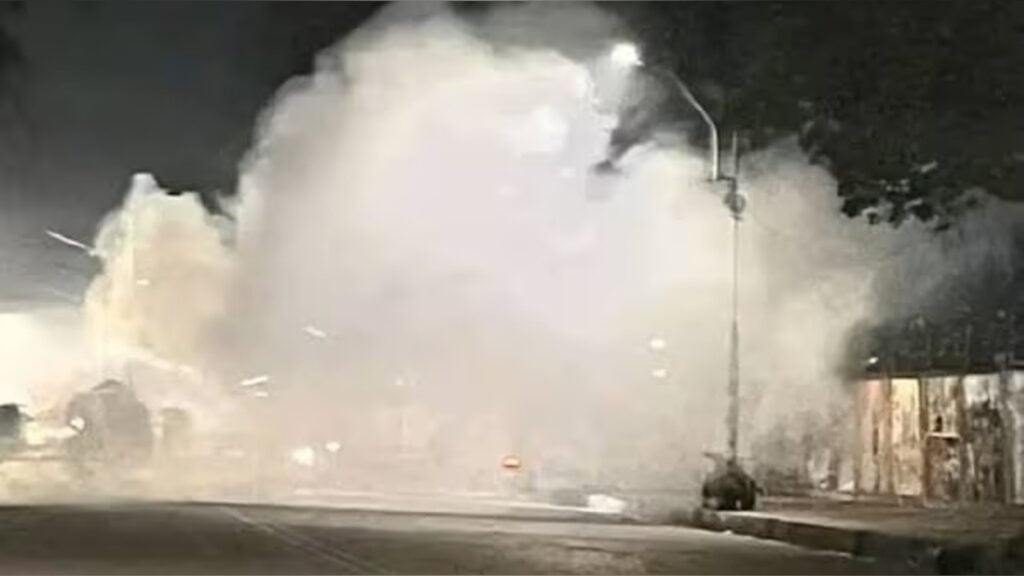
The latest escalation follows reports of explosions in Sirik late on Thursday night. Iran’s state news agency IRNA reported that the southern port city had come under an attack by what it described as an ‘enemy’ force. Several explosions were reportedly heard in the area.
However, the Iranian authorities did not immediately identify those responsible for the incident. Details about the extent of the damage, possible casualties and the facilities affected were also unavailable at the time of the initial reports.
The subsequent Iranian strike in Bahrain has raised fresh concerns about the potential expansion of military tensions beyond Iran’s borders. Bahrain is an important location for the United States’ military presence in the Gulf region, making any attack on an American military installation there particularly significant.
The radar facility targeted in the reported operation is described as an early-warning installation. Such systems play an important role in detecting potential aerial threats and providing advance information to military defence networks. However, there has been no confirmed information about the extent of the damage to the installation or whether its operational capabilities have been affected.
The developments have also unsettled international energy markets. According to Reuters, crude oil prices rose following reports of the attacks and growing concerns over regional security. Brent crude increased by 3 per cent, while the US benchmark West Texas Intermediate (WTI) climbed by 2.36 per cent.
The Strait of Hormuz is one of the world’s most important maritime energy routes. Situated between Iran and Oman, it connects the Persian Gulf with the Gulf of Oman and provides a vital passage for international oil and gas shipments. A significant proportion of the crude oil transported by sea worldwide passes through this narrow waterway.
Its strategic importance means that even the threat of military confrontation can influence global energy prices. Any disruption to shipping movements could affect supplies, increase transportation costs and create uncertainty across international markets.
Sirik itself occupies a strategically sensitive position along Iran’s southern coastline, east of the Strait of Hormuz. Its location near this major shipping corridor makes developments in the city particularly relevant to regional maritime security.
With Iran accusing the United States of provocative activities and threatening further retaliation, the latest incident has added another layer of uncertainty to an already sensitive regional situation. The extent of the damage in both Sirik and Bahrain, along with any response from Washington, remains unclear based on the initial reports.