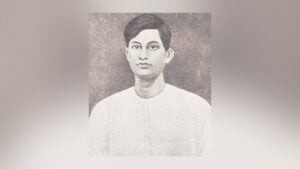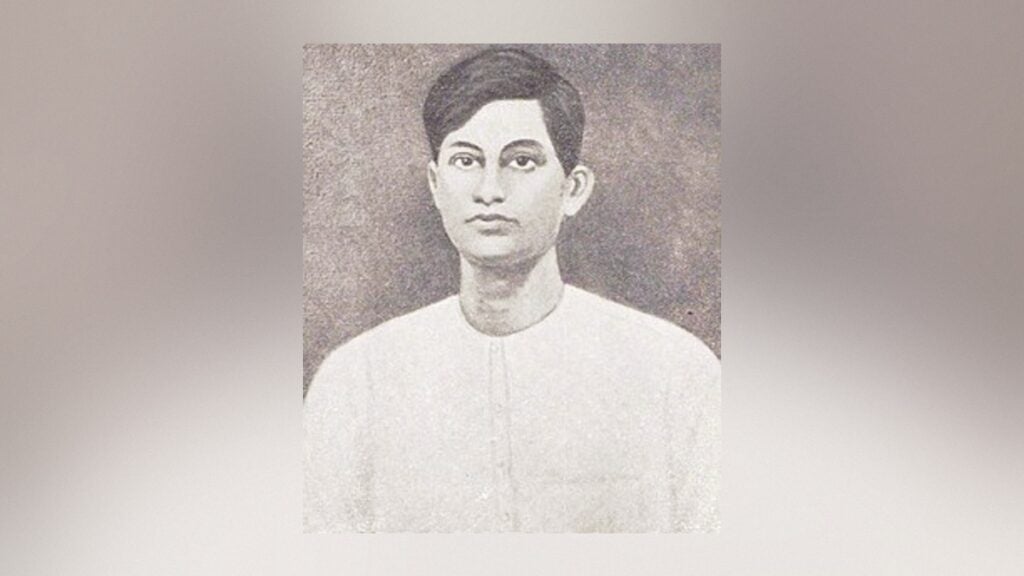
Born in November 1913 in Medinipur, West Bengal, Pradyot Kumar Bhattacharya was the son of Bhavataran Bhattacharya. He completed his entrance examination from Medinipur Hindu School in 1930, securing a first division, before enrolling at Medinipur College. It was during his student years that his sense of patriotism and revolutionary consciousness began to take shape. The suffering inflicted on Indians under British colonial rule deeply influenced his political outlook, strengthening his determination to see the country liberated from foreign domination.
Pradyot subsequently became associated with the Bengal Volunteers, an anti-British revolutionary organisation active in Bengal. His contact with revolutionary Dinesh Gupta further strengthened his commitment to the armed struggle against British rule.
The brutality of the colonial administration played a significant role in shaping his revolutionary convictions. One particularly disturbing incident was the police firing at Hijli Detention Camp in Medinipur on 16 September 1931. British police opened fire on unarmed political prisoners, killing two young revolutionaries, Tarakeswar Sengupta and Santosh Mitra. The killings provoked widespread anger among nationalists and left a deep impression on Pradyot. The incident further intensified his determination to resist colonial oppression.
The Douglas assassination operation
On 30 April 1932, a meeting of the Medinipur District Board was taking place under the chairmanship of British District Magistrate Robert Douglas. The meeting was held under tight security, reflecting the tense political atmosphere and growing resistance to British administration.
Two young revolutionaries, Pradyot Kumar Bhattacharya and Prabhangshu Sekhar Pal, entered the meeting venue with the intention of assassinating Douglas. They carried out their plan and opened fire on the British magistrate, who sustained serious injuries and subsequently died.
Following the shooting, both revolutionaries attempted to escape. Prabhangshu Sekhar Pal managed to get away, but Pradyot was apprehended by the authorities.
Historical accounts contain an important distinction regarding the shooting. Medical evidence reportedly indicated that the fatal bullet had not been fired from Pradyot’s weapon. Instead, it was Prabhangshu’s shot that proved fatal to Douglas. Nevertheless, Pradyot was charged in connection with the operation and faced trial for his participation in the assassination plot.
His arrest marked the beginning of a difficult period of interrogation and imprisonment.
Torture failed to break his silence
Following his arrest, British police subjected Pradyot to severe interrogation and physical torture in an attempt to extract information about his fellow revolutionary, Prabhangshu Sekhar Pal, and other members of the organisation.
The authorities wanted to uncover the network behind the attack and identify those involved in the revolutionary activities. Pradyot, however, remained steadfast. Despite the pressure and suffering inflicted upon him, he refused to disclose his companion’s identity or provide information that could endanger other members of the movement.
His silence was not simply an act of personal defiance. It reflected his deep sense of responsibility towards his fellow revolutionaries and his commitment to protecting the wider organisation. He understood that revealing even a single name could expose others to arrest, imprisonment and execution.
Rather than betray his comrades, he reportedly attempted to mislead the police. His determination remained unshaken, even when he knew that his refusal to cooperate could cost him his life.
On 15 June 1932, a special tribunal sentenced Pradyot to death. The sentence was subsequently upheld by the Calcutta High Court. During the judicial proceedings, one of the judges reportedly favoured life imprisonment instead of capital punishment. However, the majority decision upheld the death sentence.
For the young revolutionary, the legal battle had ended. His execution was now only a matter of time.
A final message of courage to his mother
On 12 January 1933, Pradyot Kumar Bhattacharya was taken to the gallows at Medinipur Central Jail. He was just 19 years old.
His execution brought a tragic end to the life of a young man whose commitment to the independence movement had remained unshaken despite torture, imprisonment and the prospect of death.
One of the most moving aspects of his final days was a letter he wrote to his mother. Rather than expressing fear or regret, he sought to console her. He explained that he was giving his life for an ideal and had no remorse about the sacrifice he was making.
He believed that his death would not bring an end to the dream for which he had struggled. The spirit of freedom, he felt, would continue to live among the young people of Bengal and inspire future generations.
His message to his mother contained words that have since become closely associated with his memory:
“Mother, can your Pradyot ever die? Look around you today. Millions of Pradyots are smiling at you. I shall live on, Mother, forever and undiminished.”
The words reflected an extraordinary sense of conviction. Standing at the threshold of death, he did not see his execution as the end of his existence or the defeat of his ideals. Instead, he believed that his sacrifice would become part of a much larger struggle, carried forward by generations yet to come.
Even in his final moments, Pradyot refused to bow before the colonial authorities. He faced his fate with the same determination that had defined his brief revolutionary life.
A legacy that outlived the gallows
The execution of Pradyot Kumar Bhattacharya was another grim example of the harsh measures employed by the British colonial administration to suppress revolutionary resistance in India. His life was cut short at an age when most young people are only beginning to discover their ambitions and opportunities.
Yet his story remains significant not merely because he participated in an armed operation against British rule, but also because of the extraordinary loyalty he demonstrated towards his fellow revolutionaries.
The freedom movement in Bengal was shaped by numerous young men and women who challenged colonial authority through different forms of resistance. Some organised political campaigns, others took part in underground revolutionary activities, while many endured imprisonment and persecution for their beliefs. Their experiences formed an important chapter in India’s long struggle for independence.
Pradyot’s sacrifice represents one of the most striking examples of personal commitment within that history. His refusal to reveal his comrade’s identity, even under extreme pressure, demonstrated how strongly he valued solidarity and trust among those fighting for a common cause.
His final letter to his mother also offers an insight into the emotional strength behind his revolutionary convictions. Despite knowing that he would never return home, he attempted to replace his mother’s grief with hope, assuring her that the ideals for which he had sacrificed his life would survive.
For today’s generation, his story serves as a reminder of the courage, conviction and sacrifices associated with the struggle against colonial rule. His life also raises an enduring question about the price paid by countless young people whose dreams of freedom were never fulfilled in their own lifetimes.
The British colonial administration could take Pradyot Kumar Bhattacharya’s life, but it could not erase the ideals for which he stood. His name remains part of Bengal’s revolutionary heritage, remembered for his patriotism, extraordinary courage and unwavering loyalty to his fellow freedom fighters.
On the occasion of his remembrance, profound respect and revolutionary salutes are offered to Pradyot Kumar Bhattacharya, the young patriot who faced the gallows without betraying his comrades.