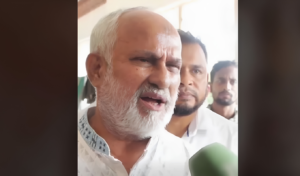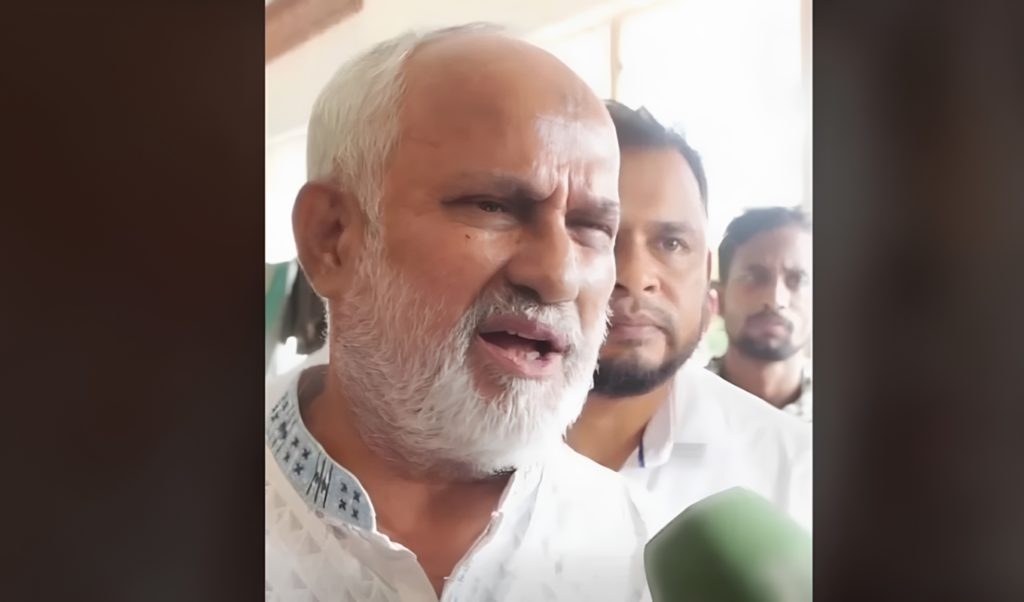
Nazrul Islam Manju, Administrator of the Khulna City Corporation (KCC) and former president of the Khulna Metropolitan unit of the Bangladesh Nationalist Party (BNP), has voiced grave alarm over the sharp deterioration of law and order across the southern city. Speaking on Friday while offering condolences to the bereaved family of slain BNP leader Zakir Hossain, Manju alleged that a climate of “silent extortion” has taken hold of Khulna, forcing terrified residents and traders to hand over crores of taka without daring to speak out.
Manju’s remarks came in the immediate aftermath of Zakir Hossain’s brutal murder. Around 10:30 pm on the night of 12 November, Zakir—son of Jalil Sheikh of Swalpabahirdia village—was sitting at Hirak’s shop in his home village when helmeted assailants arrived on motorcycles, opened fire on him, and sped away. Local residents rushed the critically wounded leader to the upazila health complex, where on-duty doctors pronounced him dead.
Addressing locals during his visit, the KCC administrator painted a grim picture of insecurity across the metropolis. Despite repeated expressions of concern from senior political figures, he noted, law enforcement agencies have struggled to take decisive action against escalating murders, armed attacks, vandalism, arson, and extortion. “Khulna is now submerged in terror,” Manju said, warning that a handful of criminal gangs have effectively held the city’s 1.4 million residents hostage. To break this stranglehold, he called for an immediate, sweeping crackdown by joint forces—and even the imposition of a curfew, if necessary—to arrest the perpetrators and dismantle narcotics networks.
According to Manju, armed groups are openly committing murder, running drug markets, and collecting protection money, while anyone who dares to protest is swiftly gunned down. He revealed that eight to ten activists from the BNP and its associate organisations have already been killed by these syndicates. Warning that neither ordinary citizens nor urban development can survive under such conditions, he described Khulna as a city shrouded in darkness. Many businesspeople have already fled the area, while those who remain are paralysed by fear. Victims are afraid to approach authorities, knowing that if word of a complaint leaks out, they risk being shot dead. “Everyone is paying extortion money, yet nobody opens their mouth,” he observed, adding that five to six organised gangs are extracting lakhs and crores of taka by holding citizens to ransom.
To end the crisis, Manju urged the Prime Minister to intervene directly by forming a unified joint force drawn from all security agencies to hunt down the criminals. He suggested reviving the anti-terrorism model implemented during the tenure of former Prime Minister Begum Khaleda Zia, a proposal he had previously raised at a press conference. Under that approach, 150 police camps were established across the Khulna division alongside the deployment of special intelligence operatives for intensive surveillance.
Touching upon the sensitive issue of extrajudicial killings, Manju remarked that “crossfire” is inhumane and has rightly been halted by the current administration. Because the practice was abused during the Awami League regime, no popular government wishes to resort to it. Still, pointing to the applause from the gathered crowd during his speech, he noted that public frustration makes stern measures appear widely popular in times of acute crisis. Insisting that the region must be cleansed of criminal elements at any cost, Manju stressed that the Prime Minister’s pledge to build a safe city for the public must be fulfilled without delay.