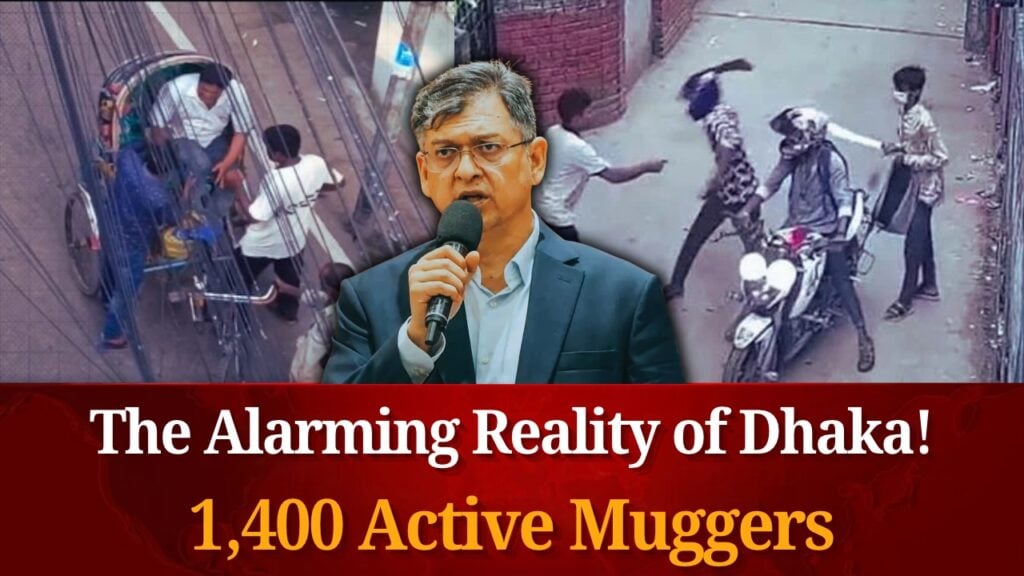
While the Home Minister maintains that the country’s law and order situation is entirely under control, the daily reality on the streets of Dhaka tells a starkly different story. Across the capital, brazen muggings at gunpoint and knifepoint have become an alarming routine. From pedestrians on busy footpaths to passengers inside public buses, virtually no one feels safe.
Mugging is no longer an isolated nuisance; it has evolved into a persistent source of terror for city dwellers. Commuters travelling in rickshaws, private cars, or public transport are routinely targeted, robbed of their cash, mobile phones, and valuables in broad daylight. In several instances, criminals have struck on congested thoroughfares and even within sight of law enforcement personnel. Consequently, residents are increasingly reluctant to venture out not only after dusk, but also during peak daytime hours.
Behind this wave of street crime lies an organised network rather than a handful of opportunistic offenders. Official records indicate that more than 1,400 listed muggers are currently active across Dhaka. Police data further identifies at least 400 crime-prone hotspots spread across the jurisdiction of 50 police stations. While the Wari division accounts for the highest concentration of listed offenders, the highest frequency of mugging incidents is being reported in the Mirpur, Tejgaon, and Uttara areas.
The gravity of the security crisis extends well beyond financial loss. Over the past four months alone, 78 people have been killed in Dhaka in incidents linked to muggings and other violent crimes. The threat to human life has sparked widespread anxiety among ordinary citizens, raising urgent questions about the efficacy of urban policing and preventive patrols.
Broader acts of violence have compounded this sense of vulnerability. Incidents involving crude bomb explosions, arson attacks on public transport, and even an assault on the residence of a Member of Parliament have rattled public confidence. Such brazenness has left many residents wondering who will guarantee their basic safety when offenders appear to operate with impunity.
A widening gulf now separates parliamentary assurances from street-level reality. Law enforcement agencies possess detailed lists of habitual offenders and have already mapped the capital’s major crime hotspots. Yet the violence persists. For the citizens of Dhaka, true stability will not be measured by official statements, but by the restoration of safety in their everyday lives.