Four senior Awami League leaders currently residing in Kolkata are scheduled to inspect the Petrapole-Benapole border checkpoint in Bongaon on Sunday, intensifying speculation over how and when Sheikh Hasina plans to return to Bangladesh. Hasina has announced her intention to return home next month, though the party has yet to release official details regarding her itinerary or mode of travel.
Within political circles, attention has centred on several symbolic dates in December. Many observers suggest she may attempt to cross back on 10 December to coincide with International Human Rights Day. Others point to 14 December, just two days ahead of Bangladesh’s Victory Day on 16 December, as another plausible window. While returning by air has not been ruled out, multiple sources indicate that a crossing via the land border remains the most likely option.
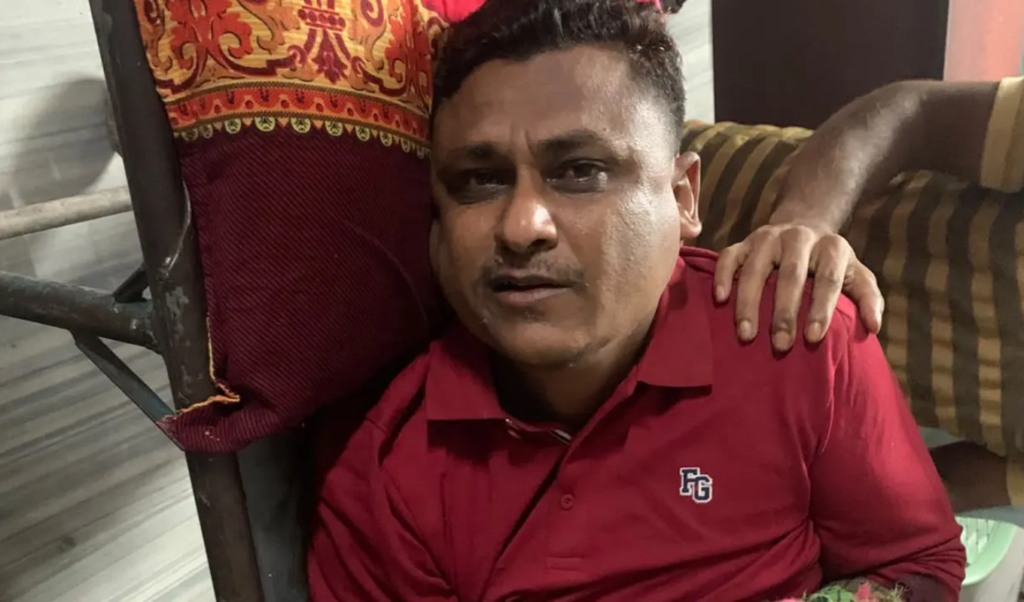
Sunday’s delegation to the Bongaon border post and its adjoining areas comprises two Awami League Presidium members, Jahangir Kabir Nanak and Mofazzal Hossain Maya, alongside Joint General Secretary Bahauddin Nasim and former Member of Parliament Salauddin Nasim. According to party insiders, the four leaders will spend three to four days assessing the situation along the Petrapole-Benapole frontier before travelling onward to Agartala.
Alongside this border assessment, the party has launched a coordinated diplomatic outreach. On Saturday, following a pre-announced programme, the Awami League submitted a comprehensive report to foreign ambassadors and high commissioners stationed in Dhaka, as well as to Bangladeshi embassies and high commissions across the globe. The dossier outlines ongoing unrest in the country and details what the party describes as systematic repression against its leadership and grassroots activists.
Compiled by Awami League Information and Research Secretary and former MP Salim Mahmud, the report puts forward 13 specific appeals to the international community:
-
Urgently draw public and diplomatic attention to escalating political violence, arson, intimidation, the destruction of residential property, and alleged attacks on religious minorities across Bangladesh.
-
Express concern over the Prime Minister’s public remarks labelling the Awami League a terrorist organisation and calling for the destruction of its political resurgence, while urging the government to refrain from rhetoric that could legitimise political persecution or incite hostility and violence against an entire political community.
-
Take note of the Speaker’s statements regarding alleged “anti-state forces” conspiring to instigate a civil war, seek clarification on the political context and motivated implications of those remarks, and urge the Speaker to uphold the impartiality and institutional balance required by the office by avoiding language that stigmatises any political group or deepens hostility against it.
-
Call upon the government to safeguard the lives and security of all citizens—including Awami League leaders, activists, supporters, former elected representatives, and their families—regardless of political affiliation.
-
Demand an independent, impartial, and credible investigation into reported attacks in Narail, specifically verifying information received by the Bangladesh Awami League concerning attacks or arson targeting approximately 200 homes and residential structures.
-
Ensure a targeted and urgent inquiry into allegations of attacks on the homes of Hindu families and members of other religious minority communities, alongside effective measures to protect these groups from future violence.
-
Investigate all allegations of physical and sexual violence, particularly those committed against women and children, while protecting the identity, privacy, and dignity of victims and witnesses.
-
Hold accountable all perpetrators and instigators involved in murder, arson, looting, physical assaults, sexual violence, intimidation, and property destruction, taking legal action against everyone who may have organised, directed, encouraged, financed, or assisted such acts.
-
Demand an end to provocative political rhetoric and incitement to violence, urging all public officials and political leaders to respect political pluralism, human dignity, and the fundamental rights of every citizen.
-
Investigate allegations of state censorship and interference in mainstream media, including purported official directives barring coverage of the Narail attacks and an alleged delay of nearly ten hours before mainstream outlets began reporting the incidents.
-
Guarantee the safety of journalists, editors, and media houses, ensuring they can report independently without intimidation, censorship, or prior political clearance.
-
Encourage relevant United Nations human rights bodies and international institutions to monitor, document, and independently evaluate the situation in Bangladesh by establishing direct contact with victims, affected communities, journalists, human rights defenders, and other credible sources.
-
Uphold political pluralism, democratic participation, freedom of expression, and the rule of law, making clear that no political party or group should face collective punishment or be stripped of its fundamental rights through violence or intimidation.

In its broader assessment, the report warns that recent statements by the Prime Minister and the Speaker raise serious questions about the use of the highest offices of state amidst deepening political polarisation. Protecting the dignity and neutrality of Parliament is a constitutional obligation of the Speaker, the document notes, stressing that the legislature must serve as a forum for democratic representation and political pluralism rather than appearing to wield its authority against a particular political constituency. No democratic society can secure its future by treating an entire political party and its millions of supporters as enemies to be eliminated or as a population subject to collective punishment.
The submission highlights the reported assaults on roughly 200 residences and Hindu households in Narail, alongside similar disturbances in Pabna and other districts, as clear evidence of the need for immediate civilian protection. Equal concern is directed at alleged government pressure on mainstream news outlets. According to the report, the ten-hour delay in broadcasting news of the Narail violence left both the domestic public and international observers with an incomplete picture, demonstrating why independent verification and direct engagement with alternative sources are vital.
Concluding its appeal to foreign envoys and international bodies, the party states that its submission seeks no special political privileges, but rather the protection of human life, dignity, fundamental freedoms, minority rights, political pluralism, and the rule of law. Every Bangladeshi citizen, irrespective of political belief or affiliation, holds the right to live free from the threat of violence, persecution, or collective reprisal. Silence in the face of severe human rights violations risks emboldening perpetrators and prolonging the suffering of innocent civilians, making principled international attention, independent monitoring, and timely diplomatic engagement an urgent necessity.