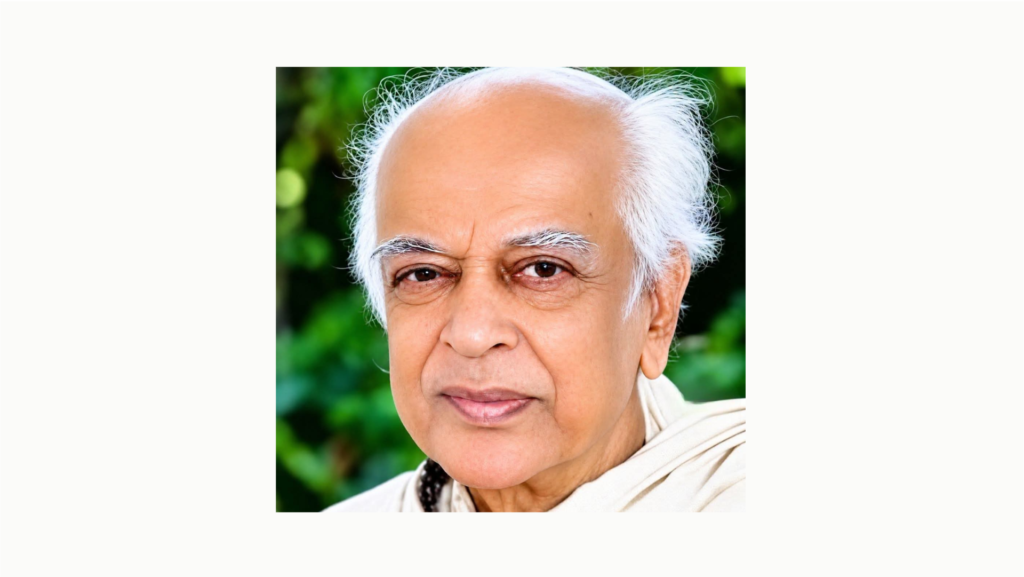
For him, architecture was never merely the technical process of constructing buildings with bricks, cement, sand and stone. He viewed it as a creative discipline deeply connected with human life, society, culture, nature and history. His architectural philosophy sought to express the character of Bangladesh through contemporary design, drawing inspiration from the country’s natural surroundings, tropical climate, light, air and the everyday experiences of its people.
Islam was also a pioneering figure in the institutional development of the architectural profession in Bangladesh. He served as the first president of the Institute of Architects Bangladesh (IAB) and played a significant role in establishing architecture as a recognised professional discipline. He was directly involved in the Liberation War and remained committed throughout his life to secularism, progressive thought, cultural freedom and democratic movements.
Education and professional journey
Mazharul Islam was born on 25 December 1923 in Murshidabad, in undivided Bengal. His father, Omdatul Islam, was a mathematics teacher at Krishnagar College.
He spent much of his childhood and formative educational years in Rajshahi. After studying at Rajshahi Collegiate School and Rajshahi College, he graduated in physics from the University of Calcutta in 1942. He subsequently earned an engineering degree from Shibpur Engineering College in 1946.
Driven by a deep interest in architecture, he travelled to the United States in 1950 on a scholarship to study at the University of Oregon. He completed his degree in architecture in 1952 and returned to the country, bringing with him modern architectural ideas that would later influence the development of architecture in Bangladesh.
One of his earliest major architectural projects was the design of the Institute of Fine Arts at the University of Dhaka. Constructed between 1953 and 1955, the building became a landmark in the country’s architectural history and is widely regarded as one of the defining examples of modern architecture in Bangladesh. During the same period, he also designed the old building of the university’s central library.
In 1956, he received a British Council scholarship to pursue advanced studies in tropical architecture at the Architectural Association School of Architecture in London. He later completed an advanced architectural degree at Yale University in the United States in 1961, studying under renowned architect Paul Rudolph.
From 1958 to 1964, Islam served as the senior architect of the then East Pakistan government. Differences with the conventional structure of government employment eventually led him to leave the position in 1964. He subsequently established the architectural consultancy firm Bastukalabid with engineer Sheikh Muhammad Shahidullah. The firm played an important role in the growth of professional architectural practice in the country.
Architectural works and distinctive contributions
The defining characteristic of Mazharul Islam’s architecture was his ability to combine modern design with local traditions, natural surroundings and climatic conditions. He believed that architecture in Bangladesh should reflect the lifestyles, culture, environment and geographical realities of its people rather than simply imitate foreign architectural styles.
His designs demonstrated an understanding of the tropical climate, incorporating considerations of natural light, ventilation, shade and the relationship between buildings and their surroundings. His approach helped establish a distinctive architectural language that was both modern and rooted in the country’s identity.
Among his significant contributions were architectural plans for major national institutions, including the National Library and National Archives. His work also extended to the designs of polytechnic institutes in Bogura, Pabna, Rangpur, Barishal and Sylhet, as well as residential planning for the limestone and cement industries in Joypurhat.
His influence extended beyond his own architectural projects. Islam played a crucial role in bringing internationally renowned American architect Louis I Kahn into the project to design Bangladesh’s National Parliament complex. His initiative and vision helped create opportunities for internationally recognised architects to contribute to the country’s architectural development.
Kahn’s Parliament complex subsequently became one of the most celebrated architectural landmarks in Bangladesh, reflecting the country’s aspirations for a modern national identity.
Liberation War, culture and progressive ideals
Mazharul Islam’s contributions were not confined to architecture. He was a progressive intellectual, socially conscious citizen and active participant in cultural movements.
From his student years, he maintained a strong interest in politics, society and culture. Marxist philosophy, Bengali cultural heritage and secular humanist ideals significantly influenced his intellectual outlook and social commitment.
During the Liberation War, he actively supported Bangladesh’s independence. His involvement extended to the broader effort to shape the identity of the newly independent nation. His name is also associated with the design of Bangladesh’s national emblem.
He regarded architecture as a powerful instrument of social transformation. He advocated improved living standards, planned urban development, environmental preservation and a society free from inequality. His ideas reflected a belief that architecture should serve the wider public rather than remain limited to the interests of privileged groups.
Islam also made significant contributions to the institutional development of architectural education in Bangladesh. From initiatives to establish educational institutions to expanding architectural studies at Bangladesh University of Engineering and Technology (BUET), he worked tirelessly to strengthen the discipline and secure its professional recognition.
He was also associated with the establishment of Chhayanot, an architectural research organisation dedicated to research, cultural understanding and the preservation of local architectural heritage.
Awards and recognition
Mazharul Islam received numerous national and international honours in recognition of his outstanding contributions to architecture.
Among the notable distinctions were special recognition from the West Bengal chapter of the Indian Institute of Architects in 1989, the gold medal of the Institute of Architects Bangladesh in 1993, and the Independence Award, Bangladesh’s highest civilian honour, in 1999.
In the same year, he received an honorary fellowship from the American Institute of Architects and a Grand Master honour for his contributions to South Asian architecture.
His architectural legacy has also received international recognition. In 2023, Bangladesh proposed a selection of his architectural works for inclusion on UNESCO’s Tentative List of World Heritage Sites, highlighting their cultural and architectural significance.
Final years and enduring legacy
Mazharul Islam died at United Hospital in Dhaka at the age of 88, on the night of 14 July 2012. Some biographical accounts record his date of death as 15 July, while contemporary reports stated that he passed away at 12.06am on 14 July.
His legacy extends far beyond the buildings he designed. He helped create a distinct identity for modern architecture in Bangladesh, one that embraced international ideas without abandoning local roots. His work brought together Bengali culture, natural beauty, modern architectural thinking and a profound sense of responsibility towards society.
He demonstrated that modernity does not require abandoning one’s roots. Rather, a nation can stand confidently on the international stage by embracing its own history, heritage and cultural identity.
Although he is no longer physically present, his influence remains visible in the Institute of Fine Arts and the university library at Dhaka University, architectural works at Jahangirnagar University and Chittagong University, and numerous other buildings across the country.
The true measure of an architect’s achievement lies not only in the beauty or functionality of the structures they create, but also in the ideas and possibilities they inspire for future generations. By that measure, Mazharul Islam was not merely one of Bangladesh’s greatest architects; he was a defining figure in shaping the nation’s modern architectural consciousness.
He is remembered with profound respect and admiration as one of the great pioneers who helped shape the architectural identity of Bangladesh.