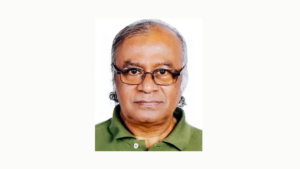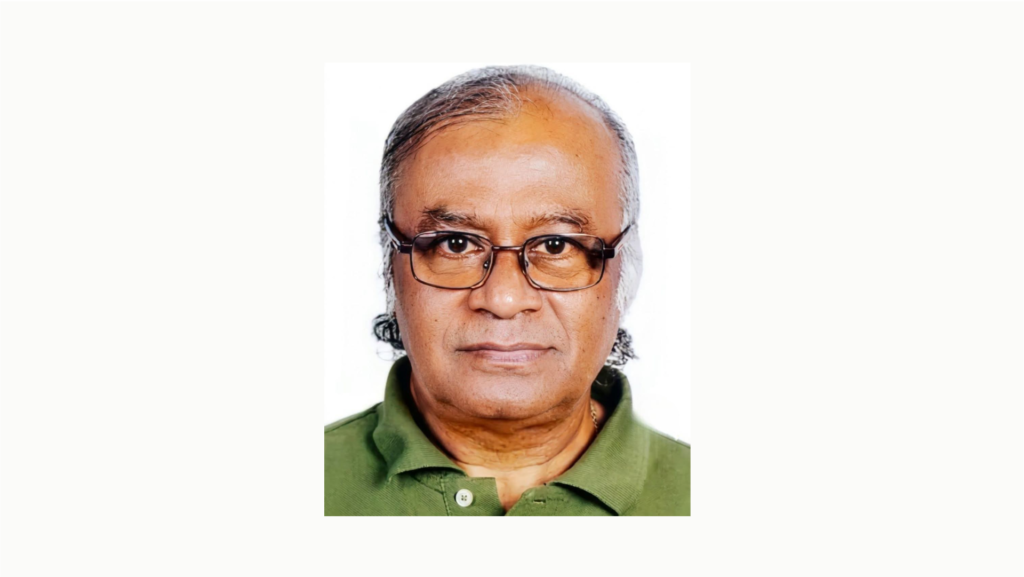
Husain brought together two seemingly different worlds: the physical artistry of architecture and the imaginative depth of literature. For him, architecture was never merely about bricks, sand, cement and concrete. It was an artistic expression of human values, aesthetic sensibilities, history and cultural identity. Similarly, his poetry explored human emotions, social realities, the complexities of contemporary life and the desire for change.
His contributions to literature received national recognition when the Government of Bangladesh awarded him the Ekushey Padak in 2018, one of the country’s most prestigious civilian honours. Earlier, in 2009, he received the Bangla Academy Literary Award for his contribution to poetry. These accolades reflected the significance of his work and his enduring influence on Bangladesh’s intellectual and cultural life.
Early Life and Education
Robiul Husain was born on 31 January 1943 in Ratidanga village, under Shailkupa Upazila in Jhenaidah district. He spent much of his childhood and adolescence in Kushtia, where he completed his secondary and higher secondary education.
His academic interests eventually led him to the East Pakistan University of Engineering and Technology (EPUET), now known as Bangladesh University of Engineering and Technology (BUET). He enrolled in its Department of Architecture and graduated with a degree in architecture in 1968.
His interest in literature and culture developed alongside his formal education. During the 1960s, his writings began appearing in literary journals and little magazines. He became involved in contemporary literary movements and experimental writing, establishing himself as an emerging literary voice even while pursuing a professional career in architecture.
This early engagement with different creative disciplines would later become a defining feature of his identity. Rather than confining himself to the technical demands of his profession, he continued to explore literature, visual arts and cultural criticism throughout his life.
A Distinctive Contribution to Modern Architecture
After completing his degree, Husain began his professional career as an architect. He became an influential contributor to the development of modern architectural practice in Bangladesh, combining aesthetic considerations with functional requirements and contemporary design principles.
His architectural philosophy reflected an understanding that buildings should serve practical purposes while also contributing to their surroundings and cultural environment. His work demonstrated an interest in spatial organisation, visual harmony and the relationship between structures and the people who use them.
Several important public and institutional buildings across Bangladesh bear the imprint of his creative vision. Among his notable architectural projects are the Bangladesh Agricultural Research Council building, the Liberation and Independence Arch at the University of Dhaka, and the main entrance gate of Jahangirnagar University.
His other significant works include Bhashani Hall, Bangabandhu Hall, Sheikh Hasina Hall, Khaleda Zia Hall and the Wazed Miah Science Complex at Jahangirnagar University. He also contributed to the design of the auditorium and academic building complex at the University of Chittagong.
These structures represent different aspects of institutional and public architecture. They also demonstrate the breadth of his professional engagement, extending from university facilities to prominent public buildings.
His contribution was not limited to individual architectural projects. He played an important role in developing the institutional foundation of the architectural profession in Bangladesh.
Husain was actively involved in the Bangladesh Institute of Architects (IAB) from its early years. He served as the organisation’s first treasurer and subsequently held the position of president on four occasions. His leadership and professional engagement also extended to international architectural organisations, where he took part in initiatives aimed at strengthening the architectural profession.
Through these responsibilities, he helped promote professional standards, encourage collaboration and establish a stronger institutional identity for architects in Bangladesh.
A Poet with a Deep Understanding of Society
Although architecture established his professional reputation, literature remained an equally important part of Husain’s creative life. He was particularly recognised for his poetry, which reflected a sensitive understanding of human psychology, social contradictions and the changing nature of contemporary society.
His poems frequently explored the uncertainties of existence, individual emotions, social injustice, protest and resistance. Rather than treating poetry simply as an expression of personal feelings, he used it as a medium to examine the wider realities of human life.
His literary interests extended well beyond poetry. He also wrote novels, short stories, essays and literature for children and young readers. His published works numbered more than 25, reflecting an extensive and varied literary career.
Some of his notable books include Ki Achhe Ei Andhokarer Gobhire, Aro Unotrish Ti Chand, Sthirbindur Mohon Sankat, Karpurer Danawala Pakhi, Amagno Katakuti Khela, Bishubrekha, Duronto, Kabitapunja, Swapner Sahoshi Manushera, Je Nodi Ratrir, Eishob Neel Opoman, Aprayojoniyo Prabandha, Duronto Kishor, Bangladesher Sthapatya Sanskriti, Nirbachito Kobita and Golpogatha.
The diversity of these publications offers an insight into his intellectual range. His writing was not restricted to literary subjects; he also regularly explored architecture, sculpture, painting, cinema and broader cultural issues.
His book Bangladesher Sthapatya Sanskriti, in particular, reflected his interest in examining architecture within the wider framework of the country’s cultural identity. It demonstrated his ability to connect professional knowledge with historical and artistic perspectives.
As an art critic and cultural commentator, he contributed to discussions that brought different creative disciplines into closer contact. His work helped establish a dialogue between architecture, literature and the visual arts.
Preserving the Memory and History of the Liberation War
One of the most significant aspects of Husain’s public life was his commitment to preserving the history and spirit of Bangladesh’s Liberation War.
He was among the founding trustees of the Liberation War Museum, established in 1996. The institution was created to collect, preserve and display historical documents, photographs, personal belongings, testimonies and other artefacts associated with the country’s struggle for independence.
Husain played an important role in this collective effort to protect the nation’s historical memory and make it accessible to future generations. His involvement reflected a strong belief that the history of the Liberation War should remain an essential part of Bangladesh’s cultural consciousness.
The museum’s work also sought to ensure that younger generations could understand the sacrifices, struggles and experiences that shaped the country’s emergence as an independent state.
He was also associated with the Ekattorer Ghatak Dalal Nirmul Committee, an organisation committed to opposing those responsible for crimes against humanity during the Liberation War and preserving the historical truth of 1971.
His involvement in these initiatives demonstrated that his commitment to culture went beyond artistic expression. He regarded the preservation of national history and collective memory as an important civic responsibility.
Leadership in Literary and Cultural Organisations
Husain maintained close connections with numerous literary, cultural and professional organisations throughout his life. A lifetime member of Bangla Academy, he remained actively involved in initiatives designed to promote literature, artistic expression and cultural awareness.
His organisational associations included the Central Kochi-Kachhar Mela, National Poetry Council, Bangabandhu Sheikh Mujibur Rahman Memorial Museum, Bangladesh Institute of Architects and the International Film Critics Association of Bangladesh.
He also served as president of the National Poetry Council and was associated with the organisation and development of the National Poetry Festival, one of the country’s prominent literary gatherings.
The festival has provided a platform for poets, writers and literary enthusiasts to exchange ideas, present their work and engage with contemporary social and cultural issues. Husain’s involvement reflected his commitment to keeping poetry connected with public life.
His work across different organisations also helped bring together people from diverse professional and creative backgrounds. Architects, poets, writers, artists, filmmakers and cultural activists found common ground through many of the institutions with which he was associated.
This ability to move comfortably between professional and cultural circles was one of his most distinctive qualities.
Final Years and Enduring Legacy
Robiul Husain died in Dhaka on 26 November 2019 at the age of 76 while undergoing medical treatment. His death marked the end of a remarkable life devoted to architecture, literature, artistic exploration and cultural activism.
His passing was a significant loss for Bangladesh’s architectural and literary communities. The country lost an accomplished architect, a thoughtful poet and a dedicated cultural organiser who had contributed to several important areas of national life.
His legacy, however, cannot be measured through a single profession or achievement. The buildings he designed continue to serve public and educational institutions. His books preserve his literary imagination and reflections on society, while his involvement in the Liberation War Museum and other cultural organisations forms an important part of his public contribution.
Husain belonged to a generation of creative individuals who believed that professional excellence and cultural responsibility could complement one another. He demonstrated that an architect could also be a poet, that artistic expression could extend beyond conventional boundaries, and that intellectual engagement could take many different forms.
His architectural creations gave physical shape to spaces where people study, work and gather. His poetry offered another kind of structure: one built through words, emotions and ideas, inviting readers to reflect on life and society.
The significance of his contribution lies in this rare combination of creativity, professional commitment and cultural awareness. He did not remain confined to the boundaries of architecture or literature. Instead, he explored the connections between them and used his talents to contribute to the broader development of Bangladesh’s cultural identity.
People may leave the world, but their creative achievements continue to speak across generations. In the enduring presence of his architectural works, the pages of his books and his efforts to preserve the history of the Liberation War, Robiul Husain remains an important figure in Bangladesh’s cultural heritage.
His life stands as a reminder that creativity is not limited to one discipline and that the most meaningful legacies are often built through a lifetime of diverse contributions.
A heartfelt tribute to the memory of poet and architect Robiul Husain, whose artistic vision enriched both the physical and intellectual landscapes of Bangladesh.