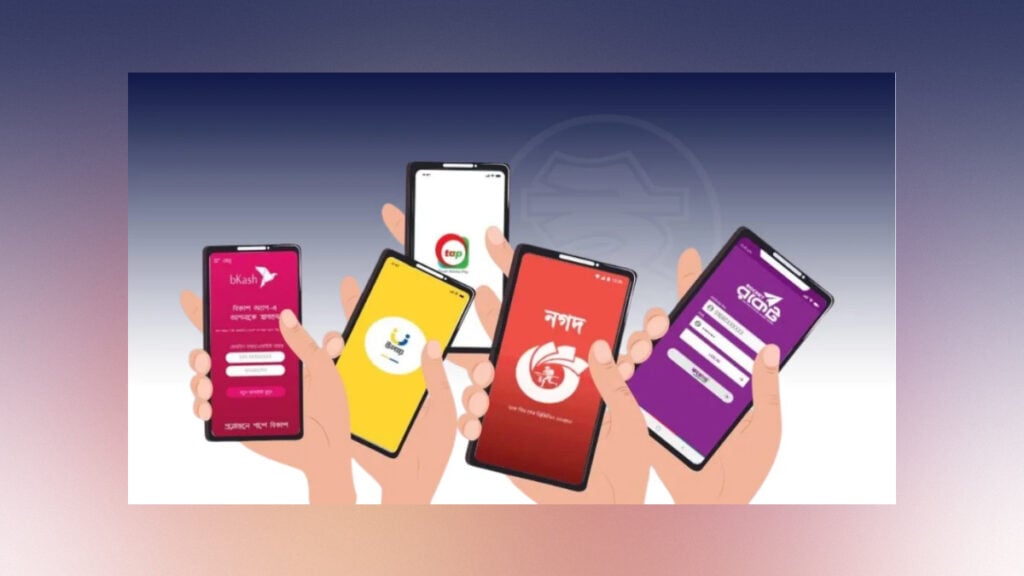
Thousands of mobile financial service users with permanent addresses or voter registration in Gopalganj are reportedly facing restrictions on their accounts, even though many now live outside the district, including in the capital, Dhaka. Customers of services such as bKash, Nagad and Rocket have found themselves unable to access their accounts following allegations that money was used to finance recent violence and acts of sabotage in Gopalganj. According to sources, instructions have been issued to suspend mobile financial services linked to nearly 200,000 mobile numbers.
The restrictions have caused considerable inconvenience for customers who depend on mobile banking for everyday financial transactions. Several users have complained that service providers sent text messages informing them that their services had been temporarily suspended or might be disrupted. As a result, they are struggling to transfer money to family members, make mobile top-ups and carry out other routine transactions.
A woman from Gopalganj who works for a private company in Dhaka, speaking on condition of anonymity, said she uses services provided by two mobile financial institutions. One of the companies informed her that services in her area could be temporarily disrupted in accordance with the Mobile Financial Services Regulations.
She regularly sends money to her mother, who lives in Gopalganj, and occasionally tops up her mother’s mobile phone. However, the restrictions have prevented her from carrying out these transactions. She also has around Tk 5,000 in her account but cannot access the money.
The incident has raised concerns among people whose permanent addresses remain in Gopalganj but who have been living elsewhere for employment, education or other reasons.
Restrictions follow violence in Gopalganj
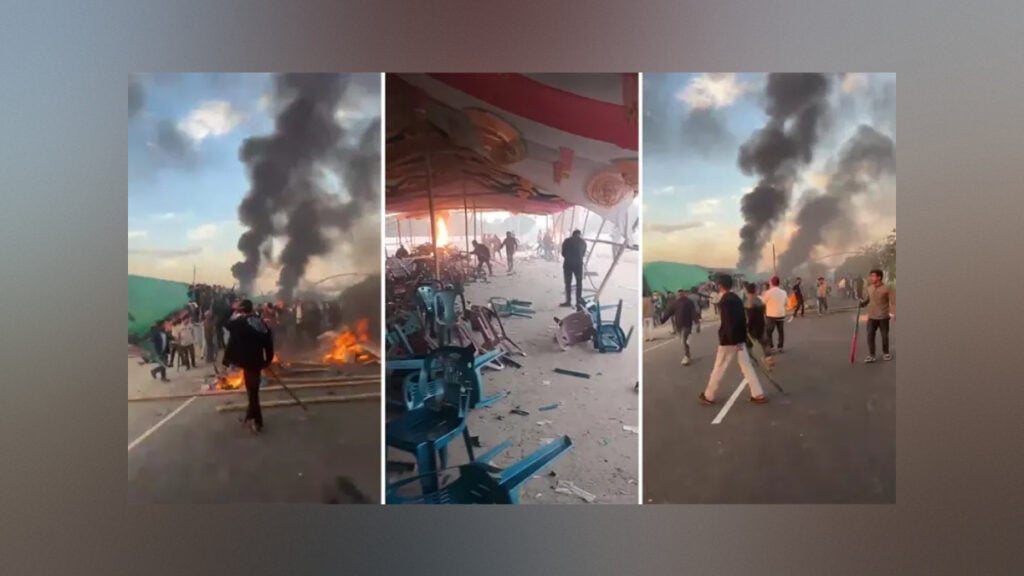
On 15 November, supporters of the Awami League, whose activities have been prohibited, allegedly vandalised and set fire to several establishments in Gopalganj. Within days, fires were reported at the police stations in Tungipara and Muksudpur. Road blockades also disrupted communication with the district, leaving transport and movement severely affected. However, law enforcement agencies did not resort to the use of force during the situation, according to the report.
Police have alleged that the attacks and arson incidents were encouraged and financed by individuals involved in the unrest. Against this backdrop, an instruction was issued last Wednesday to suspend mobile financial services in Gopalganj.
Three sources from government agencies and mobile financial service providers said instructions had been issued to suspend financial services linked to approximately 200,000 mobile numbers. The restrictions, however, have not affected every customer in the district. In some cases, an individual’s account with one provider has been suspended while their account with another provider remains operational.
The situation has also affected people who have no direct connection with the recent incidents but retain Gopalganj as their permanent address or voter registration location.
Customers fear account security breaches
Interviews with 22 people whose permanent addresses are in Gopalganj, conducted on Friday and Saturday, revealed that 13 had experienced disruptions to their mobile financial services.
One of the affected customers, Rakibul Islam, lives in Dhaka. He said he encountered difficulties accessing his bKash and Nagad accounts on 25 November. Initially, he suspected that his accounts might have been hacked.
Concerned about the possibility of unauthorised transactions, he published a warning on Facebook, asking others not to respond to any unusual financial requests or transactions that might originate from his accounts.
He later realised, after reading comments from other users and receiving messages from service providers, that the restrictions were connected to the recent developments in Gopalganj. He said he received another message regarding the issue on 26 November.
His experience highlights the uncertainty faced by customers who initially have little information about why their accounts have stopped functioning. For users with money deposited in their accounts, the inability to access their funds has become an additional source of concern.
Mobile financial services play a major role in Bangladesh
Mobile financial services have become an integral part of Bangladesh’s financial system, particularly for people who rely on digital transactions rather than visiting traditional bank branches. Services such as bKash, Nagad and Rocket allow users to transfer money, pay utility bills, recharge mobile phones, save money, access loans and make online purchases.
According to Bangladesh Bank data, the number of mobile financial service accounts in the country reached 262.1 million at the end of September this year. Of these, 132.4 million accounts were registered in rural areas, while 129.7 million were in urban areas. The figures include multiple accounts held by the same individual.
The country had approximately 2.1 million mobile financial service agents during the same period, demonstrating the extensive network supporting digital financial transactions across Bangladesh.
Transactions through mobile financial services totalled Tk 2,135.54 billion in September. The average daily transaction volume stood at Tk 71.18 billion.
These figures illustrate the scale of the sector and the extent to which individuals, families and businesses depend on mobile financial services. For many people, particularly those living away from their home districts, mobile banking provides a convenient way to support family members and manage household expenses remotely.
Any disruption to these services can therefore have consequences beyond the immediate geographical area where restrictions are imposed.
Regulations require compliance with financial crime laws
Under Section 11 of the Mobile Financial Services Regulations 2022, service providers are required to comply with the Money Laundering Prevention Act, the Anti-Terrorism Act and directives issued by the Bangladesh Financial Intelligence Unit (BFIU).
These requirements are intended to prevent the misuse of financial services for money laundering, terrorist financing and other unlawful activities. Mobile financial service providers are expected to follow regulatory instructions and take appropriate measures when suspicious transactions or potential financial crimes are identified.
People familiar with the matter say the decision to restrict mobile financial services in Gopalganj may have been taken within the existing legal framework. However, the implementation has raised questions because customers living outside the district have also reportedly lost access to their accounts.
The central concern is whether restrictions based on permanent addresses or regional connections are sufficiently targeted to prevent unnecessary disruption to ordinary customers. Residents who have moved to Dhaka or other parts of the country for work may have no involvement in the incidents under investigation, yet they are experiencing similar difficulties.
An official from one of the country’s leading mobile financial service providers, speaking on condition of anonymity, said the restrictions in Gopalganj had also caused financial losses for service providers. Although companies were complying with the government’s instructions, they had received complaints from customers living outside the district whose accounts had been affected.
The situation has brought the balance between financial security and customers’ access to essential services into focus. While preventing the flow of money linked to violence and unlawful activities remains a regulatory priority, the difficulties faced by ordinary account holders have highlighted the need for clarity over the scope and application of such restrictions.
For affected customers, the immediate concern is straightforward: they want access to their own money and the ability to carry out routine transactions, regardless of where they currently live. The issue has also raised broader questions about how financial restrictions can be enforced without unnecessarily affecting people who have no connection to the activities under investigation.