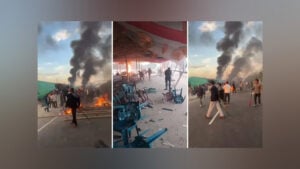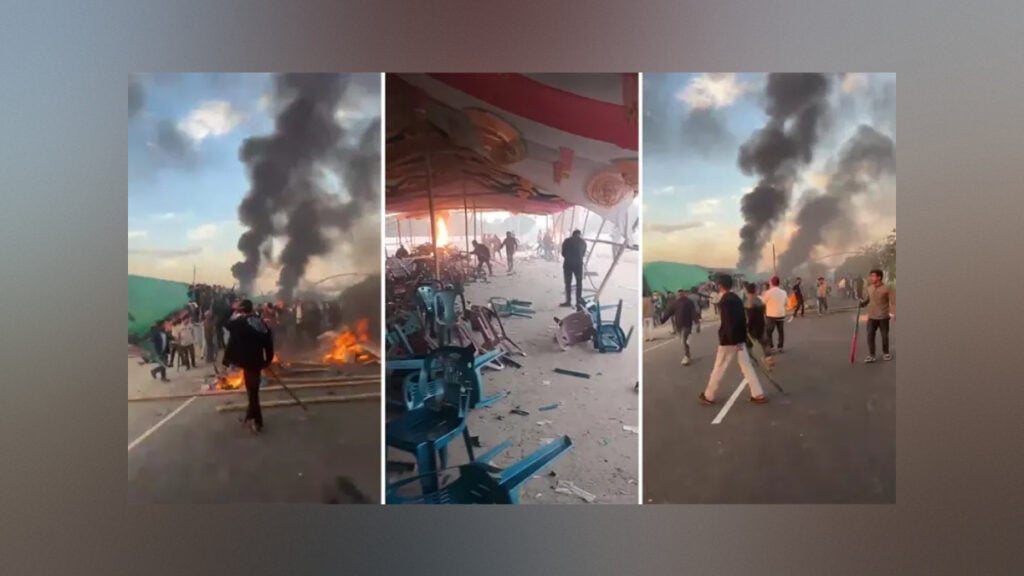
Violence broke out between Awami League and Bangladesh Nationalist Party (BNP) activists near the Zajira end of the Padma Bridge in Shariatpur early on Sunday, disrupting traffic on the Dhaka–Bhanga Expressway. The incident involved multiple crude bomb explosions, vandalism and arson, with around 20 motorcycles, a restaurant and a food hotel set on fire.
The clashes took place at around 5.30am on 29 November in the Bikennagar area of Zajira. The resulting blockade brought traffic on the expressway to a halt for an extended period, leaving vehicles stranded in long queues on both sides of the road. Police later said the situation had returned to normal.
Several videos of the incident have circulated on social media. The footage appears to show large crowds carrying locally made weapons and blocking the expressway. A series of crude bomb explosions sent thick clouds of smoke across the area, creating panic among residents and road users.
According to local sources, Awami League activists moved towards the expressway from the Bikennagar area early in the morning. BNP activists were already positioned on the road and attempted to prevent them from advancing. This led to a confrontation between the two groups, followed by chasing and counter-chasing.
There were also reports of gunfire during the clashes, although the circumstances surrounding those reports have not been independently established. As crude bomb explosions continued, BNP activists eventually moved away from the area.
The Awami League activists and members of its affiliated organisations then allegedly entered the expressway and vandalised the site where BNP supporters had assembled. Around 20 motorcycles belonging to BNP activists were reportedly set on fire. The violence subsequently spread towards the Nawdoba roundabout, where a restaurant named Food Express and another food hotel were also targeted in an arson attack.
Despite the destruction nearby, the Padma Bridge toll plaza reportedly escaped damage. During the blockade, announcements over loudspeakers could be heard instructing activists not to attack or vandalise the local police station or the toll plaza. The instructions appeared to be aimed at preventing further damage to key infrastructure in the area.
The blockade caused significant disruption to traffic along the Dhaka–Bhanga Expressway, an important transport route connecting the capital with several districts in south-western Bangladesh. Vehicles were unable to proceed while the confrontation continued, resulting in lengthy queues and inconvenience for passengers and other road users.
Additional Superintendent of Police (Crime and Operations) Zakaria Rahman said police had received intelligence suggesting that attempts might be made to disrupt traffic on the Padma Bridge. In response, officers had remained on duty throughout the night, with an adequate number of personnel deployed in the area.
He said a group of people arrived in the morning and began detonating crude bombs. Police managed to contain the situation without any loss of life, he added.
According to Rahman, traffic on the Padma Bridge was suspended for approximately 45 minutes but has since resumed. Police have also recovered evidence from the scene as part of their investigation.
The incident has once again highlighted the potential impact of political confrontations on major transport infrastructure and public safety. The burning of vehicles and commercial establishments, alongside the use of crude explosives, also raised concerns about the safety of people living and working near the expressway.
Although traffic has returned to normal, the circumstances surrounding the violence, the individuals involved and the extent of the damage remain matters for further investigation by the authorities.