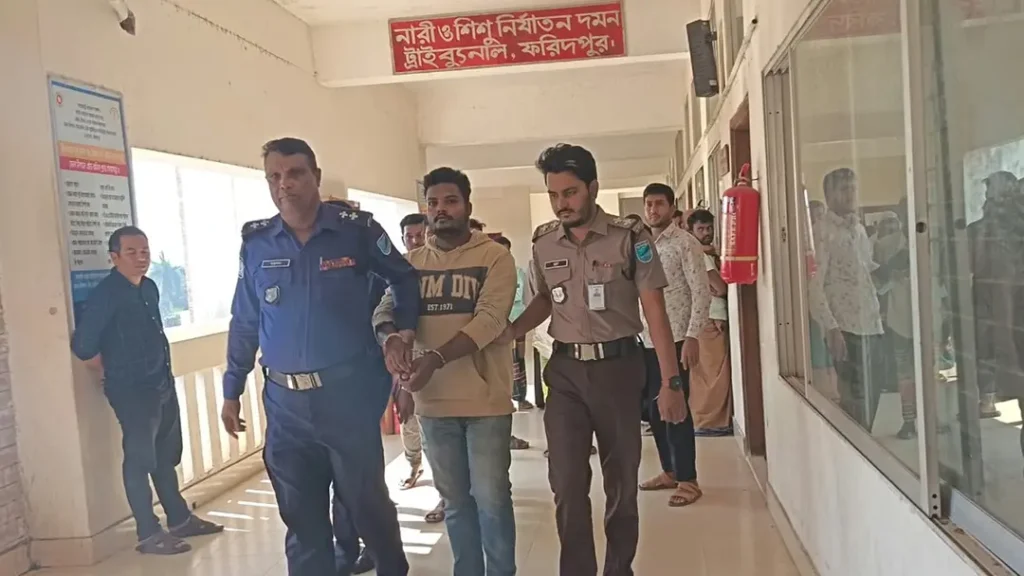
A court in Faridpur has sentenced a 38-year-old van driver to life imprisonment with rigorous labour for the rape of a woman with psychosocial disabilities. Judge Shamima Parveen of the Women and Children Repression Prevention Tribunal, holding the rank of District and Sessions Judge, delivered the verdict at around 1:00 pm on Sunday, 29 November.
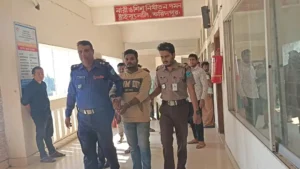
Alongside the custodial sentence, the tribunal fined the convict, Firoz Sheikh, Tk 1 lakh. The court also directed the District Collector to realise the fine and hand the sum over to the victim’s family as financial compensation. Sheikh was present in the dock during the pronouncement of the judgement and was subsequently taken to the district jail under strict police escort.
According to the First Information Report filed with the police, the 34-year-old survivor resides in a village under Krishnanagar Union in Faridpur Sadar Upazila. The assault occurred at approximately 7:30 pm on 22 April 2024. The woman had stepped out to purchase tea leaves from a local stall near her home. While she was walking back, Sheikh abducted her from the road and assaulted her in a nearby crop field.
Following the incident, the survivor’s father lodged a formal complaint at Faridpur Kotwali Police Station on 27 April 2024, naming Sheikh as the sole accused. Sub-Inspector Hiramon Biswas of Kotwali Police Station was tasked with investigating the case. After a thorough inquiry into the allegations and gathering witness testimonies, he submitted the formal charge sheet against Sheikh before the court on 30 October 2025.
- Special tribunals established under Bangladesh’s Women and Children Repression Prevention Act are mandated to expedite trials involving severe gender-based violence, particularly when vulnerable individuals are targeted. Confirming the outcome of the trial, Public Prosecutor Golam Rabbani Bhuiyan stated that the prosecution successfully proved the charges beyond a reasonable doubt through witness accounts and investigative evidence. He noted that such decisive verdicts uphold the rule of law and serve as a critical deterrent against crimes targeting marginalised members of society.