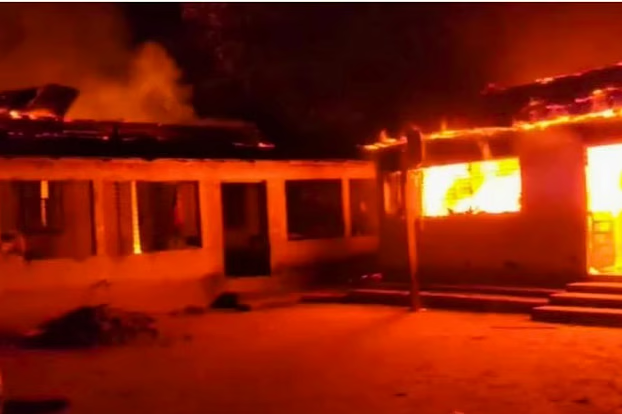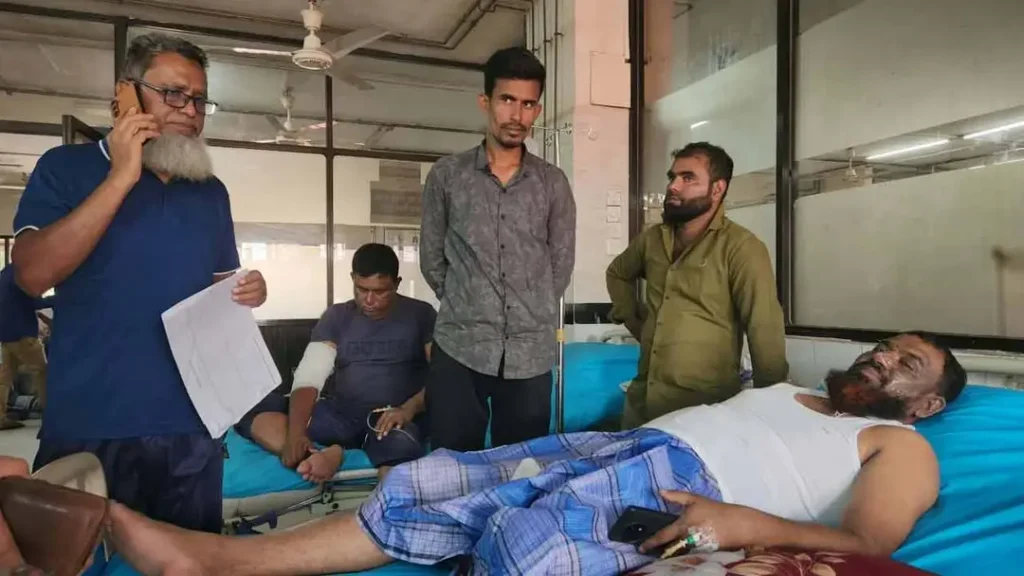
Seven officials and staff members of the Bangladesh Petroleum Exploration and Production Company Limited (Bapex) sustained burn injuries following an explosion during drilling operations in the Inani area of Cox’s Bazar on Sunday.
The blast occurred at approximately 12:30 pm at the site of a deep tube well where natural gas had previously been seeping. Of the seven injured personnel, four have already been discharged from hospital after receiving primary medical treatment, while the remaining three are still undergoing care.
Dr Abdus Salam, Deputy General Manager (DGM) of Bapex, confirmed the incident. He explained that technical teams were carrying out surveys and preparatory work at the location after successfully extinguishing a month-long gas fire just two days earlier, on 27 November. The sudden explosion took place while the crew was actively engaged on-site on Sunday afternoon. Among the injured are Bapex DGM Rakibul Hasan, alongside rig mechanics Firoz Ahmed and Mohammad Joni.
The crisis in Inani’s Chhoto Bridge area initially began on 27 October during the installation of a deep tube well, when pockets of underground gas unexpectedly started escaping. Sparks from nearby electrical wiring subsequently ignited the gas, triggering a blaze that burned continuously for nearly a month.
Following prolonged and complex containment efforts, Bapex specialists finally managed to douse the flames completely on 27 November. In the aftermath, officials announced a technical plan to drill down to a depth of 1,000 feet to bring the subterranean gas pressure safely under control. Shallow gas pockets are not uncommon in Bangladesh’s coastal belt, often posing significant operational hazards during routine groundwater extraction and requiring specialised rig intervention to seal properly.
Bapex authorities had previously outlined that once the immediate drilling and containment operations were completed, comprehensive geological and seismic surveys would be conducted across the site. Analysts intended to examine the resulting data to determine the commercial viability of the gas reserve and decide on future exploration programmes. However, the latest explosion has disrupted those ongoing containment and assessment efforts, underscoring the volatile nature of onshore gas well management.