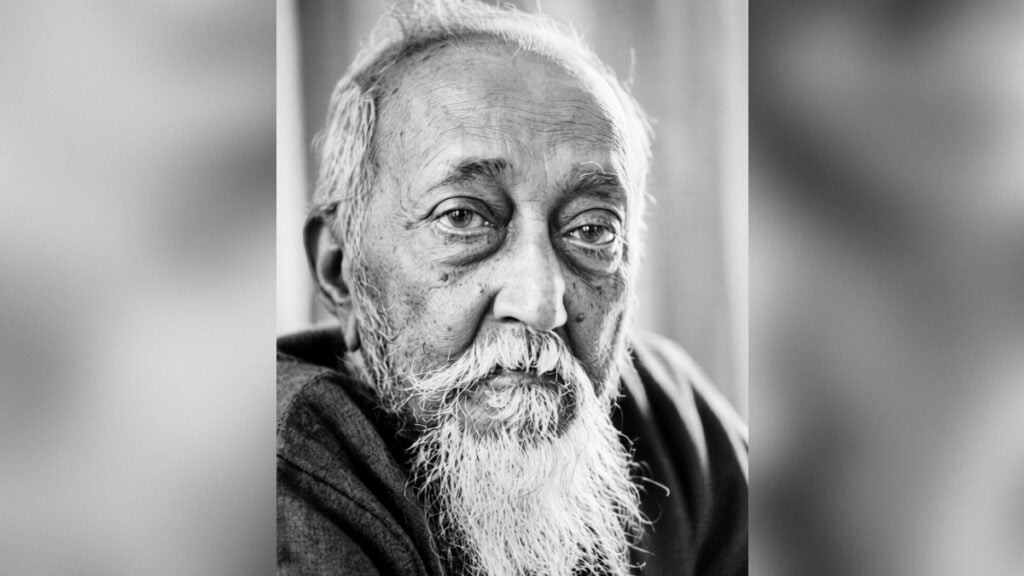
A legendary scholar immersed in the pursuit of wisdom, revered as the teacher of teachers
The awakening of a nation is never achieved solely through political movements or economic progress; it requires the emancipation of thought, the cultivation of knowledge, a rationalist mindset, and cultural flourishing. The history of the Bengali Muslim renaissance is just such a long journey.
While figures such as Raja Ram Mohan Roy, Ishwar Chandra Vidyasagar, Michael Madhusudan Dutt, Biharilal Chakraborty, and Rabindranath Tagore initiated an intellectual and cultural awakening during the nineteenth-century Bengal Renaissance, this movement developed comparatively later within Bengali Muslim society. However, the contributions of Mir Mosharraf Hossain, Kaikobad, Munshi Meherullah, and Ismail Hossain Siraji were vital in laying its foundation.
Subsequently, Dr Muhammad Shahidullah, Abul Mansur Ahmad, Saogat editor and journalist Mohammad Nasiruddin, and the rebel poet Kazi Nazrul Islam advanced modernity, secularism, self-identity, and the practice of free thought within Bengali Muslim society through their writings, ideas, and cultural endeavours.
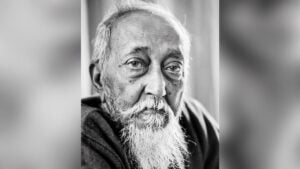
In this continuous intellectual odyssey, Professor Abdur Razzaq stood out as an exceptional sage. He did not merely acquire knowledge; through the depth of his erudition, he taught an entire generation how to think. Transcending the boundaries of conventional scholarship, he forged a distinct perspective through which to view history, the state, economics, politics, society, and culture.
National Professor Abdur Razzaq: Life and Work
Professor Abdur Razzaq remains one of Bangladesh’s foremost educationists, political thinkers, devotees of knowledge, and intellectual figures. The depth and breadth of his command over political science, economics, history, sociology, philosophy, and international politics were extraordinary.
Born in 1914 in Nawabganj, Dhaka, this eminent scholar began his education in the city. He completed his secondary schooling at Dhaka Muslim Government High School and his higher secondary education at Dhaka College. Later, he enrolled in the Department of Political Economy at the University of Dhaka, earning a first-class postgraduate degree in 1936.
In pursuit of higher learning, he travelled to the London School of Economics (LSE) in the United Kingdom, where he had the opportunity to conduct research under the world-renowned political scientist and sociologist Professor Harold J. Laski. Following Laski’s death, the lack of suitable supervision and evaluation for his thesis led Abdur Razzaq to return home without submitting his dissertation. Despite having the opportunity to complete advanced research abroad, obtaining formal degrees never became his life’s objective.
Upon returning home, he joined the Department of Political Economy at the University of Dhaka as a lecturer. When Economics and Political Science were later separated into distinct departments, he served as a faculty member in the Department of Political Science, eventually retiring from the University of Dhaka after a long and distinguished teaching career.
Depth of Knowledge Over Institutional Degrees
The most astonishing aspect of Professor Abdur Razzaq was the sheer vastness of his intellect. He did not write many books or research papers in the conventional sense, and his published works were limited. Yet, his erudition, profundity of thought, analytical prowess, and the magnetism of his reasoned discourse elevated him to legendary status within his own lifetime.
He was a mentor to whom not only students, but also prominent politicians, writers, researchers, professors, and intellectuals turned for intellectual nourishment. His residence became an informal academy for seekers of knowledge, hosting deep discussions on books, history, politics, economics, philosophy, literature, and society.
To him, the pursuit of knowledge was never about following a fixed syllabus or excelling in examinations; rather, it was a relentless quest to comprehend life and society profoundly.
Numerous Bangladeshi political leaders, thinkers, and intellectuals—including Bangabandhu Sheikh Mujibur Rahman—sought his counsel. Countless individuals received their intellectual initiation from him. To them, he was far more than a mere teacher; he was an extraordinary fountainhead of wisdom. It is for this reason that he became widely known as the “teacher of teachers.”
Ahmed Sofa’s Jaddapi Amar Guru
Novelist Ahmed Sofa’s book Jaddapi Amar Guru (Though He Is My Mentor) played a particularly significant role in introducing Professor Abdur Razzaq’s personality, scholarship, and ethos as an educator to subsequent generations.
In this work, Sofa chronicled his long association, conversations, philosophy of life, and scholarly experiences with his mentor. The book serves not merely as a memoir of a remarkable teacher, but also as an invaluable document of Bangladesh’s intellectual history.
Furthermore, eminent thinker and writer Sardar Fazlul Karim authored Dhaka Bishwabidyalay O Purbabangiya Samaj: Adhyapak Abdur Razzaq-er Alapcharita (The University of Dhaka and East Bengali Society: Conversations with Professor Abdur Razzaq), based on extensive dialogues with him. This volume likewise illuminates his intellectual universe, his grasp of socio-history, and various facets of Bangladesh’s intellectual evolution.
State Recognition and Honours
In recognition of his extraordinary scholarship, intellectual devotion, and unique contributions to education, the Government of Bangladesh honoured him with the title of “National Professor” in 1975. This accolade stood as a formal state acknowledgement of his lifelong pursuit of wisdom and intellectual legacy.
On 29 November 1999, this remarkable scholar breathed his last.
Yet, a person’s true identity is never confined to earthly achievements or official titles; they live on through their ideas, deeds, and influence. Professor Abdur Razzaq was precisely such a figure. He may not have left behind shelves of his own books, but he enriched the intellectual worlds of countless others. His devotion to learning, practice of free thought, wisdom, and spirit as an educator will remain eternally memorable in the intellectual history of Bangladesh.
The true fulfilment of a teacher lies not in the sheer number of students taught, but in how many people they inspire to think anew, to question, and to seek the truth.
Professor Abdur Razzaq belonged to that rare breed of teachers and sages for whom knowledge was a lifelong devotion, and the sharing of it a sacred human duty.
We remember this extraordinary scholar, educationist, and thinker of Bangladesh with deep reverence and affection.
A humble tribute.