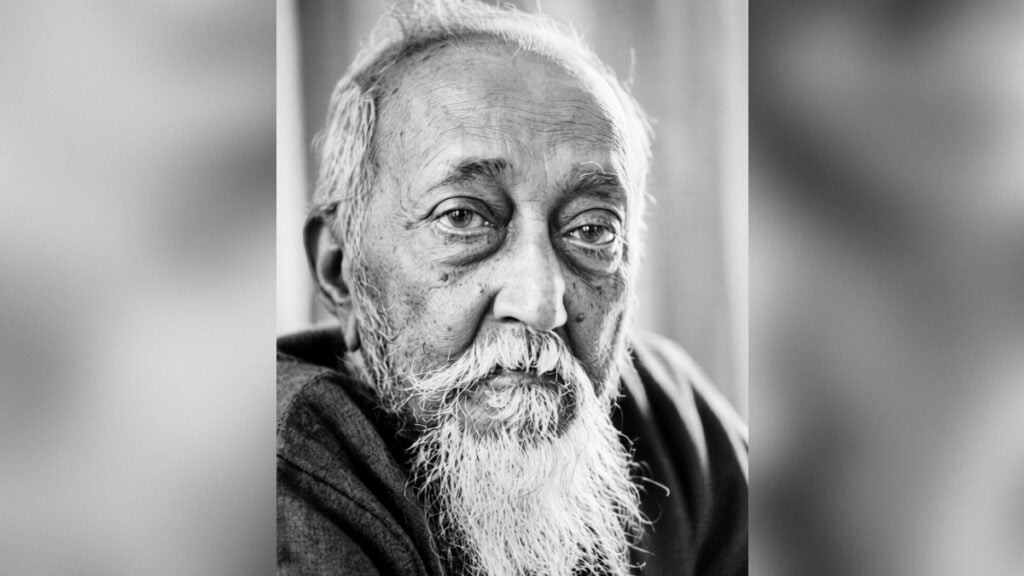
A dedicated politician in the struggle to establish the rights of workers, peasants, and the working class
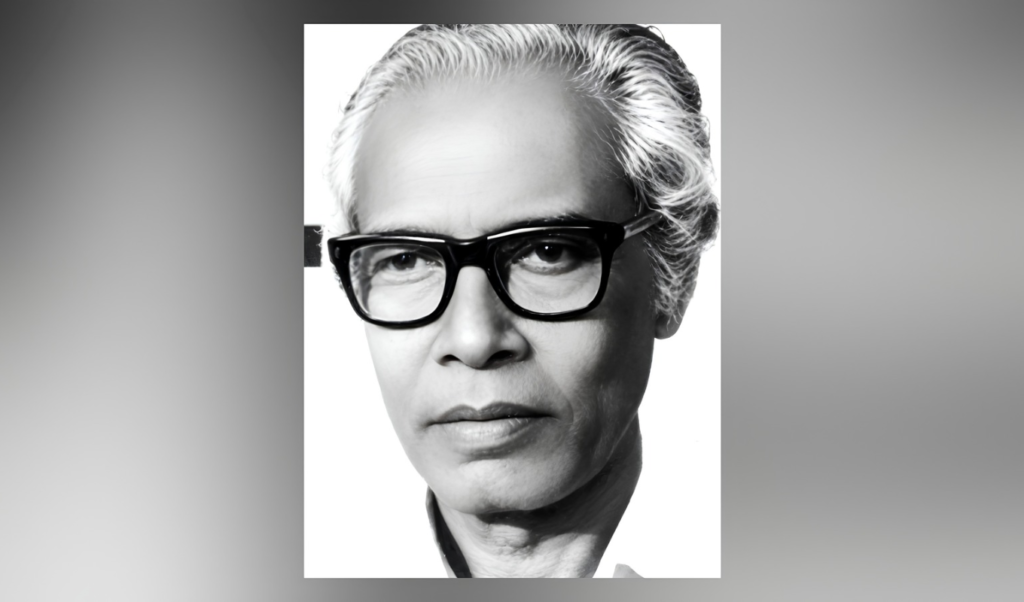
In the political history of Bengal, there are certain figures who pursued politics throughout their lives not out of a desire for power or personal gain, but with the dream of establishing an exploitation-free, egalitarian, and non-discriminatory society. Their lives were long histories of struggle, sacrifice, ideology, and political commitment. Comrade Mohammad Toaha was one such exceptional political personality.
He was one of the most active organizers of the Language Movement, a pioneer of the progressive student movement, an organizer of leftist politics, a labor leader, and a familiar face of anti-colonial and anti-autocratic movements. His political stance against the exploitation and deprivation of the Pakistani ruling clique was firm and uncompromising.
Early Life and Education
Mohammad Toaha was born on January 2, 1922, in Hajirhat village of Ramgati Upazila in the then Noakhali district (present-day Lakshmipur). His father’s name was Haji Mohammad Yasin, and his mother’s name was Hasna Banu.
He passed his Matriculation from Farashganj School in Dhaka in 1939 and his I.A. (Intermediate of Arts) from Dhaka College in 1941. Later, he enrolled at the University of Dhaka to study Political Science. Various biographical sources record that he earned his Honours degree in Political Science in 1944 and his Master’s degree in 1948.
While studying at the University of Dhaka, in August 1947, he was elected Vice President (VP) of the historic Fazlul Huq Hall Student Union. His leadership, organizational skills, and political awareness in university student politics quickly brought him into prominence.
Pioneer of the Leftist Student Movement
From his student life, Mohammad Toaha became involved in progressive and leftist politics. In 1947, he founded the ‘East Pakistan Student Federation’ (Purba Pakistan Chhatra Federation). This organization played a crucial role in the development of leftist student politics in the then East Bengal.
In 1946, he also participated in the Sylhet Referendum campaign under the leadership of Maulana Abdul Hamid Khan Bhashani. Later, in 1949, he was also involved in the founding of the Awami Muslim League.
In 1950, he played a pioneering role in establishing the ‘Democratic Youth League’ (Ganatantrik Jubo League) and the ‘People’s Theatre Association’ (Gananatya Sangstha). Through these organizations, he sought to spread political awareness, democratic values, cultural awakening, and progressive ideology among the general public.
Historic Role in the Language Movement
One of the brightest chapters of Mohammad Toaha’s political life is the great Language Movement of Bangladesh.
Immediately after the establishment of Pakistan, when the movement to establish the rights of Bengalis on the state language issue began, he became actively involved from the very outset. On March 11, 1948, while demonstrating for the demand of Bengali as a state language, he was arrested and subjected to torture while submitting a memorandum at the Secretariat.
Various biographies mention that while serving as the VP of Fazlul Huq Hall at Dhaka University, he also submitted a memorandum to Pakistan’s Governor-General Muhammad Ali Jinnah demanding Bengali as a state language.
He was a key member of the All-Party State Language Action Committee (Sarbadaliya Rashtrabhasha Sangram Committee), formed on January 30, 1952. His role was significant in the preparations, organizational activities, and strategy formulation for the Language Movement.
In particular, on the night of February 20, 1952, he participated as a leader of the Jubo League in the crucial meeting held to finalize the action plan for the State Language Movement.
Mohammad Toaha’s contributions during the preparatory phase of that historic movement—which gained a new dimension through the bloody self-sacrifice of Ekushey February (February 21)—will forever remain memorable.
Labor Movement and NAP Politics
In the 1954 elections, he was elected a member of the East Bengal Legislative Assembly as a United Front (Jukta Front) candidate. The historic victory of the United Front was an important expression of the East Bengali people’s aspirations for autonomy, democratic rights, and political emancipation.
In 1956, with the aim of establishing the rights of working people, he founded the ‘East Pakistan Mazdoor Federation’ and served as its president. He regarded the issues of fair wages, working conditions, rights, and freedom from exploitation for workers as vital components of politics.
In 1957, he joined the National Awami Party (NAP), founded under the leadership of Maulana Abdul Hamid Khan Bhashani. Later, he was elected General Secretary of the party.
In NAP politics, he placed special emphasis on anti-imperialism, socialism, democratic rights, and the emancipation of the working class.
Due to his political activities, he was imprisoned in 1948, 1952, and 1954. However, imprisonment or state repression could not halt his political activism.
The 1969 Mass Uprising
Following the imposition of martial law by Ayub Khan in 1958, a new chapter of repression began in Pakistani politics. Democratic rights were curtailed, and persecution descended upon political leaders and activists.
Under these circumstances, Mohammad Toaha went underground and continued his political activities.
He played a role as one of the key organizers in the historic anti-Ayub Mass Uprising of 1969. Through student-mass movements, workers’ struggles, and anti-autocratic political activities, the foundation of Ayub Khan’s regime was weakened.
His political role in the struggle to establish East Bengal’s autonomy and democratic rights was noteworthy.
The Liberation War and Political Controversy
During the 1971 Liberation War, Mohammad Toaha’s political stance was complex and controversial. A faction of the communist political stream under his leadership did not accept the Liberation War as its primary political duty. Consequently, his political stance regarding Bangladesh’s War of Independence drew criticism and controversy in later years.
However, various historical accounts of the Liberation War note that armed activities by the faction under his leadership were conducted across vast areas of Noakhali, and liberated zones were established in Lakshmipur, Ramgati, and Sudharam. His political stance, armed activities, and relationship with the mainstream Liberation War during this period remain a complex chapter of history.
To do justice to history, it is necessary to impartially evaluate this controversial chapter alongside the positive contributions of his political role.
Post-Independence Politics and Election as Member of Parliament
After independence, when an arrest warrant was issued against him, he went into hiding. Following the withdrawal of the arrest warrant in 1976, he returned to open politics.
Participating in the 1979 National Parliamentary Election, he was elected a Member of Parliament (MP). In the 1986 election as well, he contested as a candidate of the Eight-Party Alliance.
Alongside his political activities, he served as the president of the Bangladesh-China Friendship Association and the Bangladesh-North Korea Friendship Association. Various articles written by him on politics and social policy were also published in newspapers and periodicals.
Demise and Legacy
On November 29, 1987, this combative politician passed away in Hajirhat, Ramgati, Lakshmipur.
Mohammad Toaha’s life was a reflection of a critical era in the political history of Bangladesh. From student movements to language rights, and from labor movements to anti-autocratic struggles, he remained active across various phases with his own political ideals and convictions.
There may be differences of opinion and criticism regarding certain decisions in his political life. Yet, his role in the preparatory phase of the Language Movement, his initiative in building progressive student organizations, his contributions to the labor movement, and his participation in the 1969 Mass Uprising remain significant parts of Bangladesh’s political history.
With the passage of time, the names of many political leaders fade into oblivion. However, it is the responsibility of history to properly preserve everything—their contributions, limitations, successes, and controversies.
Comrade Mohammad Toaha was one such widely discussed, combative political figure who played an important role at various turning points in history.
We remember this resilient figure of Bangladesh’s political history, encompassing both his contributions and his limitations.
Tribute.