Sunday, 5th April 2026

Khabor Wala Desk
Published: 22nd July 2025, 1:05 PM
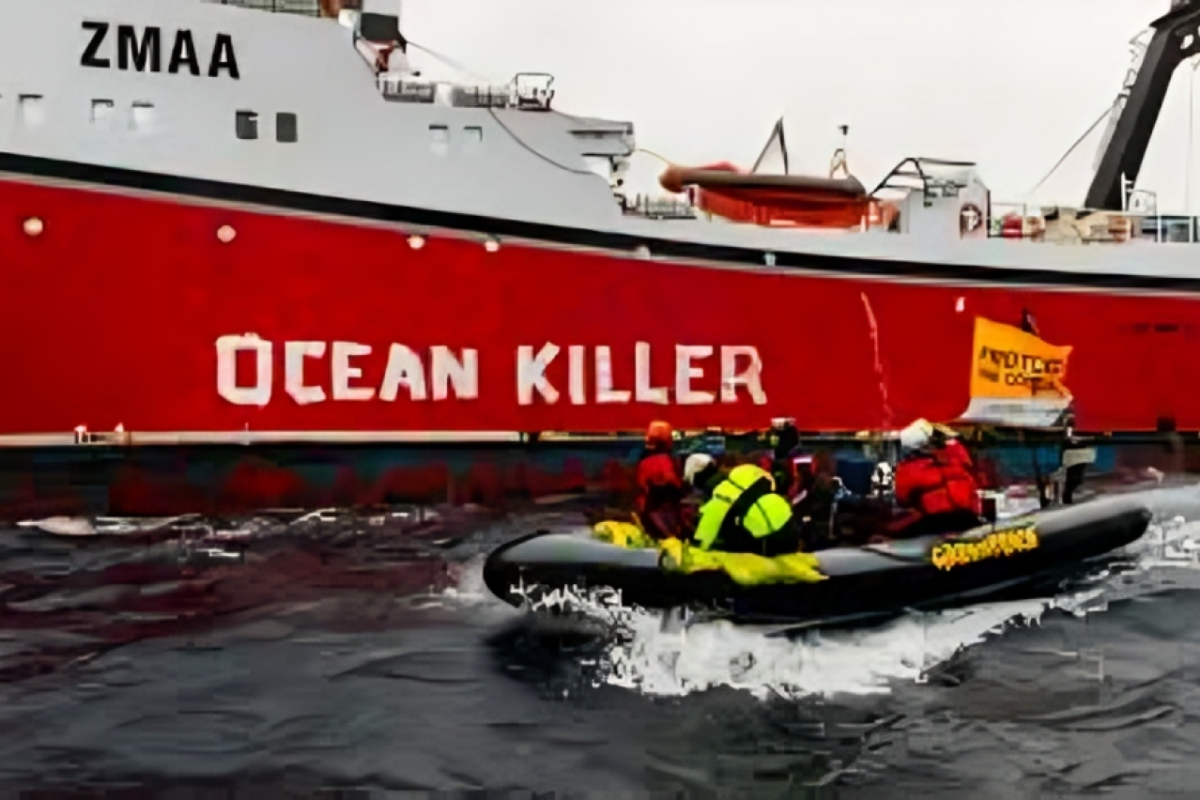
The International Seabed Authority (ISA) issued a veiled warning on Monday to Canadian company The Metals Company (TMC) regarding its plans to commence deep-sea mining operations in international waters under a US-authorised permit.
In a statement adopted during their meeting, the ISA’s executive body advised its legal and technical commission to “pay specific attention” to entities whose actions might be in “potential non-compliance” with international law. Although the ISA did not explicitly name TMC, the language was unmistakably directed at the company.
TMC’s controversial decision to bypass the ISA and apply directly to the United States for a mining permit raised concerns among international stakeholders. The company’s application, filed in April 2023, followed an executive order issued by US President Donald Trump. The order allows the US administration to unilaterally issue mining licences, including those for activities in international waters, which would be the first such licence issued by any country or international body.
Should the permit be approved, it would set a precedent for deep-sea mining operations, not only in the Pacific’s Clarion-Clipperton Zone but also globally. However, the ISA’s legal body has warned that should TMC’s activities be found in violation of international law, the company may face the revocation of its previously issued exploration permits.
TMC, through its subsidiary Nauru Ocean Resources Inc. (NORI), has held an exploration contract in the Clarion-Clipperton Zone of the Pacific Ocean since 2011. The contract, which gives NORI the right to explore an area rich in valuable polymetallic nodules, is set to expire in one year. However, the ISA’s recent actions suggest that NORI’s future in the region could be in jeopardy if the company is found to be in breach of international obligations.
| Company | Subsidiary | Exploration Area | Contract Start | Contract Expiry |
| The Metals Company (TMC) | Nauru Ocean Resources Inc. | Clarion-Clipperton Zone (Pacific) | 2011 | 2024 |
Matthew Gianni, of the Deep Sea Conservation Coalition (DSCC), a coalition of environmental NGOs, warned:
“It must be clear by now to TMC and its subsidiaries that they face a significant risk of losing their exploration contracts.” Gianni’s comments highlight the serious consequences the company could face if its activities are found to be unlawful under international law.
Environmental groups have strongly criticised TMC’s plans and the US’s unilateral approach to deep-sea mining. Louisa Casson, who leads Greenpeace’s Stop Deep Sea Mining campaign, stated that the ISA’s warning serves as a “stark message” to other companies contemplating the same “reckless path” taken by TMC. Casson reiterated the concerns of many environmentalists who fear that deep-sea mining could cause irreparable damage to fragile marine ecosystems.
The debate over deep-sea mining has divided nations, as governments and industries eye the vast metal resources lying at the ocean floor, particularly polymetallic nodules rich in metals such as nickel, cobalt, and rare earth elements. These metals are crucial for the production of electric vehicles, batteries, and other emerging technologies.
However, the environmental risks associated with mining these nodules from the ocean depths are significant. Scientists have warned that disrupting these fragile ecosystems could have disastrous, long-term consequences, not only for marine biodiversity but also for global carbon sequestration processes, which rely on healthy ocean ecosystems.
| Issue | Impact |
| Environmental Disruption | Destruction of deep-sea ecosystems |
| Biodiversity Loss | Risk to marine species and habitats |
| Carbon Sequestration | Potential harm to oceanic carbon sinks |
Despite these concerns, the pressure to exploit the seabed is mounting, particularly as demand for the metals essential to clean energy technologies continues to rise. While some countries and companies argue for responsible exploration, others, such as environmental advocacy groups, call for an immediate halt to mining operations until further studies can assess the full impact on the marine environment.
After more than a decade of discussions and negotiations, the ISA has yet to establish comprehensive and binding rules to govern deep-sea mining activities. As the authority responsible for regulating exploration and mining in international waters, the ISA’s guidelines are critical for ensuring that such operations are carried out in an environmentally responsible manner.
However, the current regulatory vacuum has made it difficult to balance the demand for mineral resources with the need for environmental protection. The lack of binding international consensus on the issue has led some countries, like the United States, to pursue unilateral approaches, further complicating the situation.
The United States, notably, is not a party to either the ISA or the UN Convention on the Law of the Sea (UNCLOS), under which the ISA was established in 1994. This has resulted in significant tensions with the broader international community, especially with respect to the regulation of deep-sea mining in international waters.
The ISA’s warning to TMC is only the latest development in an ongoing international debate over deep-sea mining. With the expiration of NORI’s exploration contract looming, the future of TMC’s operations in the Clarion-Clipperton Zone remains uncertain. Should the ISA decide that TMC’s activities are in violation of international law, the company could face the revocation of its exploration rights, which would be a significant setback for the firm.
While the United States may continue to push for its own mining licences, the broader international community remains divided. As the ISA prepares for further negotiations, the pressure is mounting on all parties to find a solution that balances the demand for minerals with the need to protect the environment.




Comments