Sunday, 5th April 2026

Khabor Wala Desk
Published: 21st August 2025, 9:44 AM
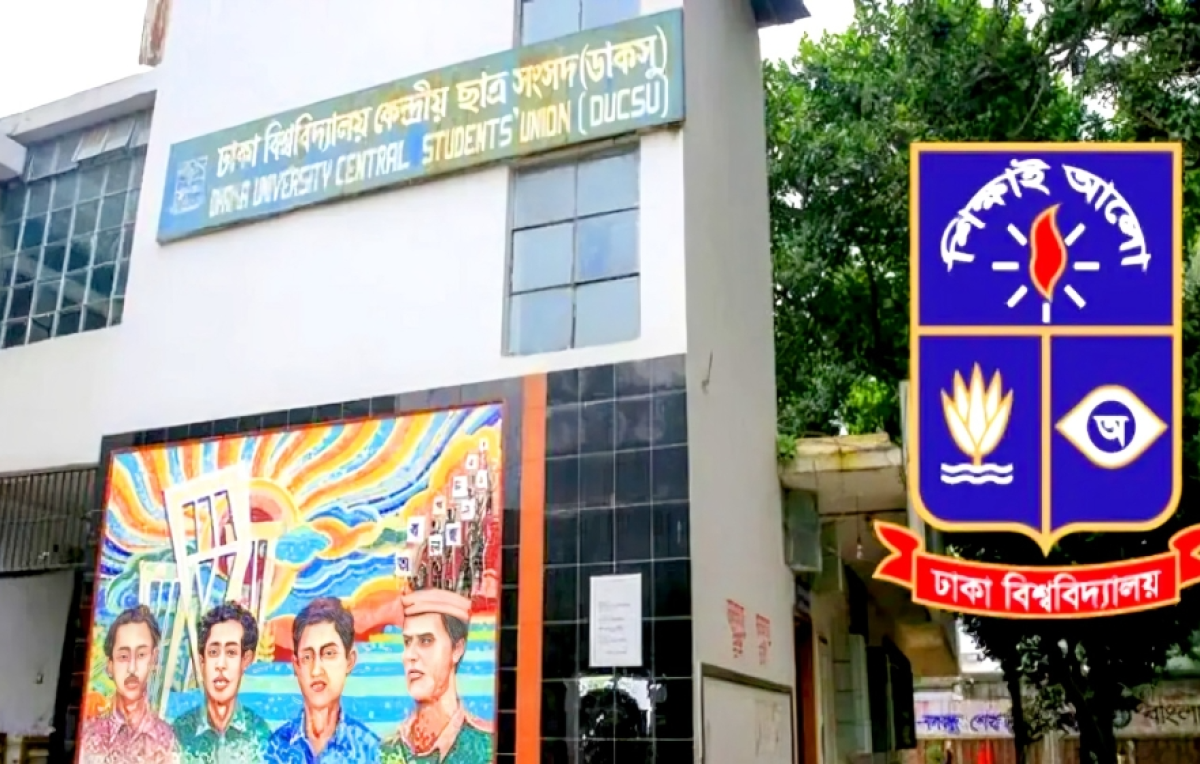
The Dhaka University Central Students’ Union (DUCSU) is widely recognised as the ‘Second Parliament of Bangladesh’ for its historic role in shaping the nation’s political and social landscape. Over decades, DUCSU has provided leadership during pivotal movements, including the Language Movement, the Six-Point Programme, the 1971 Mass Uprising, and the anti-autocratic movement of the 1990s.
DUCSU traces its origins to the establishment of three residential halls at Dhaka University in 1921, initiated by Sir A.F. Rahman, where initial student unions were formed. Following this, the Dhaka University Students’ Union was officially established in 1922-23.
According to Professor Anisuzzaman, the first elections under the new constitution were held in 1944-45. Key officeholders included:
| Academic Year | President | Vice-President | General Secretary |
| 1945-46 | P.J. Hartg | Ahmedul Kabir | Sudhir Dutta |
| 1947-48 | – | Arvind Basu | Golam Azam |
Following 1950, the union experienced a prolonged hiatus.
As noted in Syed Abul Maksud’s writings, during the first two decades, DUCSU and hall councils focused on:
While leaders did not formally align with political parties, they actively engaged in national political discourse.
Since 1923, DUCSU elections have been held 37 times. Post-independence in 1972, the first election saw:
Due to government reluctance, only 7 elections were held between 1971 and 1990. Following 1991, elections were repeatedly postponed despite multiple initiatives. Finally, 2019 elections were conducted following a court directive.
After nearly six years, the next DUCSU election is scheduled for 9 September 2025. Key details include:
| Aspect | Details |
| Total Posts | 28 |
| Nomination Papers Sold | 658 |
| Nomination Papers Submitted | 509 |
| Pending Papers | 149 |
| Number of Contesting Panels | At least 9 |
| Deadline for Withdrawal | 25 August 2025 |
| Final Candidate List | To be published on 26 August 2025 |
The upcoming election is expected to be a highly competitive event, reflecting DUCSU’s historic legacy and continuing significance in student politics and national discourse.


Comments