Sunday, 5th April 2026

Khabor Wala Desk
Published: 26th December 2025, 8:03 AM
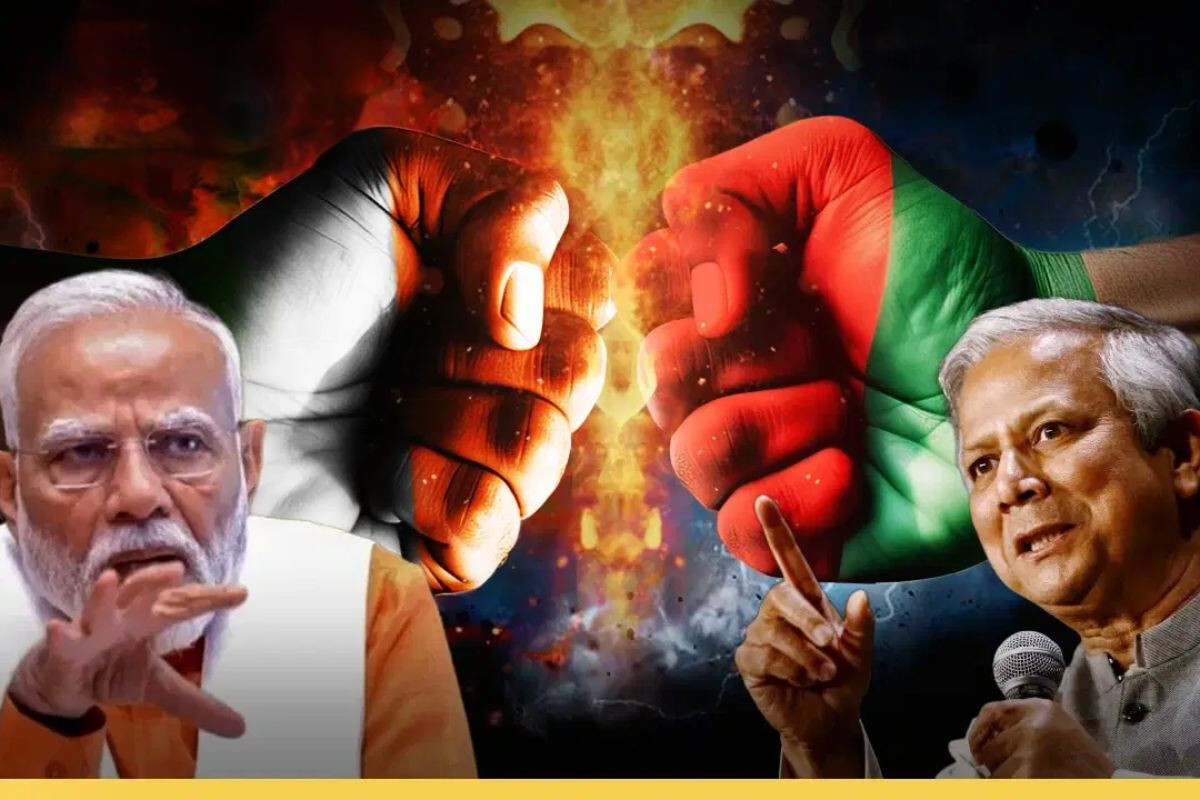
Recent violent protests and the murder of a Hindu man in Bangladesh have exacerbated tensions between India and Bangladesh, pushing the already fragile relationship to a critical juncture. The incident, which has led to widespread protests and accusations from both sides, raises the question of whether the long-standing, once close ties between the two neighbouring countries can ever be repaired.
The situation began with the brutal killing of 27-year-old Dipu Chandra Das, a member of Bangladesh’s Hindu minority, in Mymensingh. The murder, allegedly committed over accusations of blasphemy, sparked outrage, particularly among Hindu nationalist groups in India. The shocking video of the attack spread rapidly on social media, further fuelling the outrage.
The murder occurred just hours before the assassination of student leader Sharif Osman Hadi in Dhaka, another event that triggered violent protests and heightened anti-India sentiment. As tensions mounted, the political backdrop became increasingly volatile, with allegations of the involvement of members of Bangladesh’s ruling party, the Awami League, in Hadi’s death. This accusation further inflamed anti-India emotions, particularly among the majority Muslim population of Bangladesh.
The violent protests that followed these incidents have led to an escalation of tensions between the two nations. Demonstrators marched towards the Indian High Commission in Dhaka, prompting a strong response from local security forces. Furthermore, a group of protestors in Chattogram threw stones at the Indian Assistant High Commission, sparking a diplomatic row. India condemned these actions as “unjustifiable,” further straining relations between the two countries.
These events follow a long history of rising anti-India sentiments in Bangladesh, especially after the fall of Prime Minister Sheikh Hasina’s government, with some political analysts attributing the increase in hostility to India’s perceived influence over Bangladesh’s political landscape. This resentment has been amplified by Hasina’s decision to seek refuge in India after being ousted, which has fueled conspiracy theories about Indian interference in Bangladesh’s internal affairs.
Religious extremism in Bangladesh has grown over recent years, with increasing attacks on religious minorities, particularly Hindus. The rise of hardline Islamic groups has led to attacks on Hindu temples, the destruction of Sufi shrines, and the suppression of cultural activities. Human rights organisations have raised alarms about the growing prevalence of mob violence, especially against those accused of blasphemy.
Analysts are concerned that these extremist groups are capitalising on the rising anti-India sentiment to further their agenda. By invoking anti-India rhetoric, they are stoking social divisions and potentially leading the country down a dangerous path of communal unrest.
Bangladesh is set to hold its parliamentary elections in February 2025, and the role of anti-India politics is expected to be a significant factor. Political analysts predict that the Bangladesh Nationalist Party (BNP) and the Jamaat-e-Islami, which have historically been critical of India, will play a pivotal role in the outcome.
India is concerned that the growing influence of religious parties may lead to further instability in Bangladesh, which could spill over into the relationship between the two countries. In addition, international experts have warned that the current situation represents a major strategic challenge for India, with the possibility of a deterioration in bilateral relations that could have far-reaching consequences for the region.
The interim government in Bangladesh has been criticised for its failure to maintain law and order during the recent unrest. Experts argue that only a democratically elected government, with a mandate to restore stability, will be able to address the country’s internal and external challenges effectively.
India has expressed its willingness to work with Bangladesh’s elected government, signalling a desire to restore diplomatic relations. However, analysts caution that as long as public sentiment remains volatile and tensions on the streets continue to rise, the path to repairing relations will be fraught with difficulty.
Source: BBC




Comments