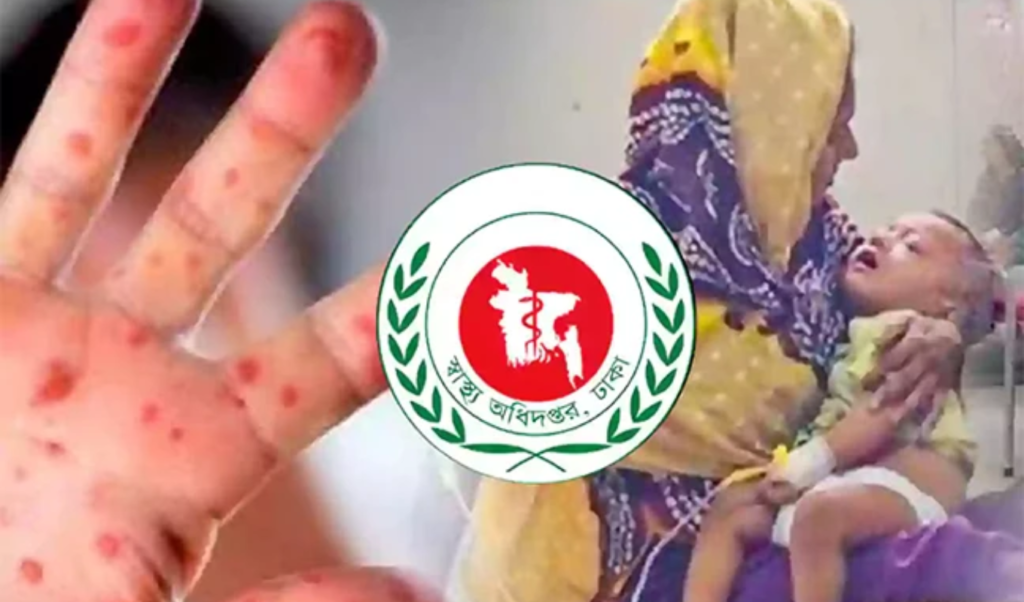
Five more children have died after exhibiting symptoms of measles in Bangladesh, as public health officials grapple with a substantial surge in infections. According to the daily bulletin issued by the Directorate General of Health Services (DGHS), the fatalities occurred during a 24-hour monitoring period between Tuesday morning and Wednesday afternoon.
Although no laboratory-confirmed deaths from measles were recorded during this specific window, the relentless spread of the disease has left more than a thousand young patients newly infected in a single day. The sudden spike has intensified pressure on paediatric wards across the country.
Capital and regions bear the brunt
Of the five young victims who succumbed to measles-like symptoms in the latest 24-hour cycle, four were from the densely populated capital, Dhaka. The remaining death was reported in the Mymensingh division. This geographical distribution highlights the dual challenge facing health authorities: managing highly infectious outbreaks in overcrowded urban slums whilst ensuring diagnostic resources reach rural districts.
Over the same 24-hour period, a further 1,092 children were hospitalised with measles or related symptoms across Bangladesh. Out of these daily cases, medical officers clinically confirmed the presence of the measles virus in 172 children. The remaining cases are currently classified as suspected, awaiting diagnostic validation.
Understanding the clinical challenge
Measles is a highly contagious viral disease that primarily targets unvaccinated infants and young children. It spreads easily through respiratory droplets from coughing or sneezing.
[Suspected Measles]                      [Confirmed Measles]
Patient exhibits high fever, rash,       Blood tests or oral fluid swabs
cough, and runny nose.                   positively identify the virus.
In Bangladesh, public health workers often struggle to distinguish between suspected and confirmed cases on the ground. A suspected case is identified when a child exhibits a high fever, a characteristic red-spotted skin rash, and respiratory issues like a persistent cough. However, confirming the diagnosis requires laboratory testing, which can be delayed due to logistical bottlenecks in remote sub-districts.
Epidemiological summary of the outbreak
To provide a clear overview of the current health crisis, the DGHS has compiled comprehensive figures documenting the scale of the outbreak from the middle of March to the present day.
| Epidemic Metric (15 March – 15 July) | Recorded Statistical Figure |
| New daily cases (last 24 hours) | 1,092 |
| Confirmed daily cases (last 24 hours) | 172 |
| Suspected daily deaths (last 24 hours) | 5 |
| Confirmed daily deaths (last 24 hours) | 0 |
| Daily deaths recorded in Dhaka | 4 |
| Daily deaths recorded in Mymensingh | 1 |
| Cumulative hospital admissions | 96,878 |
| Cumulative recoveries and discharges | 93,260 |
| Cumulative suspected deaths | 676 |
| Cumulative confirmed deaths | 95 |
| Total cumulative deaths (suspected and confirmed) | 771 |
Immunisation gaps and recovery efforts
Since the current wave began on 15 March, Bangladesh has seen a total of 96,878 suspected measles patients admitted to healthcare facilities. Despite the high caseload, the recovery rate remains a source of optimism for medical professionals. A total of 93,260 children have successfully recovered and been discharged from hospital.
Public health experts point to localized gaps in the routine Measles-Rubella (MR) vaccination programme as a key driver behind the seasonal surge. While the government has previously launched massive immunisation campaigns, disruptions in routine healthcare delivery in remote regions and rapidly expanding urban settlements have left pockets of the population vulnerable. Pediatricians are urging parents to ensure their children receive the scheduled two doses of the MR vaccine to prevent further preventable loss of life.