Monday, 6th April 2026

Khabor Wala Desk
Published: 18th March 2026, 10:11 AM
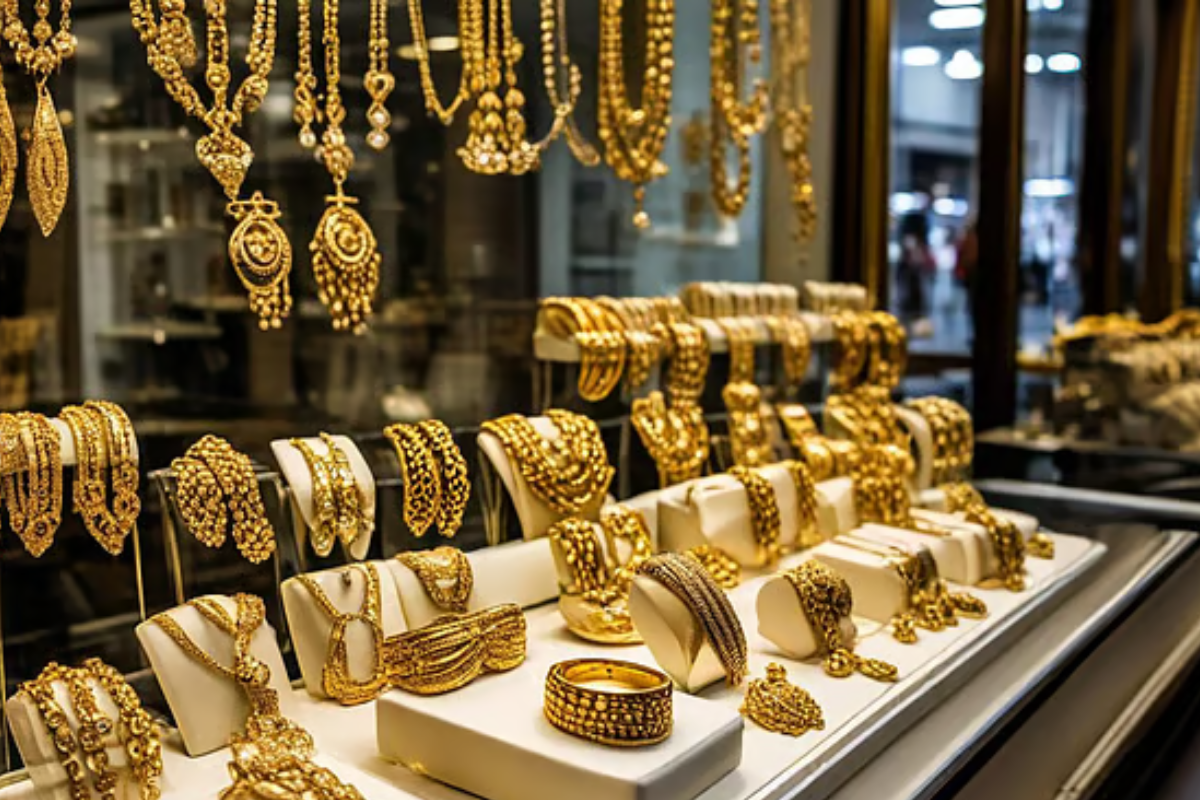
The conflict involving Israel and the United States against Iran has entered its nineteenth day as of Wednesday. Despite escalating tensions and global uncertainty, the gold market presents a curious picture: prices have remained largely stable rather than surging, defying expectations that investors would flock to the safe-haven asset.
The hostilities, which began with a first wave of attacks on 28 February, have extended beyond the borders of Israel and Iran, spreading across parts of the Middle East and raising concerns about broader economic repercussions. On 2 March, the top adviser of Iran’s Islamic Revolutionary Guard Corps (IRGC), Ebrahim Jafari, announced the closure of the strategic Strait of Hormuz, a critical maritime passage through which roughly 20% of the world’s oil and gas is transported. Following this, crude oil prices on international markets surged above USD 100 per barrel.
Global equity markets have felt the strain over the past fortnight, with widespread volatility. Yet, gold has not mirrored the sharp movements typically associated with geopolitical crises, prompting analysts to investigate the underlying causes.
Over the past year, the price of gold rose by more than 70%, reaching over USD 5,000 per ounce on 26 January 2026. Since then, prices have fluctuated around this level, reflecting both high valuations and tempered investor sentiment.
| Date | Spot Market Price (USD/oz) | Gold Futures (April Delivery, USD/oz) |
|---|---|---|
| 26 Jan 2026 | 5,002 | 5,005 |
| 10 Mar 2026 | 4,991 | 4,998 |
| Change | -11 | -7 |
Spot market prices indicate the immediate cost to purchase gold on the global market, while futures contracts reflect anticipated prices for delivery at a later date.
Traditionally, economic uncertainty drives investors toward gold, causing rapid price increases. Historical precedents, such as Russia’s full-scale invasion of Ukraine, saw gold prices spike sharply due to sanctions-induced anxiety among central banks. In contrast, during the current US–Israel–Iran conflict, gold’s movement has been more subdued.
Analysts suggest several factors: expectations surrounding US Federal Reserve interest rates have influenced investor behaviour. Higher interest rates make dollar-denominated assets more attractive, reducing demand for non-yielding gold. Additionally, the price of gold already sits at historically high levels, which moderates further upward pressure.
Economists James Midway and Rebecca Christie note that while geopolitical tensions are high, the US dollar’s strength and previously elevated gold prices have limited additional gains. Furthermore, gold is increasingly regarded by some investors as a speculative asset rather than a guaranteed safe haven, a sentiment echoed by Rémí Bourgeois of the Paris-based French Institute for International and Strategic Affairs.
Predicting gold’s near-term trajectory remains challenging. According to Christie, the primary reason for gold’s current stability is its already elevated valuation. Midway adds that significant price changes would require a clear Federal Reserve signal to lower interest rates despite inflationary pressures, or a prolonged escalation of the Middle East conflict.




Comments