Sunday, 5th April 2026

Khabor Wala Desk
Published: 5th December 2025, 1:31 AM
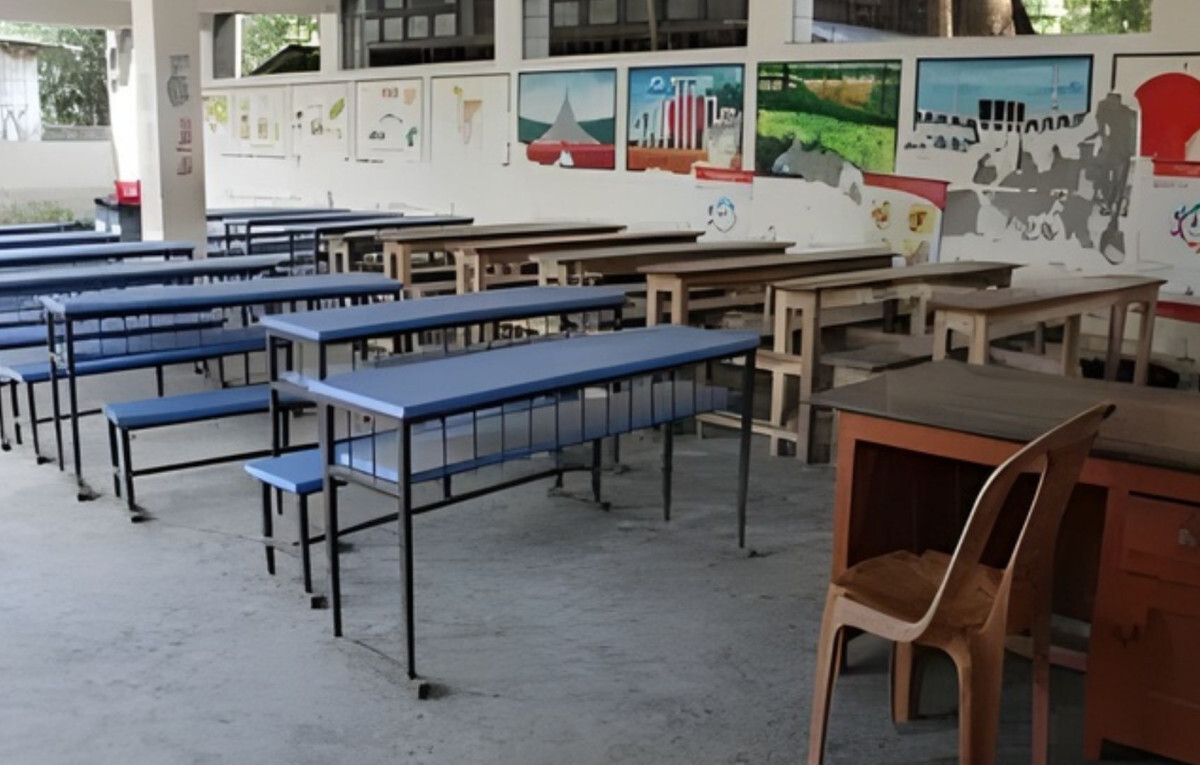
Government primary school assistant teachers across Bangladesh have decided to suspend their ongoing “complete shutdown” strike, which they had launched to press for a three-point set of demands. The decision was announced late on Thursday night, shortly after 11:30 pm, by one of the movement’s leading teacher representatives.
Speaking to the press, the teacher leader explained that, after reviewing the situation, the protesting teachers opted to pause the strike until the annual examinations are completed. The move, he said, was taken out of consideration for the welfare of young pupils, who were the most affected by the continued disruptions. A formal press statement announcing the suspension of the strike was due to be released later that night. However, the leaders insisted that the protests had not been called off entirely; rather, new programmes would be announced once the examinations end.
Bangladesh has 65,569 government primary schools, employing more than 375,000 teachers and serving over ten million pupils. Of the approved 369,216 posts for assistant teachers, 352,208 are currently filled. These teachers, alongside headteachers, play a central role in delivering foundational education to children across the country.
The teachers’ three-point demand includes: raising assistant teachers to the 11th grade of the national pay scale (from the current 13th grade), resolving complications surrounding higher grade entitlement after 10 and 16 years of service, and ensuring that promotions from assistant teacher to headteacher are made entirely through departmental channels.
On 27 November, the organisation “Primary Teachers’ Demand Implementation Council” began its work stoppage to push for the fulfilment of these demands. Earlier this week, on Monday, they escalated their movement by announcing a boycott of annual examinations. By Wednesday, they had extended this to a full “complete shutdown”, with many schools unable to function.
A separate group of assistant teachers, operating under the banner of “Assistant Teachers’ Unity Council”, had also carried out a work stoppage between 23 and 27 November for similar demands. They began their own “school-lockdown” programme from Thursday. As a result of combined actions by both groups, annual examinations were disrupted for the fourth consecutive day in many parts of the country.
Teachers in numerous schools physically locked the gates themselves, forcing exam cancellations. In a few cases, examinations took place only after the local administration broke open the locks. Reports emerged of examinations being conducted under the guard of police and Ansar personnel. Even where exams did take place, concerns have been raised about whether answer scripts can be evaluated properly amid such administrative turmoil.
The disruption during the crucial annual examination period sparked anger among parents worried about the academic progress of their children. The Ministry of Primary and Mass Education, facing growing pressure, took a tougher stance in recent days. On Thursday, several teachers—including notable leaders of the protest—were transferred to other districts on “administrative grounds”, an action widely interpreted as an attempt to curb the movement.
It was against this backdrop of administrative pressure, public frustration, and widespread educational disruption that the teachers decided to suspend their complete shutdown. Teacher leaders, however, maintain that the suspension is not a retreat but a temporary move prompted by concern for students and their academic future.
They stated clearly that once exams are over, the movement will resume with renewed vigour unless the authorities take steps to address their longstanding demands. For now, the focus is on ensuring that pupils can complete their examinations without further uncertainty.


Comments