Sunday, 5th April 2026

Khabor Wala Desk
Published: 7th January 2026, 6:14 AM
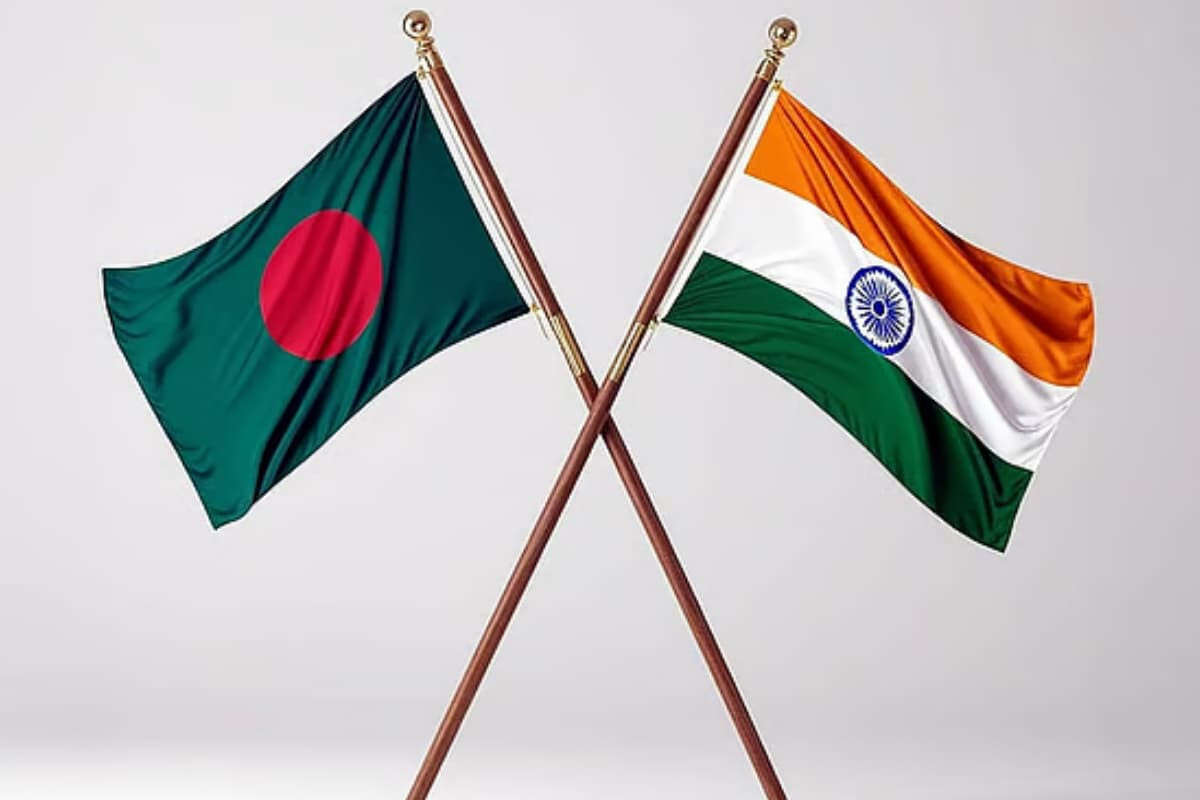
Bangladesh’s exports to India have witnessed a marked decline in recent months, with trade analysts attributing the downturn primarily to the series of restrictions imposed by the Indian government. Data from the current financial year (July–November) indicate that exports from Bangladesh to India fell by approximately 6.68%, amounting to USD 76 million, compared to USD 81 million during the same period last year.
A closer examination of key export sectors reveals that several industries have been disproportionately affected:
| Export Commodity | July–Nov (Current FY, million USD) | July–Nov (Previous FY, million USD) | Decline (%) |
|---|---|---|---|
| Ready-made Garments | 3,000 | 3,250 | 8.8 |
| Processed Food Products | 975 | 1,120 | 13.0 |
| Jute and Jute Products | 500 | 790 | 37.0 |
The restrictions at Indian border points were implemented in three phases. The first phase on 17 May and the second phase on 27 June targeted exports of ready-made garments, food products, jute and jute-based goods, cotton yarn waste, plastics, and wooden furniture. In the third phase, enforced on 11 August, additional jute-based items were brought under restriction.
Under the new regulations, jute and garments may only be exported through Mumbai’s Nhava Sheva port, while processed foods, soft drinks, wooden furniture, cotton yarn waste, and plastics are restricted to select land ports in West Bengal, with the exceptions of Burimari and Banglabandha, which remain exempt.
Exporters have reported that these measures have substantially increased logistics costs and weakened their competitiveness in the Indian market. Particularly, ready-made garment exporters cite that due to reciprocal tariffs with the United States, Indian buyers are pushing for lower prices, compelling Bangladeshi exporters to sell domestically at reduced rates. Additional shipping delays and higher freight expenses have further exacerbated the decline.
Experts emphasise that the Indian market is strategically vital for Bangladesh. If border port operations remain constrained and bilateral economic cooperation does not strengthen, the downward trend in exports is expected to continue.
Dr. Khandakar Golam Moazzem, Research Director at CPD, commented:
“Without effective coordination between politics and economics, Bangladesh’s presence in the Indian market will continue to shrink. It is the government’s responsibility to ensure balanced engagement with neighbouring countries, which is essential to mitigate export losses.”




Comments