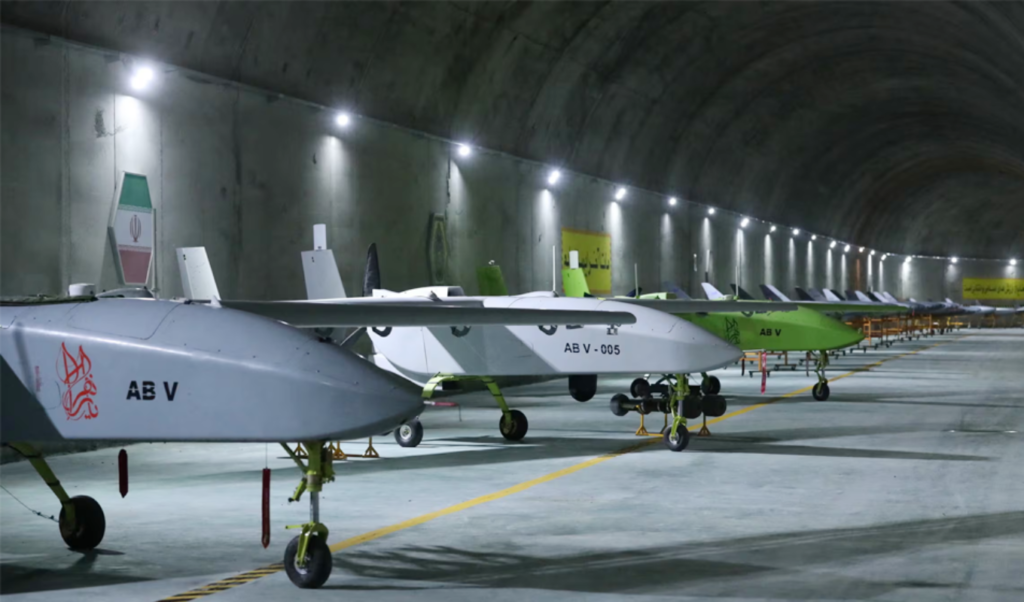
Iran has expanded its unmanned aerial vehicle (UAV) manufacturing capabilities, tripling its drone production output during recent periods of conflict. This substantial industrial scale-up was officially confirmed by Iran’s Acting Defence Minister, Majid Ibn Al-Reza. The disclosure, initially broadcast by the domestic Tasnim News Agency, has since been reported by international news outlets including Al Jazeera, triggering fresh discussions among geopolitical analysts regarding Middle Eastern military expansion.
The significant surge in output underscores the growing prominence of drone warfare in modern geopolitical strategies. Commenting on the production milestone, the Iranian defence minister remarked that recent military conflicts have demonstrated that the nation’s talented human resources and targeted investments in advanced technologies represent the most crucial elements of its sovereign defence architecture. The minister emphasized that even during the peak intensities of active regional confrontations, military manufacturing lines experienced no operational disruption. Instead, strategic resource reallocation allowed the state to scale its overall drone fabrication capacity by a factor of three.
According to statements issued by Tehran, the accelerated production curve was achieved through extensive pre-war investments in technological infrastructure and academic research. Over several decades, the country has systematically prioritised its domestic military-industrial complex to counter heavy international economic sanctions and trade embargoes. Faced with strict Western technology blockades, Iranian engineers have increasingly relied on domestic research hubs and reverse-engineering techniques to establish an independent drone supply chain.
Strategic defence analysts note that this dramatic spike in manufacturing capability carries profound implications for global security dynamics. In recent years, Iranian-designed loitering munitions, reconnaissance aircraft, and combat drones have become prominent fixtures in asymmetrical warfare across the globe. Western intelligence reports have frequently alleged the deployment of Iranian UAV platforms in multiple theatres of conflict, ranging from the sub-state militias operating within the Middle East to broader military campaigns across Eastern Europe.
While Tehran has historically maintained that its military advancements are entirely defensive and aimed at deterring foreign aggression, the sheer volume of this threefold production increase suggests a shift toward high-volume export and deployment. The state’s defense infrastructure has reportedly focused heavily on cost-effective, easily mass-produced models that can overwhelm conventional air defence systems through saturation tactics. By integrating domestic technical infrastructure with robust academic research pipelines, the Iranian government has managed to turn its state-sanctioned drone programme into a centerpiece of its geopolitical leverage, ensuring a continuous supply of armaments despite mounting diplomatic and economic pressure from the international community.