Monday, 6th April 2026

Khabor Wala Desk
Published: 22nd February 2026, 2:53 PM
Dhaka, Sunday, 22 February 2026:
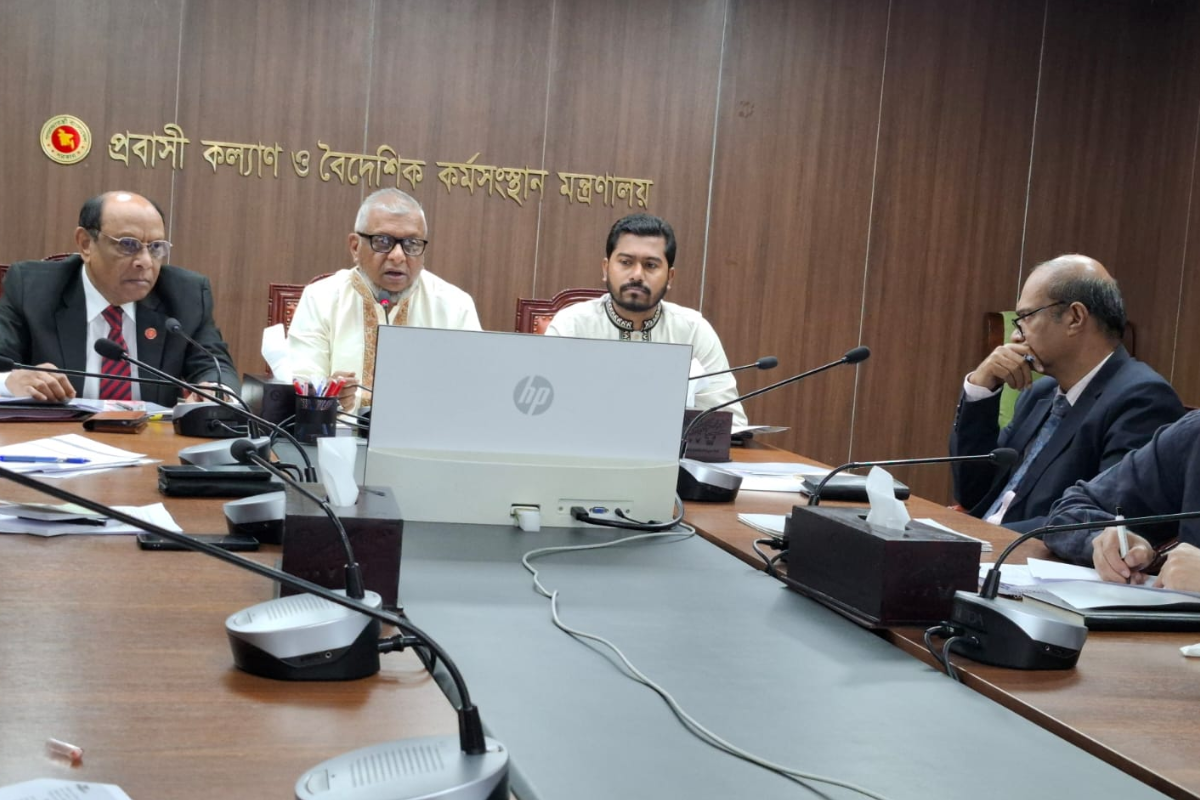
A high-level meeting on the deployment of Bangladeshi workers to Japan was held today at the conference room of the Ministry of Expatriates’ Welfare and Overseas Employment. The meeting was chaired by Senior Secretary Dr Neamat Ullah Bhuiyan and attended by Expatriates’ Welfare and Overseas Employment Minister Ariful Haque Chowdhury MP and State Minister Md Nurul Haque MP.
The meeting followed a session held on 21 February under the chairmanship of the Hon’ble Prime Minister, which focused on establishing an employment-oriented and dynamic education system, generating job opportunities, and expanding sports infrastructure and training facilities. During that meeting, the Prime Minister expressed particular interest in increasing the number of Bangladeshi workers sent to Japan.
It was noted that the newly formed nationalist government’s election manifesto includes 20 programmes directly related to the Ministry of Expatriates’ Welfare and Overseas Employment. As the manifesto has received public endorsement, it is now regarded as a national programme. Accordingly, the ministry convened this preparatory meeting to outline strategies for implementing these commitments effectively.
A key point of discussion was Japan’s projected labour demand. By 2040, Japan is expected to require approximately 11 million young workers due to its declining youth population. In contrast, Bangladesh currently has an estimated surplus of 2.3 million young workers. The meeting explored how this surplus workforce could be transformed into skilled human resources and deployed not only to Japan but also to other global labour markets.
Participants emphasised that Bangladesh has traditionally been known for exporting predominantly unskilled labour. To enhance competitiveness and secure better employment opportunities abroad, there is a pressing need to prioritise the export of skilled and semi-skilled workers. Given Japan’s labour shortages in specific trades, targeted training and language education were identified as critical components.
Previously, trade-related training aligned with Japanese market requirements had been specified in 33 Technical Training Centres (TTCs). In light of growing demand, an additional 20 centres have now been included, bringing the total to 53 TTCs where Japanese language instruction and skill development training are being provided. However, a shortage of qualified Japanese language instructors remains a challenge. The meeting discussed measures to recruit and train more language teachers to scale up the programme.
The role of approximately 200 private training centres and licensed recruiting agencies was also reviewed. The ministry sought to identify additional forms of cooperation from these stakeholders to strengthen preparation and streamline overseas deployment.
Further discussions centred on strategies to position Bangladesh competitively in Japan’s labour market ahead of other countries. Several action plans were drafted, with responsibilities assigned to relevant officials. It was decided that a comprehensive work plan would be finalised and submitted to the Prime Minister within the next seven days. A follow-up review meeting will be held within two working days to assess progress.
Additionally, a consultation meeting with key stakeholders—including training providers, recruiting agencies, teachers, and other partners—will be held the day after tomorrow. Based on their feedback, a detailed policy paper and set of recommendations will be prepared and submitted to the Prime Minister to ensure effective implementation of the government’s electoral commitments.
The Minister and State Minister urged all concerned officials to proceed with professionalism, efficiency, and dedication to advance Bangladesh’s workforce deployment to Japan. Senior ministry officials and representatives from affiliated departments and agencies were also present at the meeting.


Comments