Published: 01 Mar 2026, 02:07 pm
_1772352467.jpg)
When the Awami League government was ousted amid student and public uprisings, Bangladesh’s banking sector was in severe crisis. A shortage of dollars left businesses struggling, fuelling inflation, while several banks controlled by the S Alam Group were reportedly being funded through unchecked money creation. Alongside the currency crisis, the overall discipline of the banking system had collapsed.
In this context, economist Ahsan H. Mansur assumed the governorship of Bangladesh Bank on 14 August 2024. With prior experience at the International Monetary Fund (IMF), Mansur brought expertise in economic recovery to the role. Over his one-and-a-half-year tenure, the dollar and taka crises were largely alleviated. He also initiated the consolidation of five troubled banks and tightened money supply to control inflation. Policy interest rates were increased, which in turn raised bank lending rates, slowing the pace of business and investment.
However, shortly after the BNP government assumed office, Mansur was removed from the governor’s position just ten days later. The new governor, businessman Mostaque Rahman, now faces a complex set of challenges in a banking sector still in transition.
Following the 13th National Parliamentary elections, the BNP government took office with a manifesto promising governance reforms in the banking sector, stricter oversight of financial institutions, enhanced autonomy and authority for Bangladesh Bank, and the eventual abolition of the Banking Division. Analysts suggest that the new administration must continue the reform initiatives started by the previous government to maintain stability.
Among the critical priorities are restoring depositors’ confidence, implementing bank consolidation effectively, aligning banking regulations with international standards, and preventing fresh instances of financial malpractice. The government is also accelerating amendments to the Bank Companies Act and Bangladesh Bank Order to strengthen the legal framework, while maintaining vigilance over financial crime and money laundering.
Former chairman of the Association of Bankers, Anis E. Khan, told The Daily Star: “Significant challenges remain in the banking sector. The reform process must continue, bank consolidation completed, and professional independent directors installed to ensure good governance. Recovery of non-performing loans and repatriation of embezzled funds must also be prioritised.”
When Mansur assumed office in August 2024, the dollar price was surging, and foreign exchange reserves were low. By introducing market-based foreign exchange policies, the dollar crisis eased, and remittances began to rise. As a result, reserves increased from $25.92 billion on 5 August 2024 to $35.04 billion recently (IMF’s BPM6 accounting puts this at $30.3 billion). The exchange rate has stabilised around 122–123 taka per US dollar.
Despite these improvements, non-performing loans (NPLs) surged due to prior hidden defaults. The NPL ratio rose from 12.56% in June 2024 to 35.73% by September, amounting to nearly BDT 6.5 trillion. Several banks previously mismanaged under Awami League-aligned interests—such as First Security, Social Islami, Union, Global Islami, and Exim—were consolidated into the new Sammilito Islami Bank, although the process is ongoing. Six other financial institutions remain marked for closure.
Investigations into alleged financial misconduct involving high-profile groups—including S Alam, Beximco, Nabil, Summit, Orion, Jemcon, NASA, Bashundhara, Sikder, and Aramit—were initiated during Mansur’s tenure. Bangladesh Bank is pursuing recovery of embezzled funds both domestically and internationally, and some agreements with foreign institutions have been established for repatriation of assets.
To control inflation, Mansur used policy interest rates as a primary instrument, raising them above 14%, which helped reduce inflation to around 8.5%. However, higher lending rates have slowed investment and business activity, according to industry feedback.
| Aspect | Details |
|---|---|
| Previous Governor | Ahsan H. Mansur |
| Current Governor | Mostaque Rahman |
| Key Achievements | Stabilised dollar & taka, increased reserves, consolidated banks, controlled inflation |
| Key Challenges | Restore depositor confidence, complete consolidation, strengthen oversight, recover NPLs, curb malpractices |
| Non-Performing Loans | Nearly BDT 6.5 trillion (NPL ratio 35.73%) |
| Foreign Exchange Reserves | $35.04 billion (market-based) |
| Interest Rate | Policy rate above 14%, lending rates higher |
| Ongoing Investigations | S Alam, Beximco, Nabil, Summit, Orion, Jemcon, NASA, Bashundhara, Sikder, Aramit |
Overall, Mansur took charge during a period of acute crisis, managing to stabilise the banking sector and initiate reforms. The new governor, Mostaque Rahman, now faces the challenge of sustaining these initiatives, completing bank consolidations, and restoring confidence and governance in the sector—an undertaking that will require not only technical expertise but also strong political will.

> Performing Well in Asia Could Open Global Doors
> Clash Between BNP and Jamaat in Chuadanga Leaves One Dead
> Misled Promises and Economic Turmoil in Bangladesh
> Neymar's Dream of World Cup Football Faces Uncertainty
> Al-Aqsa Mosque Closed for Evening Prayers
> Attack and Vandalism at NGO Office in Bogura Over Loan Payment Dispute
> Strategic Shifts Reshape Global Insurance Sector
> Flights Halted, Mushfiqur Stranded in Jeddah
> All Dhaka–Middle East Flights Temporarily Suspended
> Experian Launches AI Insurance Marketplace Within ChatGPT
> Malinga Confident: Sri Lanka Will Triumph Again
> Bangladesh Identifies High-Risk Earthquake Zones


A gentle morning sun bathed Sydney’s Jubilee Stadium as the Bangladesh women’s football team went th...
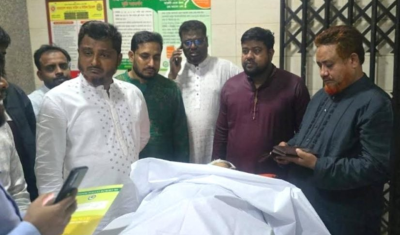
A violent clash broke out in the life of Jiban Nagar, Chuadanga, between activists of the Bangladesh...
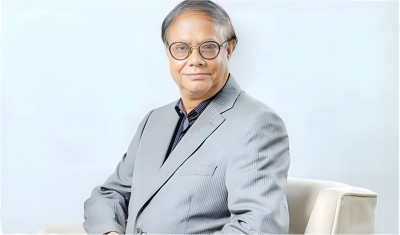
Ahsan H. Mansur, a distinguished economist, former full-time official of the International Monetary...
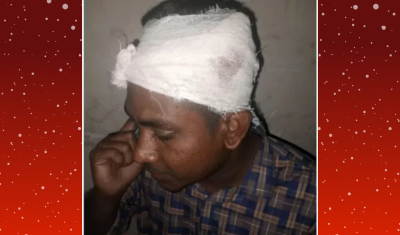
A violent attack and vandalism have been reported at the office of an NGO named ‘Uddipan’ in Bogura,...
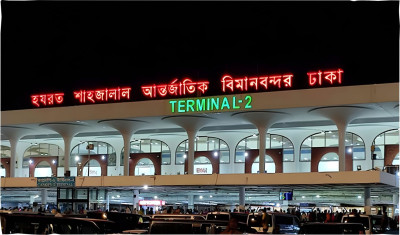
Dhaka’s Shahjalal International Airport has cancelled 54 flights to destinations in the Middle East,...
_1772357038.png)
Amir Khasru Mahmud Chowdhury, the Finance and Planning Minister of Bangladesh, has been hospitalised...
Tragedy struck in Anwara, Chattogram, on Sunday morning when two construction workers fell from a bu...
The senior echelons of Bangladesh’s civil service currently face a notable vacuum, with thirteen pos...
_1772353348.jpg)
On Sunday, the first working day of the week, trading in Bangladesh’s foreign exchange market contin...

The bustling heart of the capital has been plunged into a state of profound shock and trepidation fo...

In a pioneering development for Bangladesh, Prime Bank in partnership with Mastercard has introduced...

Eastern Bank PLC has launched a significant initiative aimed at fostering a more inclusive education...


Availabe for iphone & ipads

Available in google play
 বাংলা
বাংলা