Sunday, 5th April 2026

Khabor Wala Desk
Published: 9th October 2025, 7:46 AM
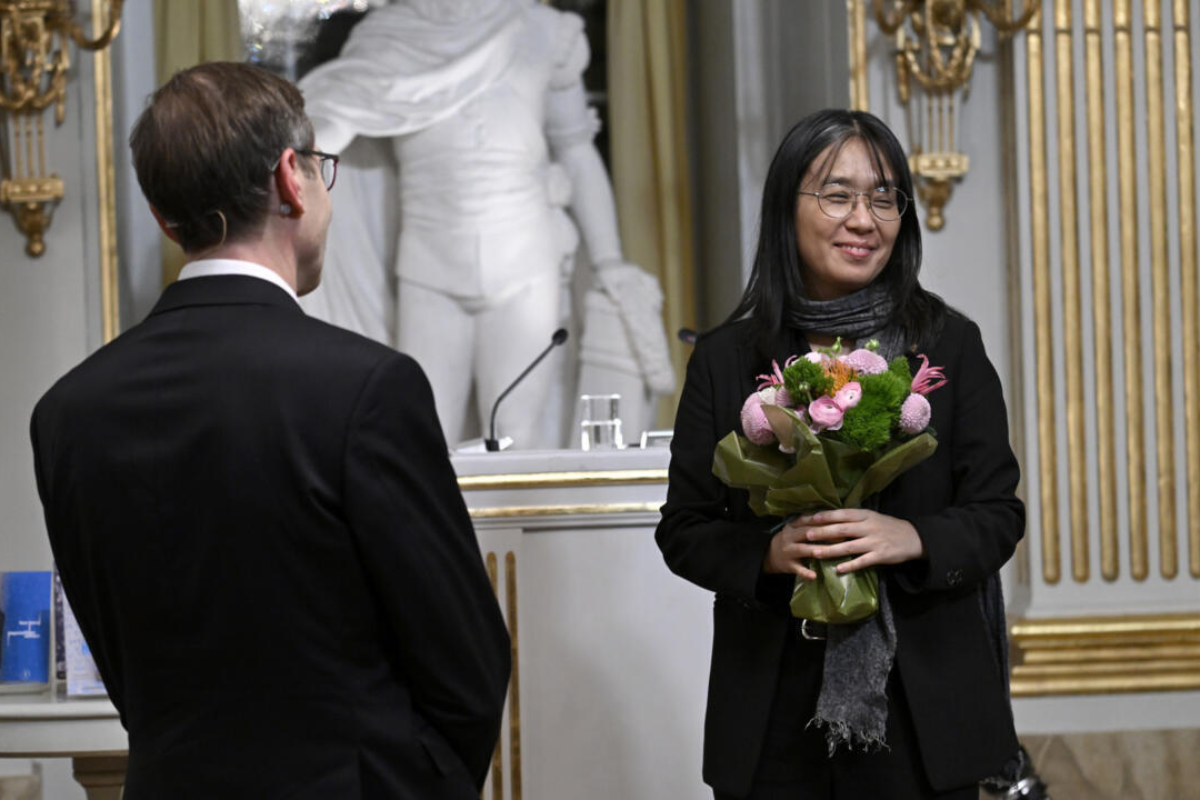
The 2025 Nobel Prize in Literature, to be announced on Thursday, is widely predicted by experts to go to a Western male author, following South Korea’s Han Kang’s win last year, when she became the first Asian woman to receive the accolade.
Awarding the prize to a woman this year would make history, as it has never been awarded to a woman two years consecutively, and female laureates remain under-represented — only 18 out of 121 recipients since the prize was first awarded in 1901.
Leading Contenders
Literary critics in Stockholm have highlighted several possible candidates:
| Candidate | Nationality | Notable Works / Notes |
| Gerald Murnane | Australia | The Plains (1982); heavily draws on personal life experiences |
| Mircea Cărtărescu | Romania | Acclaimed postmodernist author |
| László Krasznahorkai | Hungary | Known for complex, intricate prose |
| Peter Nádas | Hungary | Widely respected European novelist |
| Christian Kracht | Switzerland | Postmodernist, writes on pop culture and consumerism |
| Amitav Ghosh | India | Odds surged shortly before announcement |
Murnane and Krasznahorkai are noted for having the lowest betting odds, alongside Amitav Ghosh, whose name gained traction only days before the announcement.
Gender and Representation
The Swedish Academy, responsible for awarding the prize, insists that gender, nationality, and language are not factors in its decision.
“Even if they say they don’t think in terms of representation, you can still look at the list of past laureates and see that it’s kind of ‘OK, this year was a European, now we can look a little further afield. And now we go back to Europe. Last year was a woman, let’s choose a man this year,'”
— Lina Kalmteg, Sveriges Radio culture critic
Since the #MeToo scandal of 2018, which shook the Academy, there has been a tendency to award more women, as an effort to correct past imbalances.
Insights from Literary Critics
Bjorn Wiman, culture editor at Dagens Nyheter, believes the winner will likely be a man from the Anglo-Saxon, German, or French-language world.
Christian Kracht, 58, a German-language postmodernist, is seen as a favourite. Wiman noted that Academy members were prominently attending his event at the Gothenburg Book Fair, a signal historically associated with potential laureates.
Australian author Gerald Murnane has also received attention:
Other potential female laureates include Australian Aboriginal author Alexis Wright.
Additional Contenders
| Region / Author | Notes |
| Antiguan-American Jamaica Kincaid | Frequently cited in Nobel discussions |
| Canada – Anne Carson | Highly respected poet and essayist |
| Chile – Raúl Zurita | Acclaimed poet |
| Argentina – César Aira | Prolific writer |
| Mexico – Cristina Rivera Garza / Fernanda Melchor | Highlighted as possible Latin American winners |
The last South American winner was Mario Vargas Llosa (Peru, 2010), suggesting the region might be overdue for recognition.
Academy Patterns and Prize Speculation
“Authors like Han Kang would have been unthinkable five or six years ago… She was only 53, while the Academy previously tended to honour older men,”
— Bjorn Wiman
Prize Details
This year’s announcement is eagerly anticipated as literary circles and the global book world await whether the Academy will continue its trend of gender correction or return to a more traditional pattern of recognising Western male authors.




Comments