In Hungary, the parliamentary election has resulted in a significant political shift after 16 years in which Prime Minister Viktor Orbán and his party held power. Preliminary results indicate that the governing nationalist party, Fidesz, has been overtaken by the centre-right opposition Tisza Party, led by Péter Magyar.
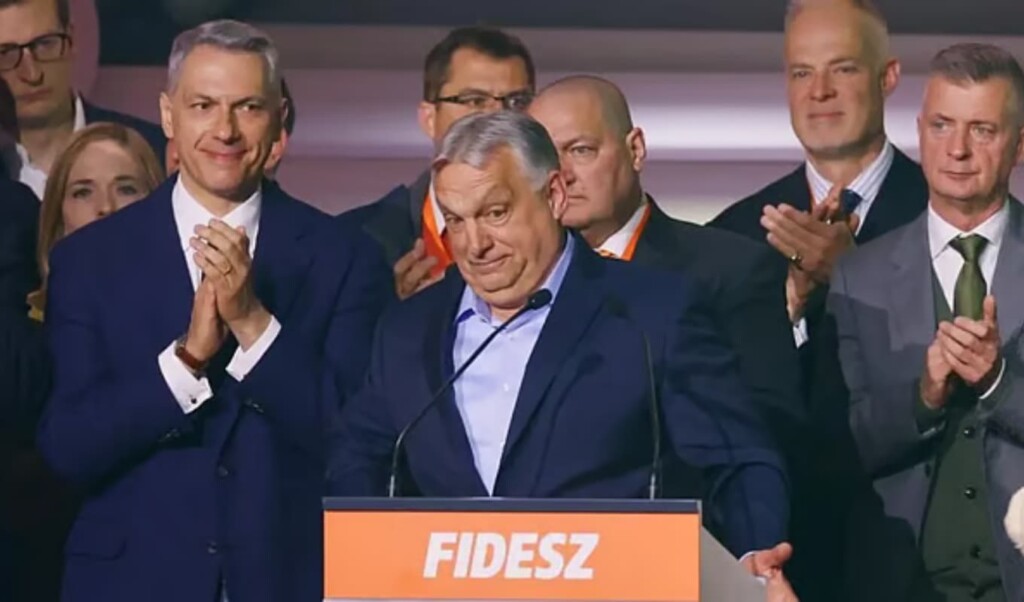
According to international reporting, including the Washington Post, Viktor Orbán—described in coverage as a political ally of both Donald Trump and Vladimir Putin—has conceded defeat. Although official results had not been fully finalised at the time of reporting, Orbán acknowledged the outcome and congratulated the opposition leader.
On social media, Péter Magyar stated that he had received a telephone call from Orbán offering congratulations following the emerging results. He also reported that the Prime Minister had accepted the outcome.
With more than 98 per cent of votes counted, the Tisza Party secured 138 seats in the 199-seat Hungarian Parliament. Fidesz won 55 seats, while the far-right Our Homeland Movement obtained 6 seats. The results reflect a decisive parliamentary majority for the opposition.
Parliamentary results overview
| Party / Alliance | Seats won | Political orientation |
|---|---|---|
| Tisza Party | 138 | Centre-right opposition |
| Fidesz | 55 | Nationalist, governing party |
| Our Homeland Movement | 6 | Far-right |
Turnout was reported to be above 77 per cent by 18:30 local time, according to Hungary’s National Election Office. This level of participation has been described in reporting as the highest voter turnout recorded in Hungary’s post-communist electoral history.
Following the announcement of results, thousands of supporters of the Tisza Party gathered along the River Danube in Budapest to celebrate. In his victory speech, Péter Magyar stated that the electorate had “written a new chapter in history”. He further emphasised that voters had chosen active responsibility for the country’s future rather than passive expectation.
Orbán, addressing supporters after the results, described the outcome as “painful”. He confirmed that he had congratulated the winning party and acknowledged that his party had not been given the mandate to continue governing. He also stated that Fidesz would continue its political activity as an opposition force.
Analysts cited in international reporting, including Gergely Rónai of the Budapest-based Centre for Fair Political Analysis, characterised the result as a major political transformation. They noted that Fidesz had maintained a dominant parliamentary majority for 16 years, which had enabled strong executive control over governance. The new composition of parliament is therefore expected to alter Hungary’s political dynamics significantly.
The result is also being viewed as potentially significant for Hungary’s position within the European Union and its relations on international matters, including policy differences that had previously affected cooperation on European funding and regional geopolitical issues.