Sunday, 5th April 2026

Khabor Wala Desk
Published: 7th March 2025, 3:42 AM
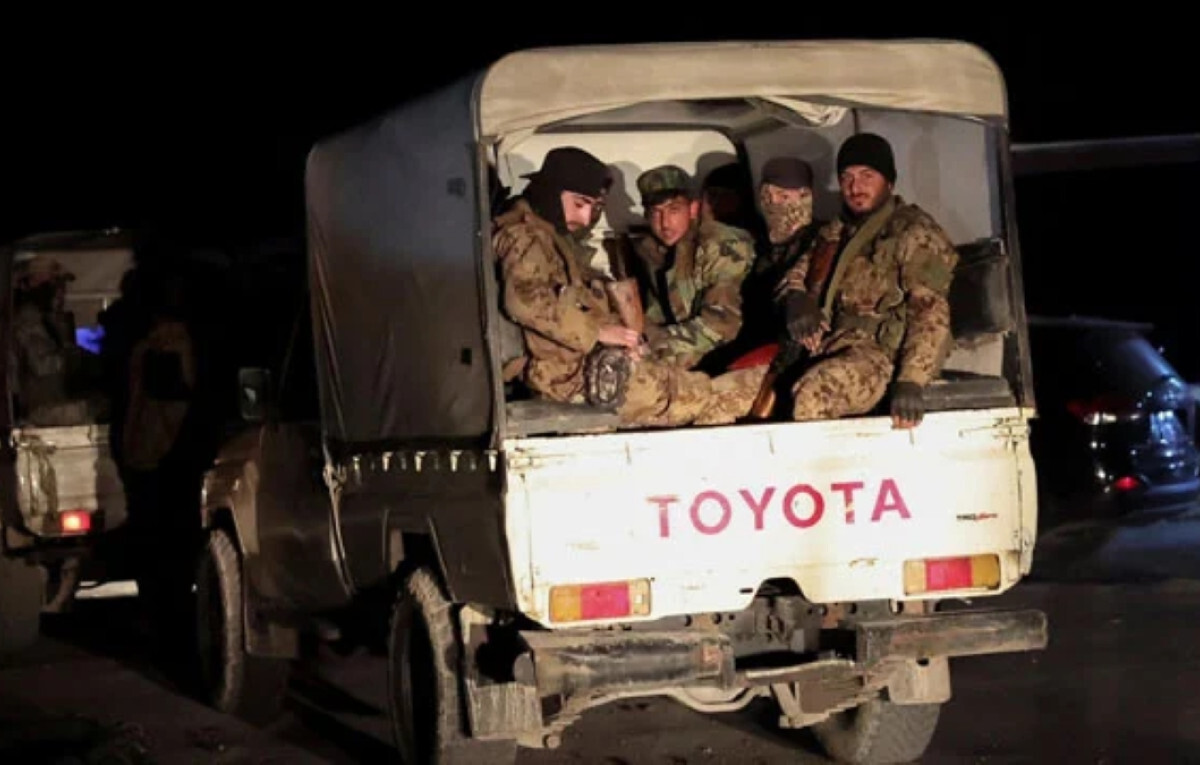
DAMASCUS, 7 March 2025 (BSS/AFP) – More than 70 individuals have been killed, with dozens more wounded, in violent clashes between Syrian government security forces and militants loyal to deposed ruler Bashar al-Assad, a war monitor reported on Friday.
“More than 70 killed and dozens wounded and captured in intense clashes and ambushes on the Syrian coast between members of the Ministry of Defence and Interior and militants from the defunct regime’s army,” the Syrian Observatory for Human Rights stated in a post on X.
The monitor earlier reported that Thursday’s fighting between government forces and Assad loyalists had claimed 48 lives in the coastal town of Jableh and its adjacent villages, marking “the most violent attacks against the new authorities since Assad was toppled” in December.
The total death toll from this week’s unrest remains unclear. According to the Observatory, pro-Assad fighters killed 16 security personnel, while 28 militants loyal to the ousted president and four civilians also perished.
The earlier confrontations occurred in Latakia, a Mediterranean coastal province that served as a stronghold of Assad’s Alawite minority, which was a key base of support during his rule.
Organised Attacks on Security Forces
Mustafa Kneifati, a security official in Latakia, stated that “in a well-planned and premeditated attack, several groups of Assad militia remnants targeted our positions and checkpoints,” attacking patrols in the Jableh area.
The attacks resulted in “numerous martyrs and injured among our forces,” he added, without specifying casualty figures.
Kneifati affirmed that security forces would “work to eliminate their presence,” pledging, “We will restore stability to the region and protect the property of our people.”
Arrest of Senior Assad-Era Officer
The Observatory reported that most of the slain security personnel hailed from the former rebel stronghold of Idlib in the northwest.
During the operation, security forces arrested a former head of air force intelligence, a notorious security agency under the Assad family. According to state news agency SANA, “Our forces in the city of Jableh managed to arrest the criminal General Ibrahim Huweija.”
Huweija, who led air force intelligence from 1987 to 2002, was accused of orchestrating numerous assassinations during the rule of Hafez al-Assad, Bashar al-Assad’s father. He has long been suspected of involvement in the 1977 killing of Lebanese Druze leader Kamal Bek Jumblatt.
Clashes with Loyalist Forces
The provincial security director reported further confrontations in Latakia’s countryside, where security forces engaged gunmen loyal to Suhail al-Hassan, a former Assad-era special forces commander. Helicopter strikes were reportedly launched against the militants.
“The armed groups that our security forces clashed with in Latakia’s countryside were affiliated with the war criminal Suhail al-Hassan,” the security director told SANA.
Nicknamed “The Tiger,” Hassan commanded the country’s special forces and was often described as Assad’s “favourite soldier.” He played a crucial role in military advances by the Assad government in 2015.
Helicopter Strikes and Civilian Unrest
The Syrian Observatory for Human Rights reported “strikes launched by Syrian helicopters on armed men in the village of Beit Ana and surrounding forests, alongside artillery bombardments on a neighbouring village.”
SANA noted that pro-Assad militias had opened fire on “members and equipment of the Ministry of Defence” near the village, resulting in one security force member killed and two others wounded.
A defence ministry source later confirmed to SANA that significant military reinforcements were being deployed to the Jableh area.
In response to the helicopter strikes, Alawite leaders issued a statement on Facebook calling for “peaceful protests,” alleging that “the homes of civilians” had been targeted. Overnight curfews were imposed in Alawite-populated regions, including Latakia, the port city of Tartus, and Homs, SANA reported.
Ongoing Tensions and Crackdowns
The clashes erupted after residents of Beit Ana, the birthplace of Suhail al-Hassan, prevented security forces from arresting a suspect accused of arms trafficking, the Observatory said.
Subsequently, security forces launched a crackdown in the area, leading to armed confrontations.
The killing of at least four civilians in a security operation in Latakia further exacerbated tensions, the monitor reported on Wednesday.
Security forces had launched an operation in the Daatour neighbourhood of Latakia on Tuesday after an ambush by “members of the remnants of Assad militias” resulted in the deaths of two security personnel, state media reported.
Since the fall of Bashar al-Assad on 8 December, Syria’s new security forces have been conducting extensive campaigns to eliminate Assad loyalists from former regime strongholds.
However, human rights organisations and residents have reported numerous violations during these operations, including the seizure of homes, summary executions, and abductions.
Syria’s new authorities have dismissed these allegations as “isolated incidents” and have pledged to prosecute those responsible.
Related Information:
The Syrian conflict, which began in 2011 as a pro-democracy uprising, evolved into a multi-front war involving domestic and international actors. The recent toppling of Bashar al-Assad in December 2024, following a lightning offensive by Islamist rebels led by Hayat Tahrir al-Sham, has led to further instability as new authorities attempt to consolidate power and remove remnants of the old regime.
Latakia, Assad’s ancestral stronghold, had long been viewed as an impregnable base for his supporters. However, recent events indicate deep divisions within Syria’s Alawite community, as some continue to resist the new authorities while others seek stability under the new government.
The presence of foreign powers, including Russia and Iran, both of whom were Assad’s key allies, remains an important factor in Syria’s evolving political landscape. Analysts warn that continued clashes could trigger wider regional instability, with potential repercussions for neighbouring countries such as Lebanon and Iraq.




Comments