Sunday, 5th April 2026

Khabor Wala Desk
Published: 18th March 2026, 3:00 AM
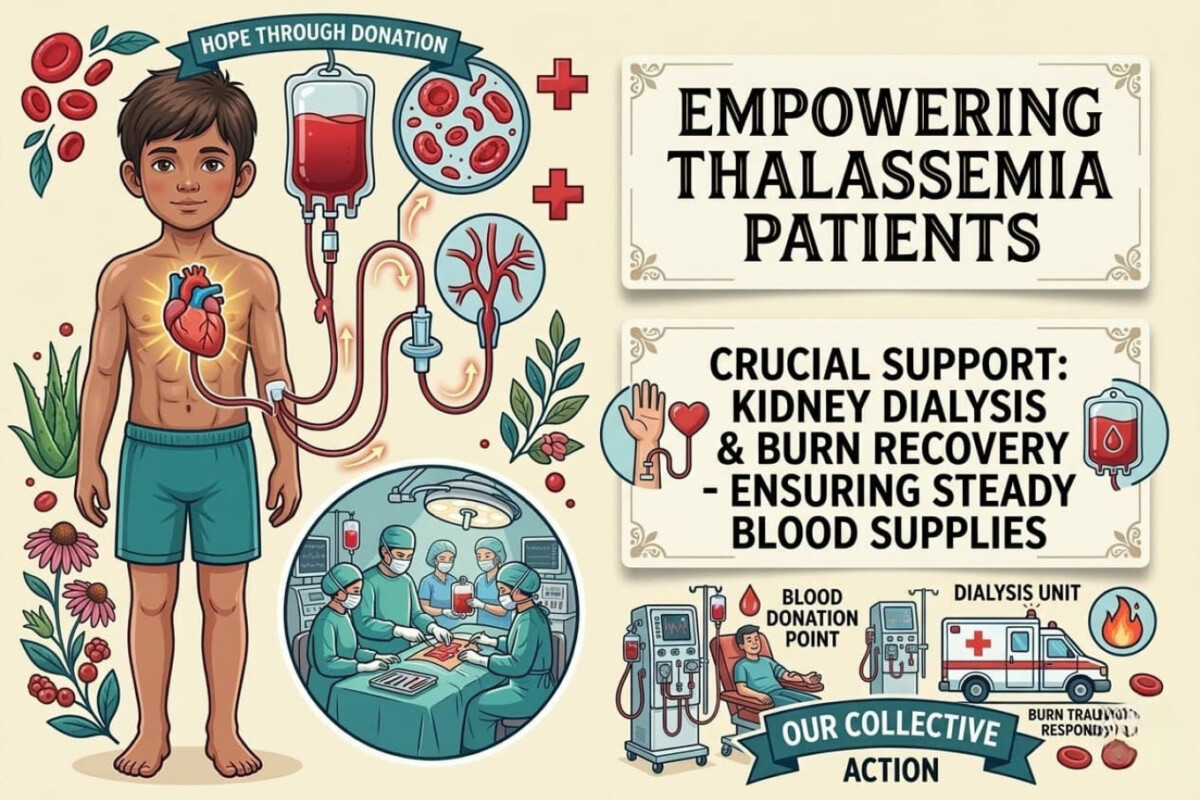
Two-and-a-half-year-old Naznin Raisa lies asleep in her father’s arms on a hospital bed, unaware of the fragile thread sustaining her life. Diagnosed with thalassaemia, a chronic genetic blood disorder, she depends on regular transfusions to survive. Her father, Ahmed Ali, travels each month from Bagerhat to secure blood for his daughter. While supplies are generally manageable throughout the year, the holy month of Ramadan presents a far more daunting challenge.
Hospitals across the country are now grappling with a severe decline in blood donations, placing critically ill patients at heightened risk. The reduction in voluntary donations during Ramadan—largely due to fasting, altered daily routines, and the closure of educational institutions—has significantly disrupted the supply chain. Patients suffering from thalassaemia, burn injuries, kidney disease, and those requiring emergency surgeries are all facing increasing difficulty in accessing life-saving transfusions.
According to hospital sources, approximately 13,000 to 14,000 children are born with thalassaemia in the country each year. Around 11.45 per cent of the population are carriers of the disorder, amounting to nearly 20 million people. Currently, more than 80,000 individuals are living with the condition, most of whom rely on regular blood transfusions and costly medication to survive.
The following table outlines key figures related to blood demand and supply:
| Category | Estimated Figures |
|---|---|
| Annual blood demand | 800,000–1,000,000 units |
| Contribution from voluntary donors | 35–40 per cent |
| Number of thalassaemia patients | Over 80,000 |
| Daily requirement (specialised hospital) | 30–50 units |
| Monthly need per patient | 1–3 units |
Medical experts stress that thalassaemia has no definitive cure, making regular transfusions indispensable. The burden of treatment, however, extends beyond blood, as patients also require long-term medication, which many families struggle to afford. Charitable organisations and philanthropic individuals occasionally step in to provide financial assistance, but such support remains inconsistent.
Doctors highlight a persistent misconception that the need for blood declines during Ramadan. In reality, demand remains constant due to ongoing surgical procedures, accidents, maternal complications, and cancer treatments. Many donors prefer to give blood after breaking their fast, yet heavy traffic congestion in major cities often prevents them from reaching hospitals in time.
Another structural limitation exacerbates the crisis: the absence of an organised, nationwide donor database. In most cases, families must arrange blood themselves, often under immense pressure. This reliance exposes them to logistical difficulties and, at times, exploitation.
Despite these challenges, voluntary donors continue to play a vital role in sustaining the healthcare system. Organisations such as humanitarian groups and community-based networks contribute significantly to the blood supply. However, with student donors forming a large portion of this base, the closure of colleges and universities during Ramadan has sharply reduced donation drives and mobile collection campaigns.
Healthcare professionals and advocates are calling for urgent measures, including the establishment of a centralised donor registry, improved coordination among blood banks, and year-round awareness campaigns. Without such interventions, the seasonal shortfall in blood supply risks becoming a persistent and life-threatening public health concern.

Comments