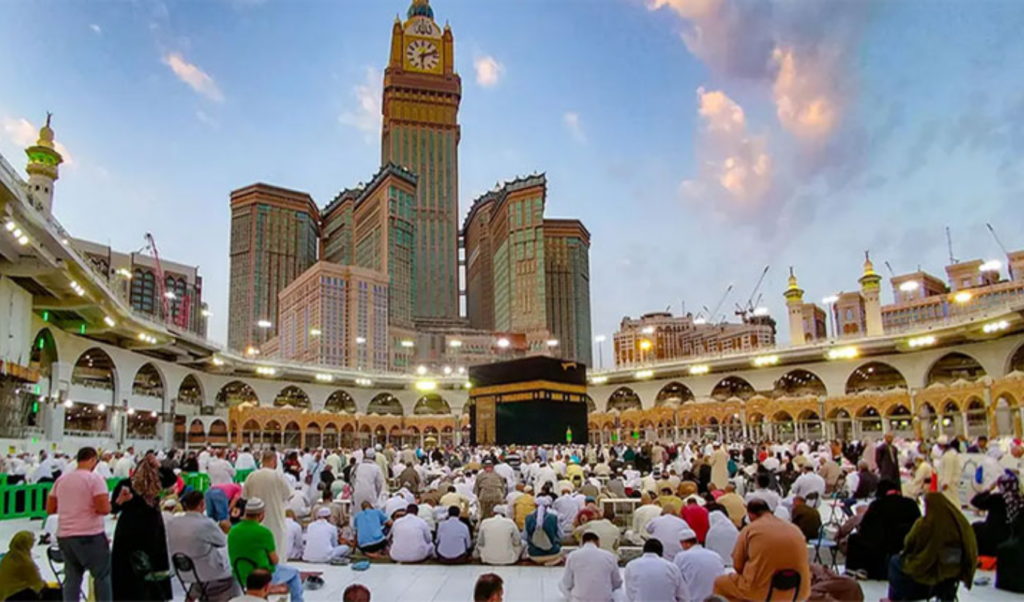
Saudi authorities have unveiled a stringent set of penalties targeting individuals attempting to perform Hajj without proper authorisation, as well as those facilitating such violations, ahead of the 2026 pilgrimage season. The measures, announced by the Saudi Ministry of Interior, underscore the Kingdom’s commitment to ensuring the safety, organisation, and sanctity of one of the world’s largest religious gatherings.
According to official directives, the new regulations will come into force from 18 April and remain effective until mid-June, covering the critical period leading up to and during Hajj. The policy primarily aims to regulate crowd flow and maintain security in and around Mecca and other sacred sites, which annually host millions of pilgrims from across the globe.
Key Penalties and Enforcement Measures
The updated framework outlines a tiered system of fines and sanctions depending on the severity of the violation. Authorities have emphasised that enforcement will be uncompromising.
| Offence Category | Description | Penalty |
|---|---|---|
| Unauthorised Entry | Attempting to enter Mecca without a valid Hajj permit or designated visa | Fine of up to SAR 20,000 |
| Assisting Violators | Providing transport, accommodation, or visa support to unauthorised pilgrims | Fine of up to SAR 100,000 (may increase based on number of offenders) |
| Overstaying Visa | Remaining in Saudi Arabia after visa expiry | Deportation and legal penalties |
| Repeat or Serious Violations | Multiple offences or organised facilitation | Higher cumulative fines and prosecution |
| Use of Vehicles in Violations | Transporting unauthorised pilgrims | Vehicle confiscation by court order |
| Re-entry Ban | Individuals deported for violations | Ban from entering Saudi Arabia for up to 10 years |
Officials have made it clear that individuals who attempt to perform Hajj without the required permit, or who overstay their visas, will be immediately deported. Moreover, such offenders will face a prohibition on re-entering the Kingdom for up to a decade, significantly affecting future travel plans.
Focus on Public Safety and Order
The Hajj pilgrimage, a central pillar of Islam, draws millions of Muslims each year, making it one of the most complex logistical operations globally. Managing such vast crowds requires meticulous planning and strict adherence to regulations. Saudi Arabia has, in recent years, intensified its efforts to prevent overcrowding, unauthorised access, and potential safety hazards.
The introduction of harsher penalties reflects lessons learned from previous seasons, where unregulated participation contributed to congestion and raised safety concerns. By tightening enforcement, authorities aim to ensure that only registered pilgrims with verified permits can access key religious sites, thereby reducing risks associated with overcrowding and unmanaged movement.
Broader Implications
Beyond individual penalties, the new measures also target networks that facilitate illegal pilgrimage attempts. This includes travel agents, accommodation providers, and transport operators who knowingly assist unauthorised individuals. The possibility of fines escalating based on the number of violators involved signals a broader crackdown on organised misconduct.
Legal experts note that the inclusion of property seizure provisions—particularly vehicle confiscation—demonstrates a shift towards more aggressive deterrence strategies. Such measures are intended not only to punish offenders but also to dismantle logistical support systems that enable illegal participation.
Advisory to Pilgrims
Authorities have urged all prospective pilgrims to comply fully with Hajj regulations and obtain the necessary permits through official channels. The government has also called on the public to report any irregularities or suspicious activities to the relevant authorities promptly.
With preparations underway for the 2026 Hajj season, Saudi Arabia’s message is unequivocal: adherence to rules is not optional but essential. These enhanced enforcement measures are designed to preserve the safety, dignity, and spiritual integrity of the pilgrimage while ensuring a well-managed experience for all authorised participants.