Sunday, 5th April 2026

Khabor Wala Desk
Published: 23rd July 2025, 3:57 PM
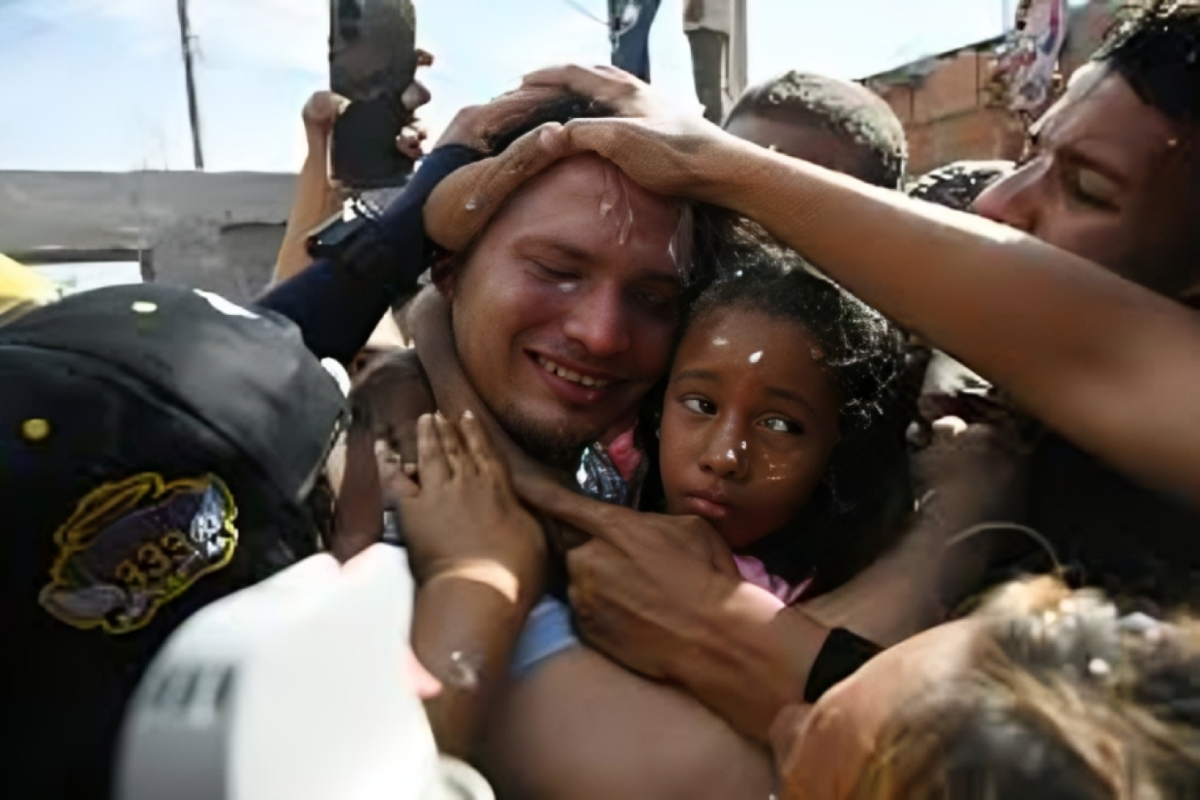
Lief flowed freely on Tuesday as Maikel Olivera, a 37-year-old Venezuelan national, returned to his family’s embrace after enduring four harrowing months in a Salvadoran prison. His release marked the end of a terrifying ordeal which he described as “hell”, endured alongside 251 fellow Venezuelan migrants.
These migrants were recently repatriated from the notorious Centro de Confinamiento del Terrorismo (CECOT) prison in El Salvador, where they had been held since March. The prison, known for its ultra-strict regime and controversial human rights record, was where the United States had transferred them as part of a crackdown on undocumented migration.
A Bittersweet Homecoming
As Olivera’s police convoy pulled into the family’s street, emotions ran high. Family and friends erupted into sobs and cheers, waving Venezuelan flags and honking car horns in celebration. One supporter wore a T-shirt that read: “Migrating is not a crime.”
His mother, Olivia Rojas, broke down in tears upon seeing her son. “You’ve come back to life, my love!” she exclaimed, embracing him tightly and examining his face for signs of suffering.
Olivera’s testimony painted a bleak picture of his time inside CECOT:
“There were beatings 24 hours a day. They told us: ‘You will rot here, you will be imprisoned for 300 years.’ I thought I would never return to Venezuela again.”
Inside CECOT: Reports of Abuse and Torture
CECOT was constructed by Salvadoran President Nayib Bukele as part of a widely publicised and heavily criticised crackdown on gang violence. Funded in part by the administration of then-U.S. President Donald Trump, the prison became a symbol of authoritarian control — and now, according to multiple testimonies, of severe human rights abuse.
Bukele reportedly accepted millions of dollars from the U.S. in return for accepting deported migrants, among them Venezuelans, who were accused without clear evidence of gang affiliation. These accusations, according to Olivera and Venezuelan authorities, were never substantiated by American officials or processed through any formal judicial proceedings.
| Key Details of Incarceration | Reported Conditions |
| Prison Name | CECOT (Centro de Confinamiento del Terrorismo) |
| Location | El Salvador |
| Duration of Stay | 4 months |
| Conditions Reported | Constant beatings, torture, sexual abuse |
| Legal Representation | Denied access to lawyers or families |
| Accusations | Gang affiliation (no evidence presented) |
| Return to Venezuela | Via prisoner exchange with the U.S. |
According to the Venezuelan government, inmates were subjected to brutal beatings, sexual assault, starvation, and were fed rotten food. Many were also shot with rubber bullets. Human rights organisations have condemned the incident as a flagrant violation of international law.
“I had a friend who was gay – they raped him,” Olivera recounted. “They beat us just for taking a shower.”
Family Reunions Across the Country
As Olivera was welcomed back in Barquisimeto — over four hours west of Caracas — other families across Venezuela were similarly reunited with their loved ones.
In the city of Maracaibo, 29-year-old Mervin Yamarte broke into tears as he was embraced by his wife Jeannelys Parra, their six-year-old daughter, and his mother, Mercedes Yamarte.
“It was complete torture what we were enduring. I have many marks on my body,” he said.
Mercedes had spent days preparing for her son’s return, cooking a special meal and decorating their modest home with balloons in the colours of the Venezuelan flag. A hand-painted banner hung at the entrance read: “Welcome to your homeland, you were missed.”
Also in Maracaibo, 45-year-old Yarelis Herrera was reunited with her 23-year-old son, Edwuar Hernandez, whom she described as “very changed” by the ordeal.
“He looks more like a man now.”
Migration Driven by Crisis
Olivera, Yamarte, Hernandez and hundreds of others had braved the perilous journey north in search of economic opportunity, fleeing a country mired in political and economic turmoil under President Nicolás Maduro.
Maduro’s government, widely accused of election rigging and human rights violations, has overseen a national collapse that has led to the emigration of nearly 8 million Venezuelans — approximately one-quarter of the population.
| Venezuelan Migration Statistics |
| Total emigrants since 2014 |
| Primary causes |
| Destination countries |
| President in power |
Mervin Yamarte’s younger brother Jonferson, who avoided the same fate by returning on a humanitarian flight, reflected on the tragedy:
“They have no record of criminal activity, nothing. Humble people seeking a better future who ended up in this nightmare.”
A Long Road to Healing
Although their return has brought joy to their communities, the psychological scars remain. Survivors will now need time and support to recover from the abuses suffered while in foreign custody.
Their stories serve as a sombre reminder of the human cost of politically driven migration crackdowns — and of the enduring hope that drives desperate people to risk everything for a better life.


Comments