Sunday, 5th April 2026

Khabor Wala Desk
Published: 2nd August 2025, 1:16 PM
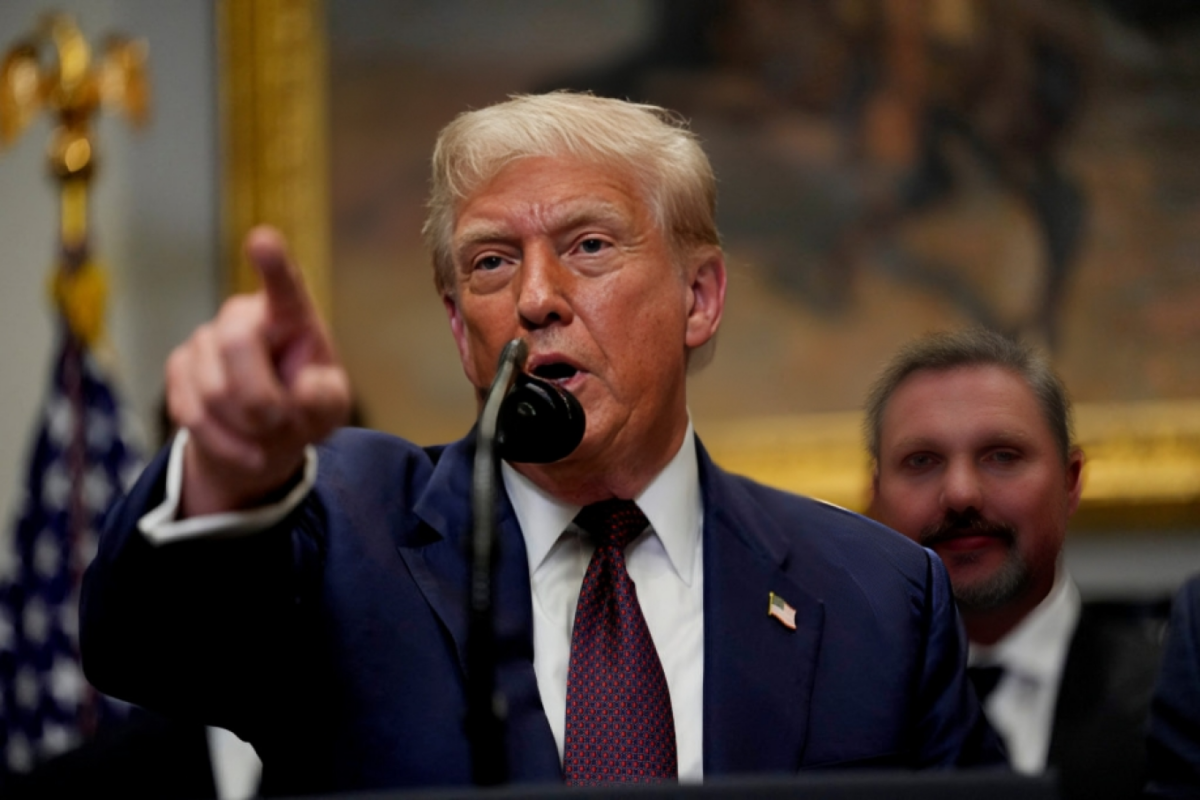
President Donald Trump announced on Friday that he had ordered the dismissal of a top U.S. economic official, accusing her of politically motivated manipulation of employment statistics, just as new data revealed signs of weakness in the nation’s labour market.
Disputed Jobs Report and Political Fallout
According to figures released by the U.S. Department of Labor, job creation in July significantly underperformed expectations. Additionally, employment figures for the previous two months were revised sharply downward, reflecting the slowest growth seen since the COVID-19 pandemic.
Without presenting supporting evidence, Trump alleged on social media that the statistics were deliberately altered:
“The jobs numbers were RIGGED in order to make the Republicans, and ME, look bad,” he wrote.
In a follow-up post on his Truth Social platform, Trump accused Commissioner Erika McEntarfer, the head of the Bureau of Labor Statistics, of falsifying the data to benefit Democrats in the recent presidential election.
He specifically pointed to the July report, which stated that only 73,000 jobs were added — a figure Trump called a “shock.” More importantly, he emphasised a downward revision of 258,000 jobs across May and June:
“Similar things happened earlier in the year, always negative,” Trump claimed, insisting that the U.S. economy was in fact “booming” under his administration.
Speaking later to reporters, Trump asserted:
“We need people that we can trust,” and alleged that McEntarfer had artificially inflated employment figures during President Joe Biden’s term.
U.S. Jobs Data Snapshot
The latest labour report paints a sobering picture:
| Metric | July 2025 |
| Jobs Added | 73,000 |
| Unemployment Rate | 4.2% (↑ from 4.1%) |
| May Jobs (Revised) | 19,000 (↓ from 144,000) |
| June Jobs (Revised) | 14,000 (↓ from 147,000) |
This recent downturn in job creation reflects growing caution among employers, who are navigating an unpredictable economic landscape — particularly with Trump’s aggressive and rapidly changing tariff regime.
Reactions: Criticism and Warnings
Trump’s move to dismiss McEntarfer has sparked widespread condemnation:
“Large revisions in jobs numbers reflect not manipulation, but dwindling resources for statistical agencies.”
“Firing the head of a key government agency because you don’t like the numbers is what happens in authoritarian countries, not democratic ones.”
‘Gamechanger’ for the Economy
Economist Heather Long from the Navy Federal Credit Union labelled the July jobs report a “gamechanger.”
“The labour market is deteriorating quickly,” she warned, noting that 75% of all jobs added in July were in the health care sector alone.
She cautioned that ongoing tariff uncertainty poses major risks:
“The longer this tariff whiplash lasts, the more likely this weak hiring environment turns into layoffs.”
Federal Reserve Under Pressure
The disappointing jobs report is likely to influence monetary policy decisions. The Federal Reserve is under increasing pressure to reduce interest rates in order to stabilise the economy.
Trump escalated tensions by reintroducing steeper tariffs on numerous foreign economies on Thursday — tariffs that are set to come into effect within a week.
Two senior Federal Reserve officials, Vice Chair for Supervision Michelle Bowman and Governor Christopher Waller, who opposed the recent decision to maintain current rates, issued warnings:
“Delaying a rate cut could result in a worsening labour market and a deeper slowdown in economic growth,” said Bowman.
With economic indicators faltering and political pressure intensifying, the next steps by both the Federal Reserve and the White House will likely prove crucial to determining the trajectory of the U.S. economy in the months ahead.



Comments