Sunday, 5th April 2026

Khabor Wala Desk
Published: 21st March 2026, 11:20 AM
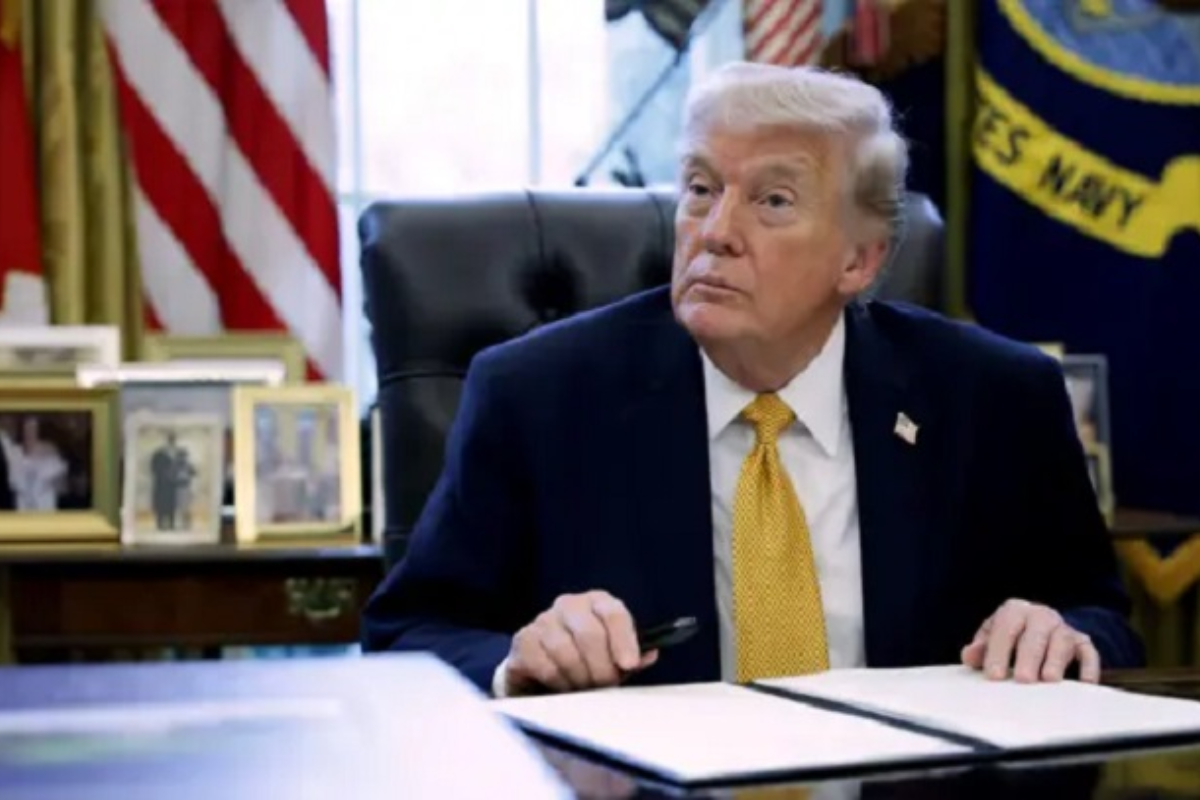
US President Donald Trump appears to be recalibrating his strategy regarding the Strait of Hormuz, signalling a departure from his earlier stance of unilateral action. Once dismissive of the crisis, Trump now faces mounting challenges that threaten his declared “victory” in securing control over one of the world’s most strategically important maritime chokepoints. Analysts suggest that this shift reflects both strategic recalculation and an acknowledgment of limitations in American power projection alone.
Previously, Trump had asserted with confidence that the United States could secure the Hormuz Strait “by any means necessary” without assistance from allies. He explicitly downplayed the need for cooperation from NATO partners or key regional allies such as Japan and South Korea. His rhetoric suggested a strong preference for unilateral action, signalling that American resolve alone would suffice to maintain freedom of navigation in the region.
However, in recent statements, Trump has framed the issue as a global concern rather than solely a US problem, emphasising the international stakes of maintaining an open and secure strait. This represents a notable shift from his earlier posture and suggests that he now sees allied support as integral to any sustainable solution.
Analysts argue that Trump’s new emphasis on multilateral involvement is a pragmatic response to the reality that unilateral efforts may not be sufficient. On Friday, he controversially labelled NATO allies as “cowards”, criticizing their inaction and implying that their participation is necessary to ensure the strait remains navigable. Observers interpret these comments as an expression of strategic frustration, indicating that the president is now seeking to rally global partners to share the burden of maritime security.
The table below summarises the evolution of Trump’s stance:
| Aspect | Previous Position | Current Position |
|---|---|---|
| Approach | Unilateral, US-only | Multilateral, global engagement |
| Allies’ Role | Not required | Crucial for success |
| Framing of Crisis | US problem | International problem |
| Rhetoric | Confident, assertive | Urgent, critical |
Strategic experts note that this repositioning reflects a recognition that no single power can unilaterally guarantee security in the Strait of Hormuz. Trump’s pivot towards ally engagement may be aimed at both reinforcing US influence and sharing the operational and political burden with global partners.
Political commentators suggest that the shift may also reveal internal tensions within the administration and broader questions about the feasibility of Trump’s prior unilateral ambitions. While asserting strength remains a key priority, the emerging narrative now emphasises cooperation, signalling that future US actions in the region are likely to be framed as part of a collective international effort rather than a solo endeavour.
In conclusion, Trump’s evolving stance on the Hormuz Strait highlights the complexity of modern maritime security, where unilateral power is increasingly insufficient and international cooperation has become essential for strategic success.




Comments