Sunday, 5th April 2026

Khabor Wala Desk
Published: 1st February 2026, 8:12 AM
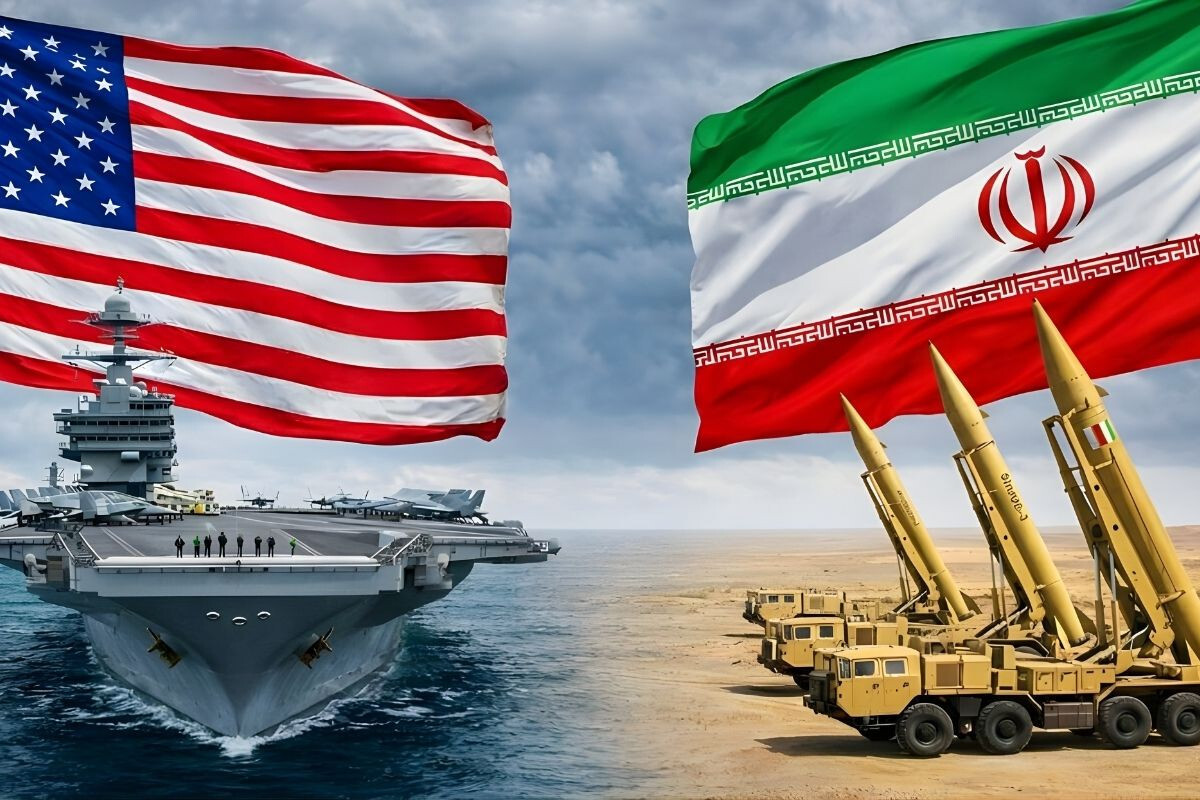
The United States is reported to be standing on the brink of a major military confrontation with Iran, amid claims that a carefully planned strike could be launched at any moment. According to a report by the American outlet The Drop Site News, President Donald Trump has warned several Middle Eastern allies to prepare for the possibility of an imminent escalation, potentially beginning as early as Sunday.
The report suggests that any such operation would go far beyond a limited attempt to degrade Iran’s nuclear or missile capabilities. Instead, US planners are said to be considering a far more ambitious strategy aimed at Iran’s senior leadership. This so‑called “decapitation” approach, according to unnamed sources cited in the report, is intended to weaken the command structure of the Islamic Revolutionary Guard Corps (IRGC) and create conditions for internal unrest that could ultimately lead to a change of government in Tehran.
American military strategists reportedly believe that removing key figures within the IRGC could encourage large‑scale public demonstrations and fracture the ruling establishment. However, analysts caution that such assumptions are highly contested, given Iran’s history of rallying domestic support in times of external threat.
A former senior US intelligence official, quoted in the same report, claimed that Israeli Prime Minister Benjamin Netanyahu is strongly supportive of military action and has been urging Washington to proceed. According to this source, Mr Netanyahu has assured President Trump that Israel would offer full cooperation in supporting a new, Western‑aligned administration in Tehran should the current leadership fall.
President Trump himself appeared to lend weight to the speculation on Friday, when he confirmed during remarks in the Oval Office that a substantial US naval force was moving towards the Iranian theatre. The deployment has heightened anxiety across the Middle East, with regional governments closely monitoring developments.
Saudi Arabia and the United Arab Emirates have publicly stated that they would not permit their airspace or territorial waters to be used for any attack on Iran, reflecting fears that the conflict could rapidly spill across borders and destabilise the region.
Tehran, meanwhile, has issued unusually blunt warnings. Brigadier General Mohammad Akraminia, a military spokesperson, said Iran would not tolerate what he described as a short, symbolic operation followed by political messaging. He warned that any attack would trigger a region‑wide conflict, placing approximately 40,000 US troops stationed across the Middle East and their bases within range of Iranian drones and ballistic missiles. Iranian officials have indicated that they are preparing to abandon their previous policy of limited retaliation in favour of a far harsher response.
Even as tensions rise, last‑ditch diplomatic efforts continue. Iran’s Foreign Minister, Abbas Araghchi, told Turkish leaders during talks in Istanbul that Tehran remains open to dialogue but will not yield under pressure or threats. He stressed that Iran’s defensive and missile capabilities are non‑negotiable.
As US warships advance towards Iranian waters and quiet diplomatic channels struggle to prevent escalation, the Middle East finds itself facing one of its most perilous moments in recent years.
| Actor | Position / Statement |
|---|---|
| United States | Considering military options; naval forces deployed |
| Iran | Warns of region‑wide retaliation; rejects pressure |
| Israel | Reportedly supportive of decisive US action |
| Saudi Arabia | Denies use of airspace or waters |
| United Arab Emirates | Denies use of airspace or waters |
| Turkey | Hosting diplomatic talks to avert conflict |
This unfolding crisis underscores how swiftly strategic calculations can push an already volatile region towards open conflict, with consequences likely to extend far beyond Iran and the United States.




Comments