Sunday, 5th April 2026

Khabor Wala Desk
Published: 3rd March 2025, 4:25 AM
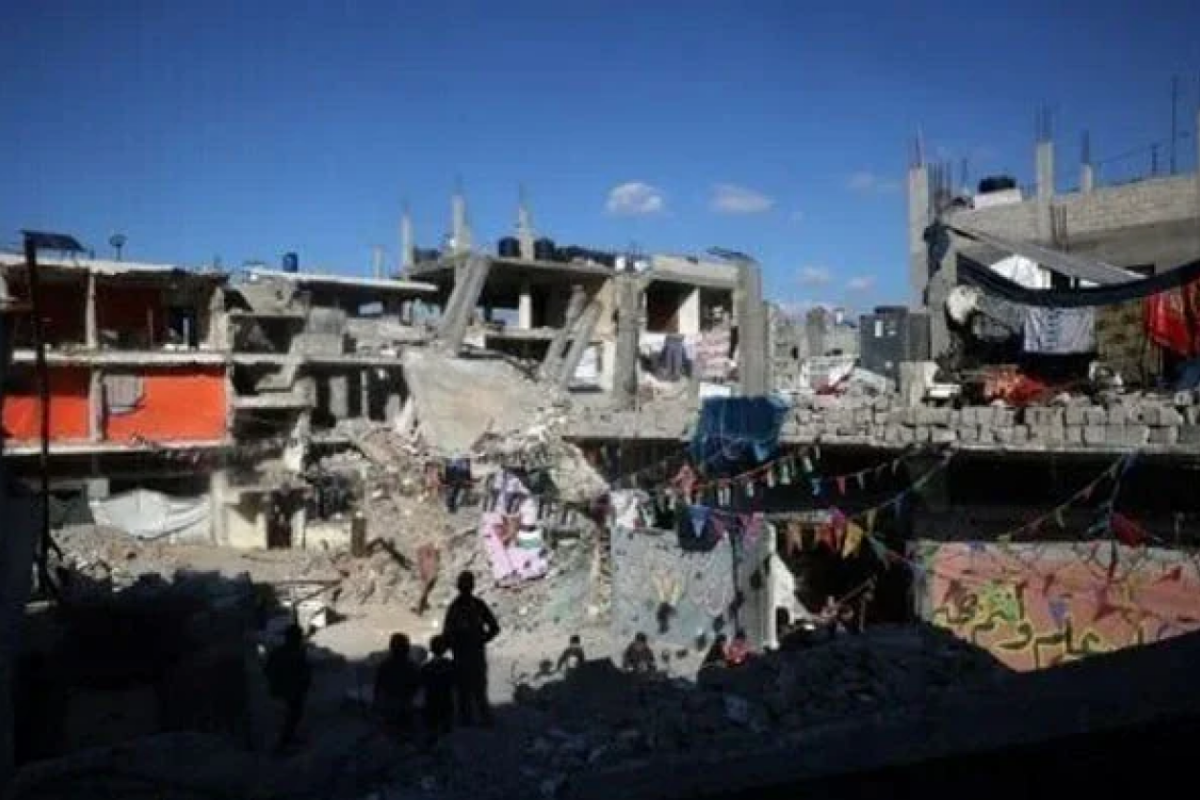
JERUSALEM, 2 March 2025 (BSS/AFP) – The United Nations on Sunday called upon Israel to immediately restore humanitarian aid deliveries to Gaza, just hours after the Israeli authorities suspended assistance to the war-ravaged enclave. The move comes amid growing tensions as negotiations for an extension to the fragile ceasefire appear to have reached an impasse.
With uncertainty hanging over the truce, reports from both Israeli and Palestinian sources confirmed Israeli military strikes in the Gaza Strip. According to the health ministry in the Hamas-controlled territory, at least four people lost their lives in the attacks.
As the initial 42-day ceasefire period ended, Israel announced an extension until mid-April, citing a proposal allegedly put forward by United States Middle East envoy Steve Witkoff. However, Hamas has repeatedly rejected the notion of an extension, instead insisting on advancing to the second phase of the truce deal, which could lead to a permanent cessation of hostilities.
The Palestinian faction, whose attack on Israel on 7 October 2023 ignited the current conflict, condemned the suspension of humanitarian aid, calling it “cheap blackmail, a war crime, and a blatant coup against the ceasefire agreement.”
In a statement shared online, UN Secretary-General Antonio Guterres urged for “the immediate resumption of humanitarian aid into Gaza,” calling on all parties to “make every effort to prevent a return to hostilities” and pressing for the release of “all hostages.”
Thomas Fletcher, head of the United Nations humanitarian agency OCHA, expressed concern over Israel’s decision, warning on social media that blocking aid could constitute a violation of international law.
Following Israel’s announcement, images captured by AFP depicted aid-laden trucks queued on the Egyptian side of the Rafah crossing, unable to proceed.
“Since the morning, we have not seen a single truck enter,” said Umm Mohammad Abu Laia, a resident of Rafah, Gaza’s southernmost city. She cautioned that the blockade was already leading to price hikes for essential commodities, exacerbating the humanitarian crisis.
The first phase of the ceasefire, which took effect on 19 January, had permitted an increase in aid shipments into Gaza. The war has left much of the territory’s infrastructure in ruins, displaced nearly the entire population, and triggered severe food shortages, according to the UN.
However, Israeli Foreign Minister Gideon Saar dismissed concerns about starvation in Gaza, branding such warnings as “a lie.”
Israeli Prime Minister Benjamin Netanyahu’s office stated that “all entry of goods and supplies into the Gaza Strip will be suspended” with immediate effect. It also warned Hamas of “consequences” if it refused to agree to the truce extension, which would span both the Muslim holy month of Ramadan and the Jewish holiday of Passover.
On the ground in Gaza, residents expressed hope that the ceasefire would be prolonged indefinitely.
“There is so much destruction here; we need years to rebuild,” said 21-year-old Mays Abu Amer, standing amid rubble-strewn streets in Gaza City.
Egypt, serving as a mediator in the negotiations, along with the International Committee of the Red Cross, has urged both sides to uphold the ceasefire.
The militant group Islamic Jihad, an ally of Hamas, accused Israel of deliberately “sabotaging” the truce. According to Israeli authorities, the proposed ceasefire extension would involve the release of half of the remaining hostages held in Gaza on the first day of implementation, with the remainder to be freed upon reaching an agreement for a permanent ceasefire.
Of the 251 hostages taken during Hamas’s October 2023 attack, 58 are still believed to be in Gaza, including 34 whom the Israeli military has confirmed as deceased.
In Israel, mourners gathered for the funeral of 85-year-old Shlomo Mansour, whose remains were returned from Gaza last Thursday. Calls for a more determined effort to secure the release of all hostages were voiced at the ceremony.
“Return all of them immediately,” urged Vardit Roiter, a relative of one of the captives.
Under the first phase of the ceasefire, Hamas-led militants had released 25 hostages alive, along with eight bodies, including Mansour’s, in exchange for approximately 1,800 Palestinian prisoners.
Meanwhile, in Israel, some citizens supported the decision to block aid deliveries, seeing it as a means to pressure Hamas into further concessions.
“It is a smart move that might push negotiations forward, leading to the release of more hostages and eventually ending the war,” said Neria, a 27-year-old teacher in Jerusalem, declining to give his full name.
Despite the truce, violence has persisted. On Sunday, Gaza’s civil defence agency reported shelling and gunfire from Israeli tanks, though the Israeli military denied knowledge of such operations.
The Palestine Red Crescent reported that Israeli drone strikes had killed one person in the same area and another in a nearby town. The Israeli military later stated it had conducted an air strike in northern Gaza targeting individuals allegedly placing an explosive device near its forces.
Since the ceasefire commenced on 19 January, Gaza’s health ministry has recorded 116 deaths from Israeli military actions. Though hostilities have significantly decreased, occasional skirmishes and strikes continue.
The initial Hamas-led assault in October 2023 led to the deaths of over 1,200 people in Israel, primarily civilians. In response, Israeli military operations in Gaza have resulted in over 48,300 fatalities, the majority of whom were civilians, according to figures from both sides.
The ongoing conflict has placed intense pressure on international actors to mediate a sustainable peace agreement. The United States, Qatar, and Egypt have been actively involved in diplomatic efforts to secure a broader settlement. Meanwhile, humanitarian agencies continue to warn of an impending famine in Gaza if aid remains restricted.
With Ramadan and Passover approaching, the stakes for maintaining peace have never been higher. Observers fear that any collapse in negotiations could reignite full-scale warfare, with devastating consequences for both Israelis and Palestinians.




Comments