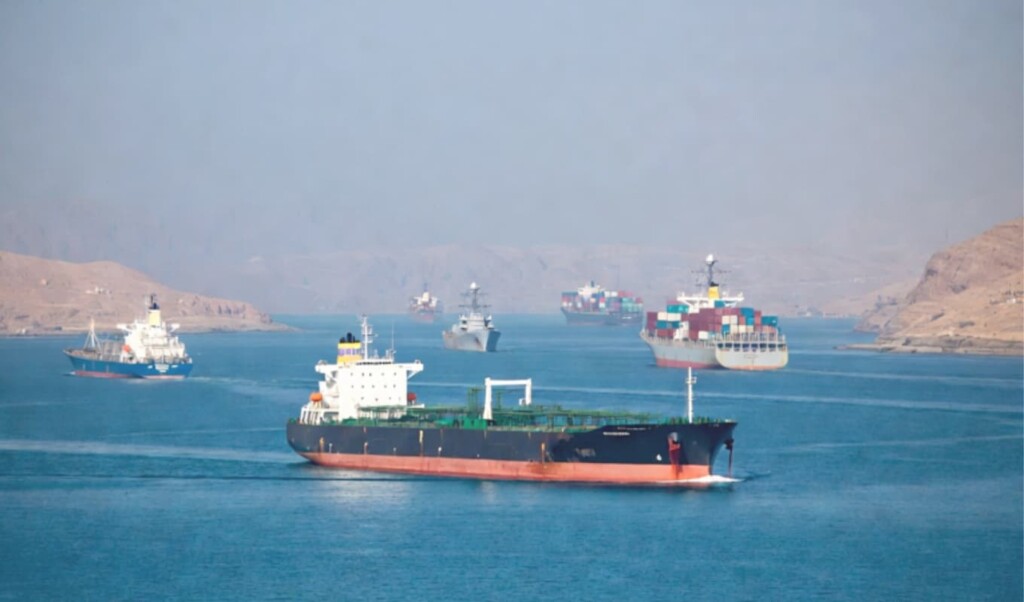
The United States has unveiled a policy initiative aimed at challenging the United Kingdom’s long-standing dominance in the global marine and war-risk insurance sector, particularly the influence of the London insurance market on coverage for high-risk shipping routes.
In March 2026, the US administration directed the United States International Development Finance Corporation to develop a government-supported reinsurance facility worth 20 billion US dollars. The proposed mechanism is designed to provide insurance capacity for hull cover, cargo protection, and political risk exposure, with a particular focus on vessels operating in strategically sensitive maritime areas, including the Strait of Hormuz and the wider Persian Gulf.
The initiative seeks to offer coverage at lower premium levels than those currently prevailing in the commercial market. It also includes a policy consideration under which commercial vessels operating in high-risk zones could potentially be accompanied by United States Navy escorts, depending on operational requirements and security conditions.
The move places direct competitive pressure on the Lloyd’s of London, which has played a central role in global marine, war-risk, and specialty insurance for more than three centuries. In recent years, the market has faced criticism from some industry stakeholders over rising premiums and more restrictive coverage terms, attributed largely to increased geopolitical risk and attacks on commercial shipping in sensitive maritime corridors.
As part of its implementation strategy, the United States is also exploring cooperation with private-sector insurers, including Chubb Limited, to combine public backing with established underwriting expertise and distribution networks.
The policy objectives include strengthening the resilience of international maritime trade, supporting the security of global energy supply routes, and increasing the role of US-backed financial structures within the marine insurance ecosystem.
Lloyd’s of London has responded by stating that it views the initiative as a constructive development and remains open to engagement with new participants in the market. It has also reiterated that its position in global marine and war-risk insurance remains strong, supported by its extensive underwriting network and long-established global market relationships.
Industry analysts suggest that if the US-backed facility is implemented at scale, a portion of marine insurance business could gradually shift away from London-based underwriting markets. However, they also note that Lloyd’s is likely to retain a significant share due to its deep underwriting expertise, global reach, and established risk aggregation capabilities.
At the same time, analysts highlight that key uncertainties remain regarding the operational design, funding deployment, and long-term capacity of the proposed US facility, all of which will influence its eventual impact on the global insurance landscape.
Proposed US Reinsurance Facility
| Component | Details |
|---|---|
| Lead institution | United States International Development Finance Corporation |
| Funding size | 20 billion US dollars |
| Structure | Government-backed reinsurance facility |
| Coverage types | Hull, cargo, and political risk insurance |
| Geographic focus | Strait of Hormuz and Persian Gulf |
| Private-sector involvement | Chubb Limited and other insurers under consideration |
| Additional security option | Possible US Navy escort for commercial shipping |
| Strategic goals | Lower premiums, trade stability, and supply route security |
The initiative represents a notable expansion of state-supported involvement in global maritime insurance markets, with potential implications for established centres such as London.