Sunday, 5th April 2026

Khabor Wala Desk
Published: 1st March 2025, 4:14 AM
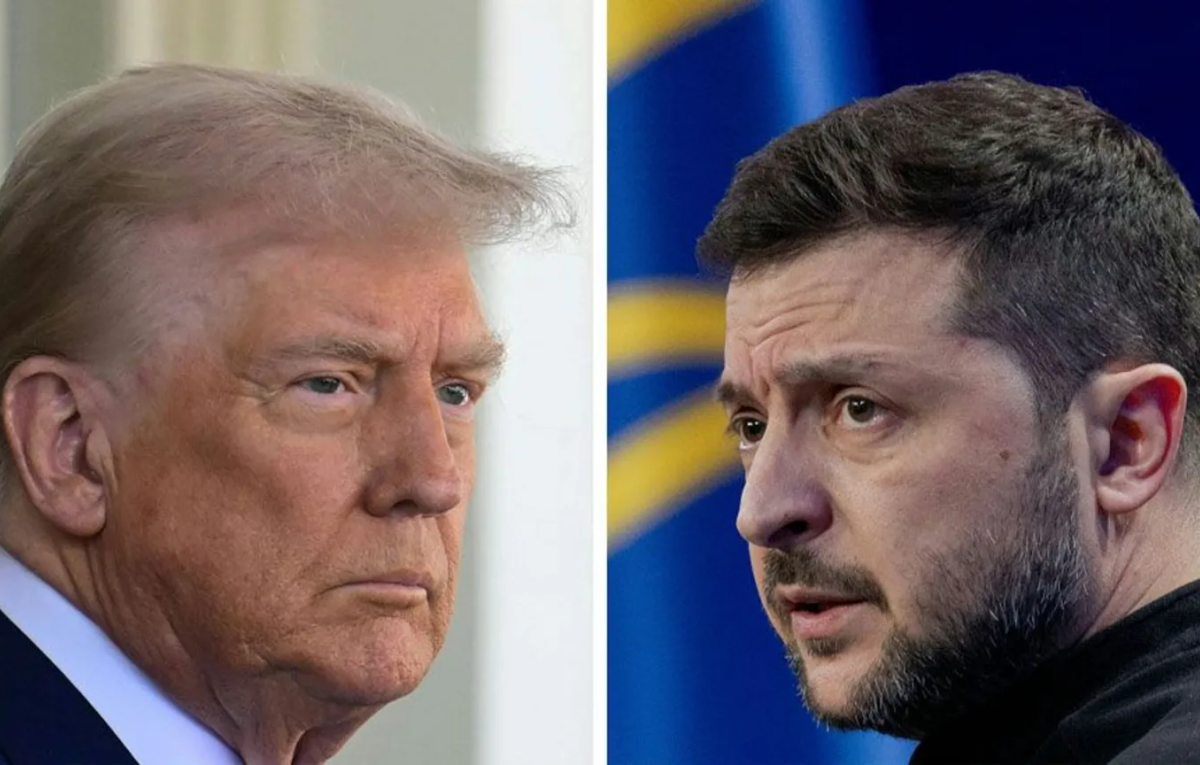
Washington, 1st March 2025 – Ukrainian President Volodymyr Zelensky met with US President Donald Trump in Washington on Friday to sign an agreement granting the United States access to Ukraine’s deposits of rare earth minerals. However, following a heated exchange with Trump and Vice-President JD Vance, Zelensky left early, and the White House subsequently announced that the deal had not been signed.
Zelensky had previously expressed hope that the “preliminary” agreement with the US would pave the way for further agreements, though he confirmed that no US security guarantees had been established—an issue he had been advocating for. Trump stated that a deal would allow US taxpayers to “recoup” funds sent to Ukraine as wartime aid but insisted that ensuring Kyiv’s security should be primarily Europe’s responsibility.
On Wednesday, Ukrainian Prime Minister Denys Shmyhal confirmed that Ukraine and the United States had finalised a version of the agreement, which was published on Friday morning. The preliminary deal outlined the creation of an “investment fund” for Ukraine’s reconstruction, jointly managed by Kyiv and Washington on “equal terms.”
According to the agreement, Ukraine would allocate 50% of future proceeds from state-owned mineral resources, oil, and gas to the fund. The fund would then be used to promote Ukraine’s “safety, security, and prosperity.” Meanwhile, the US government pledged a long-term financial commitment to Ukraine’s economic stability, subject to American laws.
Although acknowledging the fund, Zelensky told the BBC on Wednesday that it was “too early to discuss financial aspects.” The agreement also states that the US would hold the maximum allowable share of the fund under American law.
A significant point of contention between Trump and Zelensky appears to be the minerals deal, highlighting a widening rift between the two leaders. Initially, Ukraine rejected an American request for $500 billion (£395 billion) in mineral wealth, though media reports suggest this demand has now been withdrawn.
“The US administration initially proposed a deal that undermined Ukraine’s sovereignty, later moved to an exploitative arrangement that could have bankrupted the country, and has now settled on a more reasonable deal based on co-ownership,” said Tymofiy Mylovanov, former minister and head of the Kyiv School of Economics, in an interview with the BBC. “This version could actually benefit Ukraine.”
On Tuesday, Trump claimed that the US had provided Ukraine with between $300 billion (£237 billion) and $350 billion (£276 billion) in aid, insisting that the US should recover these funds through the minerals deal. However, the Kiel Institute, a German think tank, estimates that the actual US aid to Ukraine stands at $119 billion.
Zelensky has consistently lobbied for a security guarantee as part of the deal. However, on Wednesday, he confirmed that no such guarantee had been included.
“I wanted a clause on security guarantees for Ukraine, and it is crucial that it is present,” the Ukrainian leader stated. When asked by the BBC whether he would abandon the agreement if Trump failed to provide security assurances, Zelensky responded, “I want to secure a NATO pathway or something equivalent. If we do not receive security guarantees, we will not achieve a ceasefire, and nothing will progress.”
Despite this, the published agreement states that the US supports “Ukraine’s efforts to obtain security guarantees to establish lasting peace.” Trump later clarified that while the US would not offer extensive security commitments, the presence of American personnel in Ukraine would act as “automatic security.”
Trump had initially planned for the agreement to be signed during Friday’s meeting at the White House. Prime Minister Shmyhal asserted that a final version had been prepared, though Zelensky’s aide, Mykhaylo Podolyak, maintained that only a framework agreement was expected.
However, no agreement was signed during the visit, as tensions escalated into a fiery confrontation in the Oval Office. At one point, an irate Trump accused Zelensky of insufficient gratitude for American support and warned that he was “gambling with World War Three.”
“Make a deal, or we’re out,” Trump allegedly told Zelensky. “You don’t have the cards.”
Zelensky, in response, stated that there could be “no compromises” with Russian President Vladimir Putin. Shortly thereafter, and well ahead of schedule, he was seen leaving the White House.
Following this, the White House announced that the agreement had not been reached and that Trump himself had cancelled the signing ceremony. Writing on his Truth Social platform, Trump claimed Zelensky had “disrespected the US in its cherished Oval Office” and added, “He can return when he is ready for peace.”
At present, it remains uncertain if or when the agreement will be finalised.
Ukraine is believed to contain approximately 5% of the world’s “critical raw materials.” This includes an estimated 19 million tonnes of proven graphite reserves, making it one of the world’s top five suppliers. Graphite is a key component in electric vehicle battery production.
Additionally, Ukraine has significant deposits of titanium and lithium. The government claims to hold substantial reserves of rare earth metals—17 elements used in military applications, renewable energy technologies, and electronics. However, some of these claims remain contested.
Complicating matters further, parts of Ukraine’s mineral-rich regions have been seized by Russia. Economy Minister Yulia Svyrydenko estimates that mineral resources worth $350 billion (£277 billion) are currently in Russian-occupied territories.
There are also concerns that a minerals deal cannot be implemented until Ukraine addresses its landmine problem. Approximately 25% of Ukraine’s landmass is contaminated with unexploded ordnance, mainly in the war-ravaged eastern regions.
“These resources are not sitting in a port or a warehouse; they need to be developed,” Mylovanov explained. “If the US invests, it will ultimately benefit all parties.”
Russian President Vladimir Putin has yet to comment directly on the agreement. However, on Monday evening, he told state television that Russia was open to offering resources to American partners in joint ventures, including mining projects in Russia’s “new territories”—a reference to the Ukrainian regions occupied since the 2022 invasion.
Meanwhile, Russian Foreign Minister Sergei Lavrov dismissed suggestions that Moscow would accept European peacekeepers in Ukraine, contradicting Trump’s earlier claims that Russia was open to such an arrangement.
With geopolitical tensions continuing to rise, the fate of the US-Ukraine minerals deal remains uncertain.



Comments