Published: 16 Jan 2026, 06:52 am
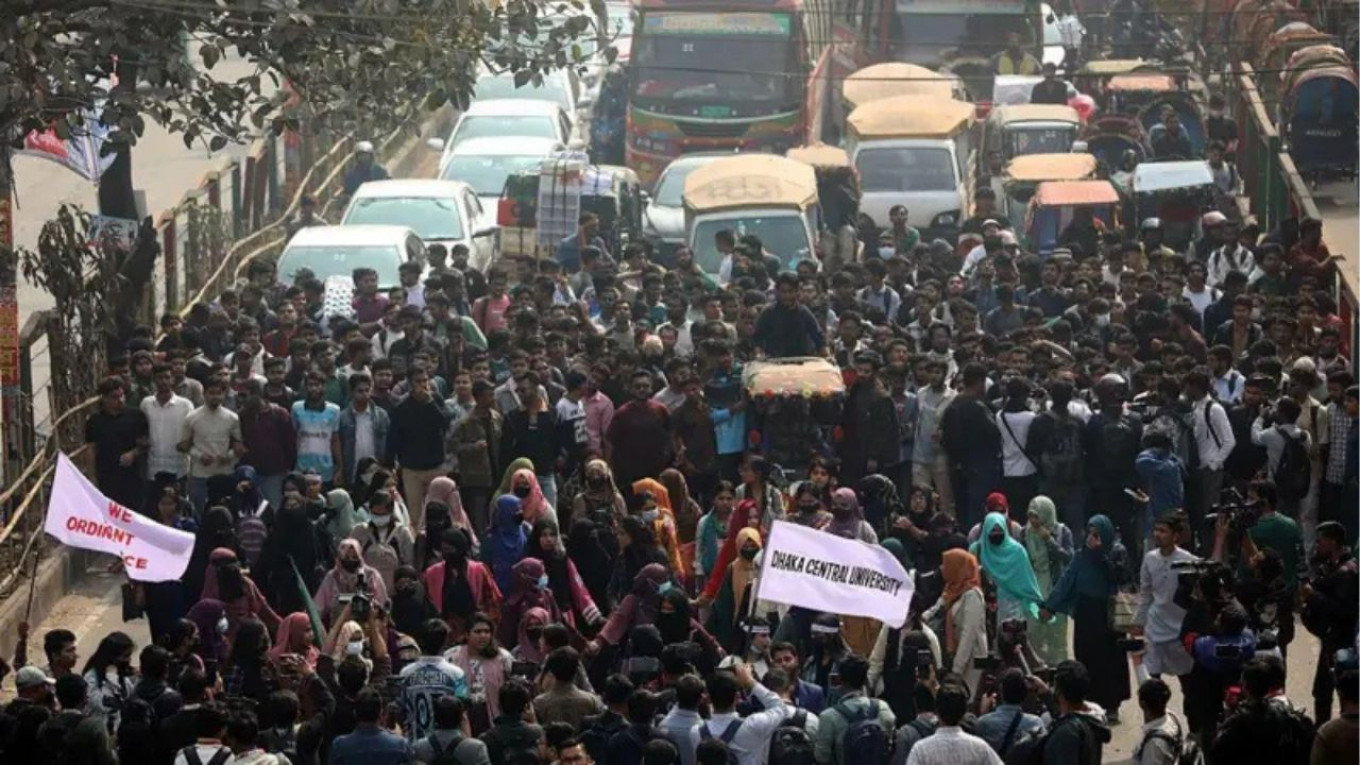
The streets of Dhaka have once again become the stage for a recurring drama of disruption. For Syed Abid Hussain Sami, a media professional residing in Azimpur, Wednesday was supposed to be a routine working day involving travel outside the capital. However, his plans met a grinding halt at the Shahbagh intersection. What is typically a manageable transit turned into a two-and-a-half-hour ordeal of absolute immobility.
The cause was a coordinated road blockade initiated by students from the "Seven Colleges." Their demands are twofold: the immediate issuance of an ordinance to establish a dedicated university for their institutions and justice for their fellow student, Sakibul, who was recently murdered. By midday, protesters had occupied at least five of the city’s primary arterial roads, effectively paralysing the urban landscape.
The impact of these demonstrations extends far beyond mere inconvenience. As the city stood still, the friction between protesters and the public reached a boiling point. Social media was flooded with footage of heated altercations between stranded commuters—ranging from bus drivers to motorcyclists—and the student activists.
Perhaps most distressing was the plight of emergency services. "I personally witnessed at least twenty ambulances with their sirens wailing, trapped with nowhere to go," Mr Sami recounted. This gridlock poses a direct threat to public safety, yet the protesters have issued warnings of continued blockades should their demands remain unmet.
Political analysts and observers note that while street protests are a historical staple of Bangladeshi activism, the frequency and intensity of blockades have surged under the current interim administration. This raises a critical question: why has the road become the primary tool for negotiation?
Experts point towards a perceived culture of "official apathy." Many groups claim that they attempt to engage with the authorities through formal channels—letters, memorandums, and peaceful delegations—only to be met with silence. It is only when the economic and social heart of the city is throttled that the government appears to listen.
Common Triggers for Road Blockades in Dhaka (Jan 2026):
| Group | Primary Demand | Impact Zone |
|---|---|---|
| Seven College Students | Independent University Ordinance | Shahbagh / Nilkhet |
| Garment Workers | Arrears and Wage Increases | Gazipur / Mirpur |
| Job Aspirants | Age Limit Increase (35 Years) | Shahbagh / Science Lab |
| Local Residents | Utility Services (Gas/Water) | Various Neighbourhoods |
The responsibility for this "culture of blockades" is a subject of intense debate. If the government only responds to pressure, the public is incentivised to bypass dialogue in favour of disruption. Conversely, the unrestricted blocking of public thoroughfares infringes upon the fundamental rights of millions of citizens who are not party to the dispute.
Until a structured, responsive grievance redressal mechanism is established, the streets of Dhaka will likely remain a battlefield for competing interests, with ordinary citizens like Mr Sami caught in the perpetual crossfire.

> Appeal hearing against the life sentence enhancement of Hasina-Asaduzzaman on 20 January
> BRAC Bank Recruitment Notice: Apply by 25 January
> Iran alleges: Israel is supporting terrorists in the protests
> Netanyahu urges Trump to postpone Iran attack
> The BCB authorities are refunding the ticket money
> Today is the holy night of Shab-e-Miraj
> Mithun threatened in a call from an unknown number
> Islamist Bloc Unveils 253-Seat Pact as Jamaat Leads Electoral Alliance
> Today is the holy night of Shab-e-Miraj
> Bangladesh Cricket Crisis: Players Issue Resignation Ultimatum
> Sudden Earthquake Shakes Southern Israel
> Madison Beer Performs Her New Song on Jimmy Fallon's "The Tonight Show"
> The United States has officially launched the sale of Venezuelan oil.
> Depositors Face Two-Year Profit "Haircut" in Merger
> Honey Singh Sparks Outrage With Lewd Remark
> BCB Disavows Finance Chief’s Outburst Against National Players

The Supreme Court’s Appellate Division has scheduled the hearing on 20 January regarding the state’s...

BRAC Bank PLC, one of Bangladesh’s leading financial institutions, has announced a recruitment drive...

The Bangladesh Cricket Board (BCB) has announced that spectators who purchased tickets for the Bangl...
Mohammad Mithun, President of the Bangladesh Cricketers’ Welfare Association (CWA), has reportedly b...
ollowing weeks of intense negotiations and high-stakes diplomacy, a formidable coalition of Islamist...
The American dream has taken a distressing turn for thousands of Bangladeshi families as the tempora...
In a significant escalation of the ongoing graft probe into the former leadership of the Dhaka North...

A volatile situation erupted in the Zakiganj Upazila of Sylhet on Thursday as a local student leader...
The Bangladesh Nationalist Party (BNP) has launched a stinging critique of the current electoral env...
In a landmark decision aimed at safeguarding those at the forefront of the recent democratic transit...

A shocking case of food fraud has left the residents of Chatmohar upazila in Pabna reeling, after a...
A significant consignment of parboiled rice from India has successfully docked at Mongla Port, marki...


Availabe for iphone & ipads

Available in google play
 বাংলা
বাংলা