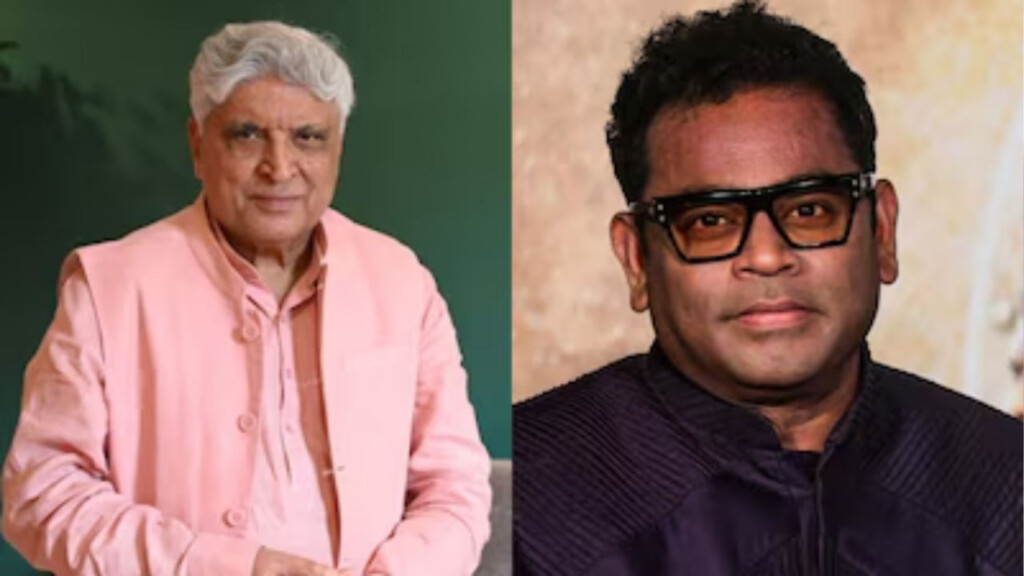
The veteran lyricist and screenwriter, Javed Akhtar, has firmly rebuffed suggestions of a “communal element” within the Hindi film industry, following recent remarks made by the Oscar-winning composer A.R. Rahman. In a candid exchange with the news agency IANS on 17 January 2026, Akhtar asserted that the industry remains fundamentally religion-agnostic and driven by merit, despite Rahman’s hints at shifting power dynamics.
The Source of Contention
The debate was ignited by an interview Rahman gave to the BBC Asian Network, where he reflected on a perceived slowdown in his Bollywood projects over the past eight years. Rahman attributed this to a “power shift” where non-creative executives have gained decision-making influence. Crucially, he remarked that while it was not “in his face,” he had heard through “Chinese whispers” that a communal bias might be a contributing factor.
Responding to these claims, Akhtar stated, “I have never felt this way. I meet people here in Mumbai every day, and they hold immense respect for him.” He suggested that Rahman’s diminished workload in Mumbai is likely a result of his towering international stature rather than any religious prejudice.
Industry Perspectives: The Great Debate
| Personality | Stance | Key Argument |
|---|---|---|
| Javed Akhtar | Disagrees | Proximity and stature create “awe and fear,” not bias. |
| Shobhaa De | Disagrees | Calls it a “dangerous comment”; says Bollywood is merit-driven. |
| Shaan | Disagrees | Asserts that music is purely merit-based; cites career cycles. |
| Kangana Ranaut | Critical | Accuses Rahman of personal bias for refusing her film Emergency. |
| Varun Grover | Supports | Defends Rahman’s right to share his “lived experience.” |
A Matter of Stature, Not Sentiment
Akhtar elaborated that Rahman’s global success—including his extensive international tours and high-profile shows—often leads filmmakers to assume he is simply unavailable. “Rahman is such a big man,” Akhtar noted. “Even a small producer is afraid to approach him, thinking he is too busy in the West.”
He further dismissed the idea that the industry has turned its back on the composer. Akhtar insisted that the “communal angle” is a wrong assumption, suggesting that if filmmakers were to reach out directly, Rahman would likely respond positively. “Why don’t you see him? He will definitely come,” Akhtar added, urging a bridge between the composer and producers.
A Legacy of Collaboration
Javed Akhtar and A.R. Rahman share a storied professional history, having collaborated on iconic soundtracks for films such as Lagaan, Swades, Dil Se.., and Zubeidaa. Akhtar’s defence comes at a time of heightened sensitivity within the film fraternity regarding political and social narratives.
While Rahman later shared a video statement on 18 January clarifying that his intentions were “misunderstood” and that India remains his “inspiration and home,” the dialogue sparked by his comments continues to echo through Mumbai’s creative corridors. For Akhtar, the issue remains one of communication and the natural intimidation caused by greatness, rather than a systemic rot of communalism.