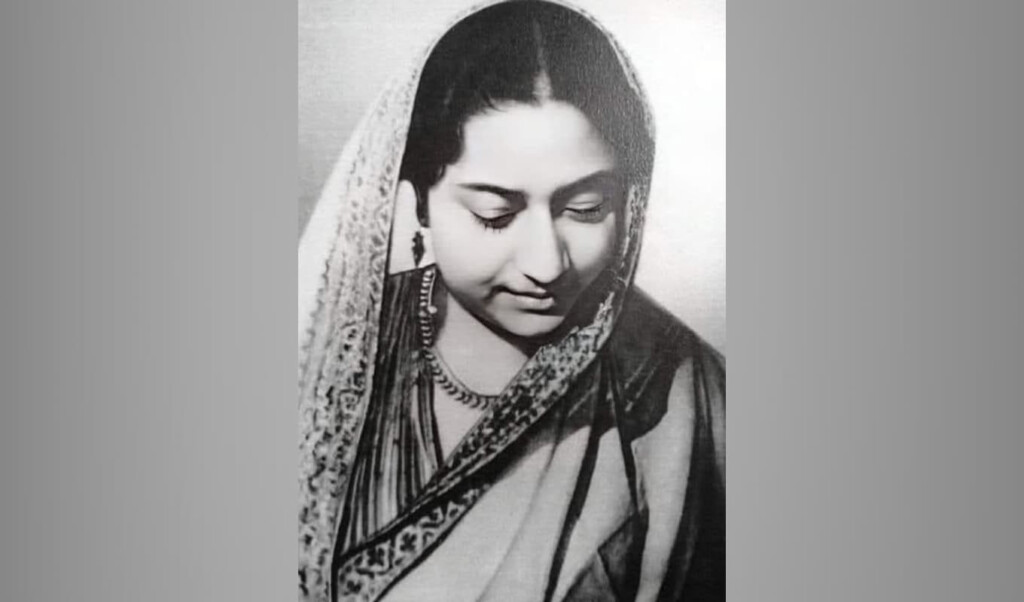
Maitreyi Devi—a name synonymous with literary brilliance, humanism, and an unwavering philosophical vision. Poet, novelist, essayist, and social thinker, she occupies a distinguished place in Bengali literature. Her autobiographical novel N Hanyate brought her international recognition and a lasting place in the literary canon.
N Hanyate, meaning “It Does Not Die,” explores her life philosophy, the consciousness of women, the social structures of colonial India, and a profound humanistic outlook. The novel won her the prestigious Sahitya Akademi Award in 1976 and was translated into English as It Does Not Die, earning acclaim from readers worldwide.
Born on 1 September 1914 in Chittagong, Maitreyi Devi was the daughter of renowned philosopher and essayist Surendranath Dasgupta and Himani Madhuri Roy. She spent her formative years in the village of Goila, Agailjhara, in greater Barisal, where the rural landscape and cultural environment profoundly shaped her worldview.
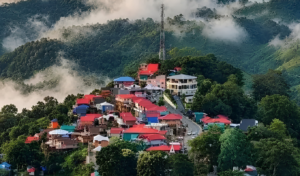
She graduated in philosophy from Jogamaya Devi College, University of Calcutta, in 1936. Two years earlier, in 1934, she married distinguished scientist Dr Monomohun Sen, who managed a cinchona plantation in Mungpoo and specialised in malaria-resistant herbal quinine cultivation.
A close confidante of Rabindranath Tagore, Maitreyi Devi hosted the poet four times at Mungpoo between 1938 and 1940. These interactions inspired her celebrated work Mungpoo te Rabindranath, later translated into English as Tagore by Fireside.
Her literary journey began at the age of sixteen, with the publication of her first poetry collection, Udit, in 1930, introduced by Tagore himself. Her subsequent collection, Chittachhaya, established her as a sensitive and reflective poet. Her scholarship on Tagore includes notable works such as Swarger Kachakachi, Kobi Sarbavoum, Rabindranath Grihe O Bishwe, and Rabindranath: The Man Behind His Poetry, which remain essential resources in Bengali and global Tagore studies.
In 1961, she commemorated Tagore’s birth centenary with visits to Bulgaria, Hungary, and the Soviet Union, receiving the Tagore Centenary Medal from the latter. She delivered numerous lectures across Europe, America, and the Soviet Union on Tagore and world peace.
Beyond literature, Maitreyi Devi was deeply committed to social welfare. In 1964, against the backdrop of communal riots, she founded the Council for Promotion of Communal Harmony. During the Bangladesh Liberation War in 1971, she actively supported Bangladesh through public advocacy and established Khelaghar near Badu village, a haven for orphaned refugee children, offering agriculture, fishery, beekeeping, and livestock training. She personally oversaw this initiative until her death.
Maitreyi Devi passed away on 4 February 1990, leaving a legacy that transcends literature. Her life and work affirm the enduring power of truth, compassion, and consciousness. As her seminal novel reminds us: N Hanyate—the human spirit, love, and awareness cannot be destroyed.