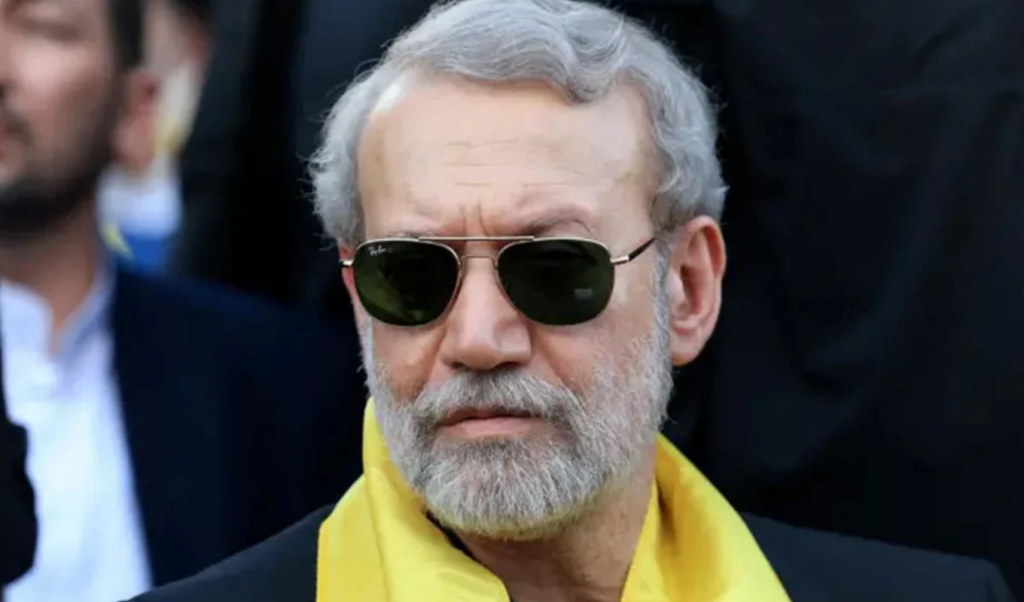
Iran’s top security official, Ali Larijani, has delivered a stark warning to the United States following the death of Supreme Leader Ayatollah Ali Khamenei and a series of attacks in Tehran reportedly influenced by Israel. Larijani directly questioned President Donald Trump, asking whether the United States remains the principal actor in Middle Eastern affairs, or whether Israel now leads.
According to reports said, Larijani stated that the death of Ayatollah Khamenei, which occurred on 28 February during coordinated attacks by the United States and Israel, would come at a high cost for Washington. In a post on X (formerly Twitter), Larijani accused Trump of dragging the American people into “an unjust war with Iran,” asserting that Israeli Prime Minister Benjamin Netanyahu had exerted undue influence over the decision to strike.
He asked pointedly, “Is America still first—or is it Israel?”—a question signalling Tehran’s perception of Israel’s growing influence over US military and diplomatic policy in the region.
The attacks on 28 February marked a significant escalation in tensions between Iran, the United States, and Israel. Since then, security concerns across Iran have intensified, with multiple installations reportedly remaining under threat.
US Secretary of State Marco Rubio defended the United States’ actions, stating that Washington was aware of Israel’s operational plans. He added that American forces had taken pre-emptive measures to safeguard personnel in response to potential Iranian retaliation, emphasising the need for defensive readiness.
Analysts suggest that the events could further strain regional stability, complicate international diplomacy, and influence Iran’s domestic and foreign policy in the coming months. The situation underscores a broader strategic challenge: balancing deterrence against Iran while managing alliances with regional partners such as Israel.
The following table summarises key details of the events and subsequent responses:
| Date | Location | Perpetrators | Outcome / Key Impact |
|---|---|---|---|
| 28 February | Tehran, Iran | United States & Israel | Supreme Leader Ayatollah Khamenei killed |
| 28 February–ongoing | Various sites across Iran | Unknown / ongoing attacks | Heightened security measures, multiple facilities under threat |
| Post-28 February | Tehran & surrounding regions | Iran | Increased defensive posture, official warnings to US and Israel |
The escalating exchanges highlight Iran’s determination to assert its sovereignty and respond to perceived threats. Experts warn that the combined political, military, and strategic ramifications of these events could resonate far beyond the Middle East, affecting global security and international economic stability.