The Israel Defence Forces (IDF) have announced a major escalation in their ongoing aerial campaign against Tehran, claiming to have successfully neutralised high-value strategic assets within the heart of the Islamic Republic. According to a formal communiqué released via Telegram, Israeli airstrikes targeted the Islamic Revolutionary Guard Corps (IRGC) Space Force headquarters, along with a vast network of conventional military infrastructure.
Strategic Objectives and Claims
The centrepiece of the operation was the purported destruction of a facility used as a research hub for the Iranian Space Agency. Israeli military intelligence asserts that this site served a dual purpose: advancing civilian aerospace endeavours while simultaneously providing the IRGC Space Force with the technical foundation for long-range ballistic missile development.
The IDF’s statement detailed a comprehensive strike package that extended beyond the capital’s technological hubs. The mission reportedly hit 50 subterranean ammunition bunkers, designed to withstand significant aerial bombardment. Furthermore, a base belonging to the Basij—the paramilitary volunteer wing of the IRGC—and a secondary IRGC tactical compound were cited as being among the “neutralised” targets.
Analysis of Targeted Infrastructure
The scale of the reported strike suggests a multi-wave operation involving advanced electronic warfare to bypass Iranian air defences. By targeting the space agency, Israel aims to disrupt the sophisticated guidance systems and satellite capabilities that Iran utilises to coordinate its regional proxies.
| Target Category | Number / Description | Strategic Significance |
|---|---|---|
| IRGC Space Force HQ | 1 Major Installation | Ballistic missile and satellite coordination |
| Ammunition Bunkers | 50 Subterranean Units | Storage for long-range and tactical munitions |
| Basij Military Base | 1 Active Site | Internal security and paramilitary mobilisation |
| IRGC Compound | 1 Tactical Centre | Regional command and control operations |
Regional Context and Escalation
This latest sortie comes amidst heightened tensions following the recent US-led Operation Epic Fury, which targeted the Iranian leadership and nuclear facilities. Israel appears to be capitalising on the current volatility to dismantle Iran’s defensive “depth”—specifically its ability to retaliate with precision-guided weaponry.
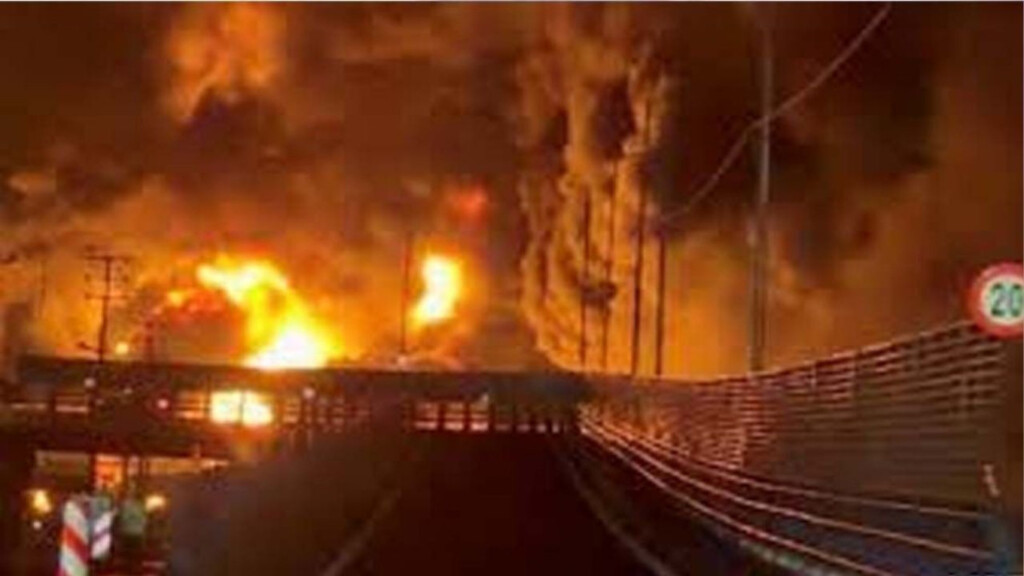
While Tehran has yet to release a detailed damage assessment, local reports from the Iranian capital describe significant tremors and plumes of smoke emanating from the outskirts where these military installations are situated. The destruction of fifty bunkers in a single operational window represents one of the most substantial blows to Iran’s conventional storage capacity in recent years.
As the geopolitical landscape of the Middle East continues to shift, the focus now turns to whether Iran will opt for a direct state-on-state response or utilise its remaining “Axis of Resistance” assets to launch a counter-offensive.